Pablo Picasso. I say nothing more than what I do not say

Submitted by brandcode_deweloper on
Pablo Picasso and a Century of Artists

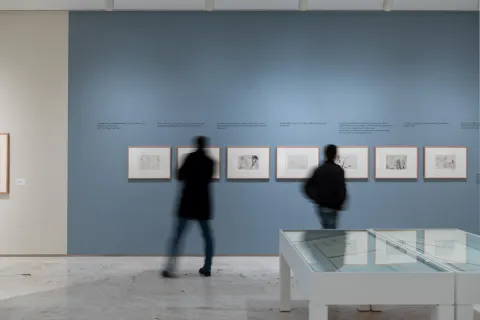
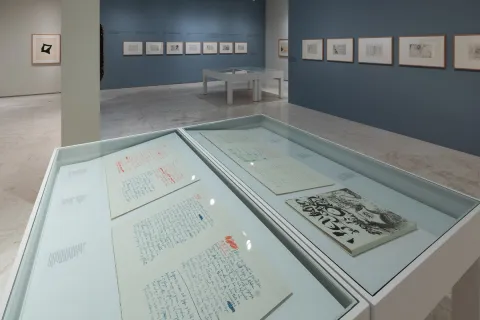
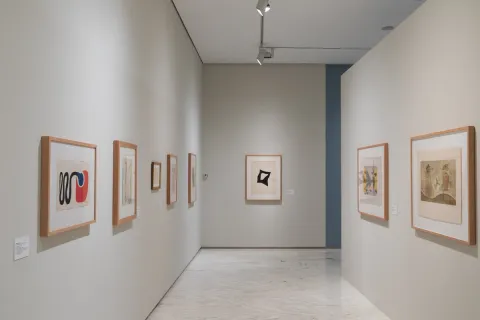
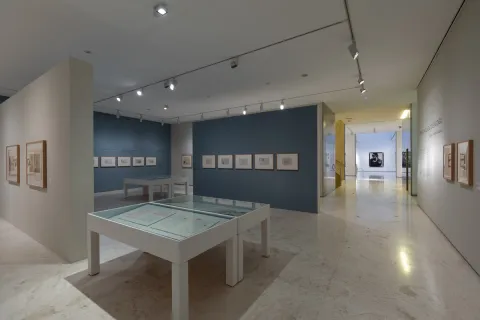
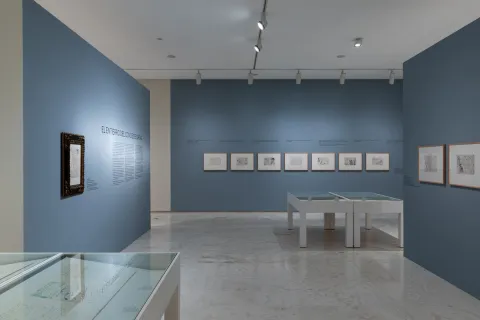
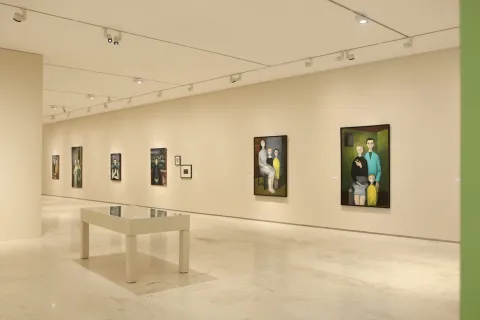
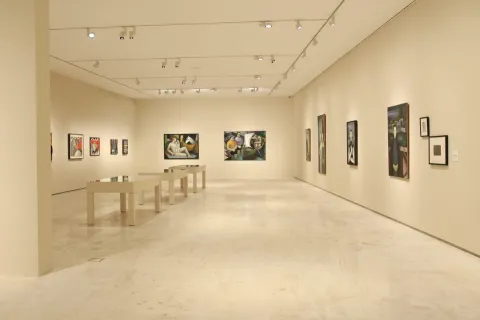
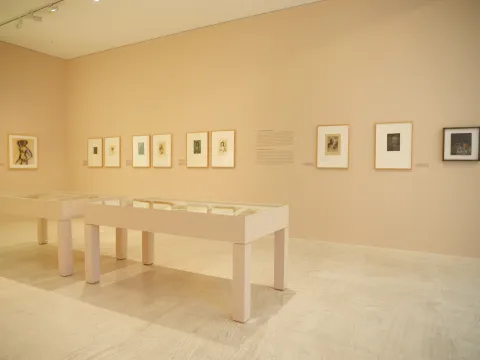
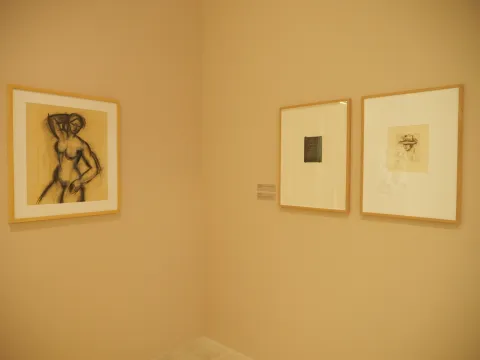
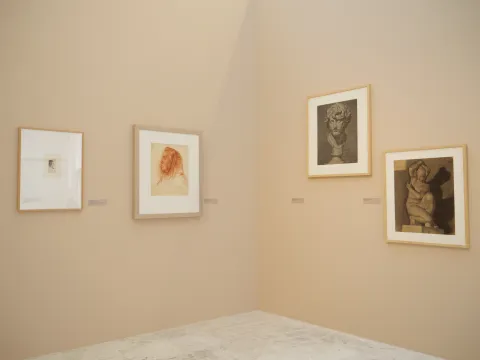
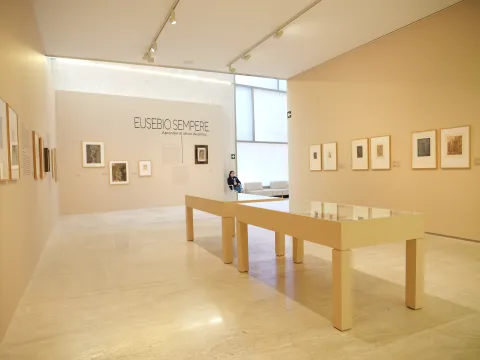
Pablo Picasso spans almost a century of art and alongside him, an essential series of artists radically transform the history of art while blurring the boundaries between figuration and abstraction. Many of them are represented here.

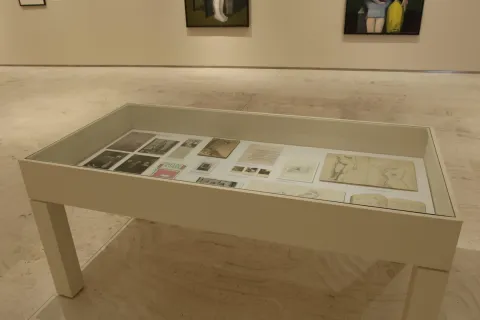
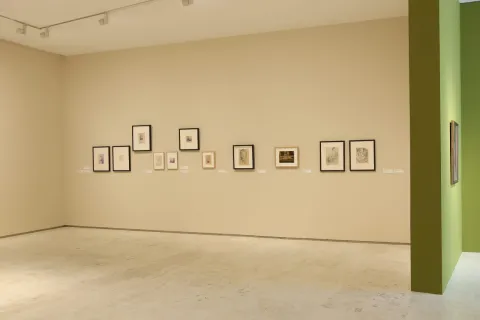
The 20th Century Art Collection holds among its holdings a large number of works on paper including drawings, engravings, lithographs and silkscreens that complete an extensive roster of essential artists, traversing the most suggestive territories of the artistic framework of the past century. 
And it is so because Eusebio Sempere and his companion Abel Martín, after experimenting in Paris with various printing techniques, introduced artistic silkscreen printing to Spain, creating beautiful prints of their own works and those of their artist friends. And they are deeply convinced that graphic work deserves the status of "original" and that it places contemporary art within reach of a majority of the public, democratizing it.

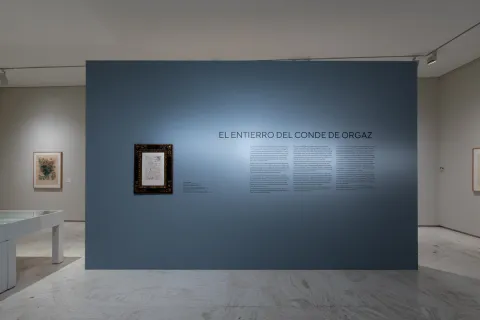
With that aesthetic and political conviction, Sempere always admired the figure of Pablo Picasso. He acquired Picasso's engraving belonging to the Vollard Suite, Fernando Zóbel gave him the Portrait of Rimbaud as a gift, and he bought The Burial of the Count of Orgaz, works that are shown here. In the same way that he participated in the Homage to Picasso that took place during the celebration of the artist's 90th birthday in November 1971, suffering as a result detention, imprisonment and a substantial economic fine. 
EXPO-0089
Imagen
042A9824bis.jpg
/sites/default/files/inline-images/resources/exposiciones/EXPO-0089/Folleto-Picasso-un-siglo-de-artistas-AF-para-imprenta-3.pdf
Rosa Castells

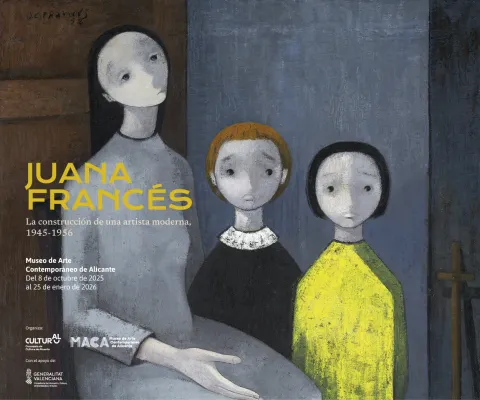
Juana Francés. The Construction of a Modern Artist, 1945-1956

Submitted by brandcode_deweloper on

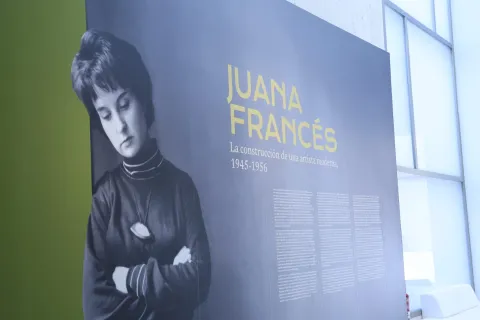
Juana Concepción Francés de la Campa (Alicante, 1924 - Madrid, 1990) is one of the most forceful artists in the Spanish artistic panorama of the second half of the twentieth century, a pioneer of abstract informalism and the only woman in the emblematic El Paso Group. She exhibited in important international artistic events such as three Hispano-American Biennials, the Venice Biennale, in as many as five editions, and the São Paulo Biennale. She exhibited in group shows alongside her generation's peers at the Guggenheim Museum in New York and at the Tate Gallery in London, and in notable solo exhibitions at institutions in Spain, France, and Portugal, among other places. She was recognized by critics from her early figurative period through the end of her career, but has been forgotten by art historiography. In recent years, her figure has been strongly reclaimed, affirming her quality and relevance, and at the MACA we have delved deeper into separate exhibitions on her abstract paintings. 
 

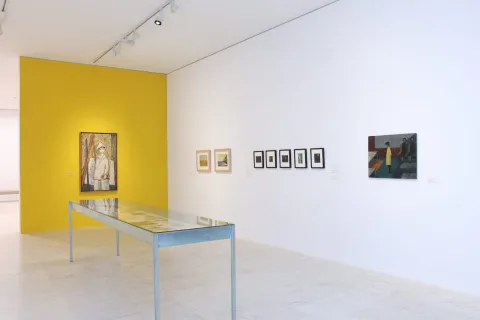
Now we propose to review the origins of her painting: the years of training, her more symbolist figurative period, and her personal transition before embarking on the generational adventure of abstract art. It is the least known period: paintings where figurative work of Italianate influence moves between restrained symbolism and surrealism with metaphysical roots, featuring rounded and voluminous figures of geometric character. Among the themes presented are maternities, portraits of children and women, families, and enigmatic still lifes as well as allegorical scenes that present an air of intriguing mysticism and that contain a spirituality that we will see emerge in later periods. On a technical level, Francés works innovatively to achieve certain textures and impastos using the encaustic technique, where she mixes wax, resin, and solvent on a rigid support, superimposing different layers of paint to "wound" them afterward with a nail. An experimental will that remains intact throughout her entire career, marking her strong plastic personality. 
 

Juana Francés is the most prominent of a group of women artists who began exhibiting in the 1950s and whose professional determination defied the society of her time: an exclusionary system that relegated women to the domestic sphere or to decorative roles in culture. Facing a hostile, normative, and rigid environment created by the social ideology of Francoism, Juana Francés managed to remain attentive to plastic concerns and to be an active part of a generation of artists who revolutionized the art of their time. Her trajectory allows us today to rethink the role of women in art history, as well as the complex relationship between aesthetic modernity and social commitment.
 

EXPO-0083
Imagen
Juana Francés. La construcción de una artista moderna, 1945-1956
/sites/default/files/inline-images/resources/exposiciones/EXPO-0083/JUANA-FRANCES_folleto_ES_VAL_rev9_0.pdf
Rosa Castells y Natalia Molinos

Eusebio Sempere. Learning the Painter's Trade

Submitted by brandcode_deweloper on

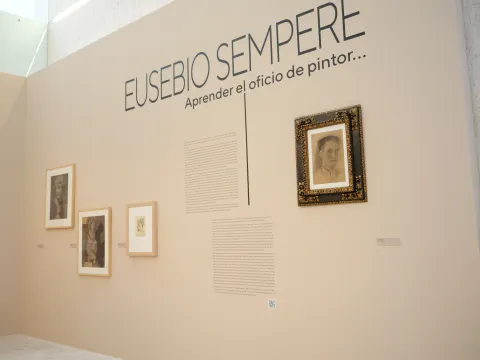
Thanks to an early vocation for painting, Sempere began in 1941 his training period at the School of Fine Arts of San Carlos in Valencia, the city where his family moved after the civil war, after having lost his toy factory in Onil. 
 

Sempere had finished his high school studies a few months earlier and attended evening classes at the School of Arts and Crafts, which had given him some knowledge and practice in drawing. His six years of academic training were tedious and frustrating. Artistic education in Spain during those postwar years was depressing; to the poor teachers, mediocre as artists, authoritarian and despotic in their classes, was added an extreme conservatism in the content and continuous "Sorolla-like" references as the only valid example to follow, just as the artist recalls time and again. 
 

At the School he met Father Alfons Roig, professor of the subject Liturgy and Christian Culture, who spoke to the San Carlos students about Kandinsky and was perhaps the only person knowledgeable about and an enthusiastic defender of modernity and avant-garde movements. Eusebio finished his studies in 1946 but remained at San Carlos until 1948 in order to study the specialty of intaglio engraving with professor Ernesto Furió, one of the few teachers who managed to earn the respect of his students. Sempere learned the technique of etching and dry point, and his engravings show an exceptional mastery of graphic art, working texture and volume and skillfully balancing light and darkness. 
 

Sempere studied modeling, drawing, anatomy, perspective and painting procedures, acquiring solid training in the artistic craft that is demonstrated in the preserved works from those training years. At the end of 1948, the SEU (University Students' Union) grants him a scholarship to pursue further studies in Paris. There he will become an artist-

EXPO-0060
Imagen
P1060957
/sites/default/files/inline-images/resources/exposiciones/EXPO-0060/TEXTO-EXPO-SEMPERE-LECTURA-FACIL_5.pdf
Rosa María Castells