Mother of Srebrenica

Submitted by maca on
Almin Zrno

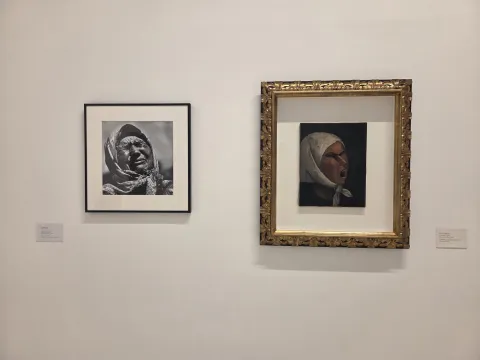
The United Nations General Assembly, through Resolution 78/282, adopted on 23 May 2024, declared 11 July as the International Day of Remembrance of the Srebrenica Genocide, emphasising the importance of remembrance and education as tools for raising awareness, combating the denial of this tragedy and preventing crimes of this nature from ever happening again. Around this date, the Museum of Contemporary Art Ars Aevi in Sarajevo is inviting museums around the world to take part in this commemoration by exhibiting the photograph “Mother of Srebrenica”, taken in 2001 by the artist Almin Zrno. It is an image of
great symbolic power, encapsulating silence, grief and dignity; a work that invites introspection and compassion, and bears witness to horrors that defy description, becoming a symbol of pain.
 

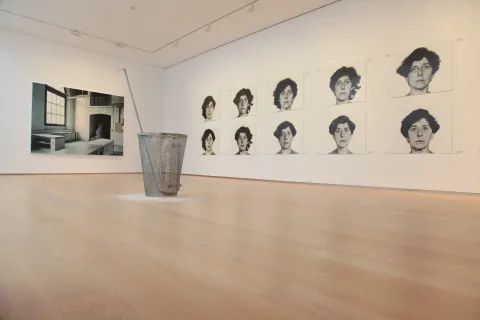
The display of this photograph alongside the oil painting “Montserrat criant n.º 2” by the artist Julio González, painted between 1936 and 1940, reveals a striking affinity between the two compositions. Through the figure of a Catalan peasant woman, whom he named Montserrat, Julio González depicts the suffering of the civilian population during the Spanish Civil War.
 

The two images share the same expressive power: almost the same woman, a universal mother, with a scarf tied beneath her chin; her mouth open or closed in a muffled cry; her eyes closed; her face furrowed by deep wrinkles that bear witness to extreme pain. The cry cannot be heard, but it is clearly sensed. Both works were conceived within the same context of war, several decades apart, granting art not only the potential for aesthetic enjoyment, but also the capacity to serve as a testimony and an act of resistance against oblivion.
 

Imagen
foto
Julio González

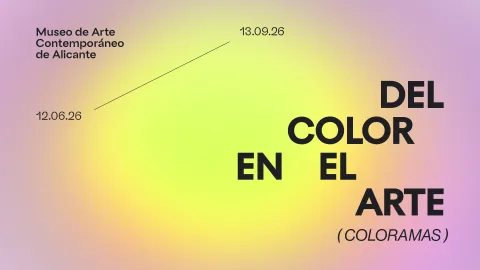
On Colour in Art (COLORAMAS)

Submitted by maca on
EXTENDED UNTIL JANUARY 10, 202January 10, 2027.

The exhibition has been extended until January 10, 2027.

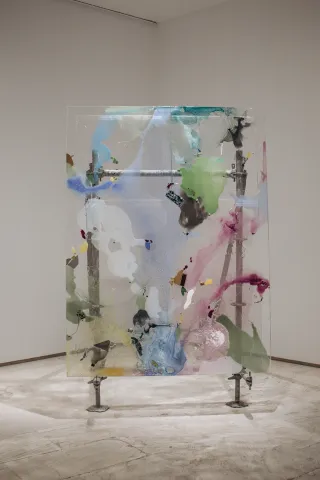
Colour does not exist, but the world is unimaginable without it. As a phenomenon —in every sense— it has existed in thought and in the arts from rock art to contemporary digital experiments. For many artists it has been at the centre of their practice, while for philosophers and scientists it has provided plenty of material for reflection and debate.

In art history, the importance of colour has often been discussed and challenged. It was the emergence of abstract art in the early 20th century that freed colour from the dictates of representation and the primacy of line. For the first time, colour could exist on its own in artwork, without being subjected to narrative models or other elements of graphic value: it ceased to be an adjective and it became a noun.

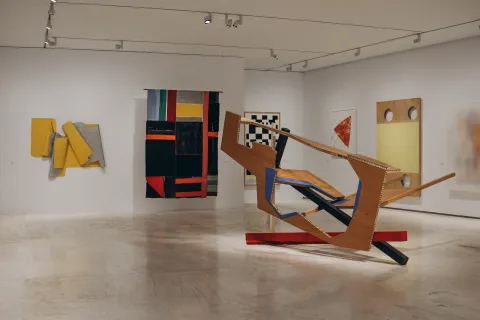
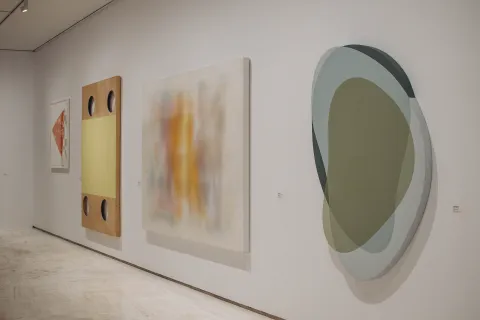
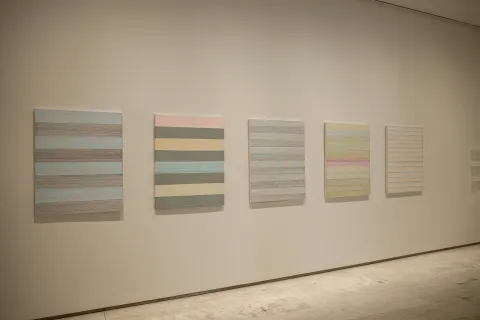
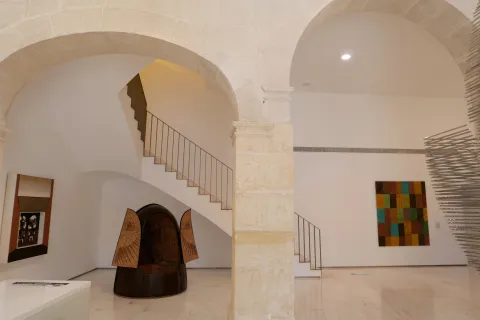
On Colour in Art (Coloramas) presents the work of a group of contemporary artists for whom colour is the essential principle of composition. All the artwork belongs to the collections of MACA. Museum of Contemporary Art of Alicante and they span 75 years, from the mid-1950s to 2025. The selection of artists, styles, techniques and materials conveys both the complexity of contemporary languages and the richness and variety of the museum’s collections.
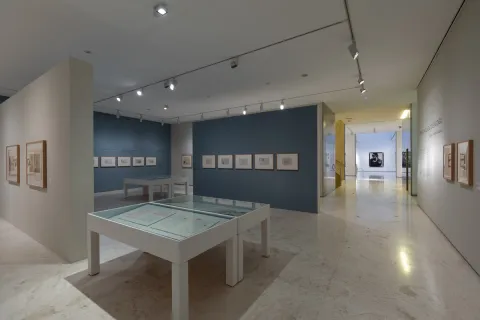
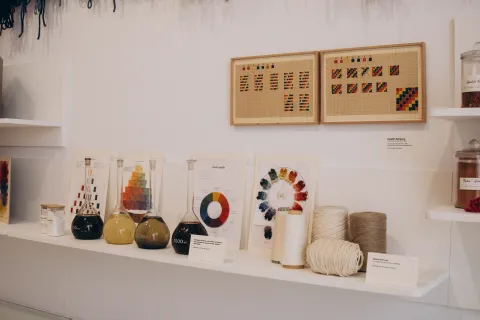
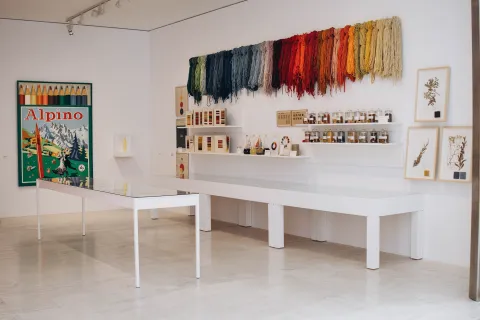
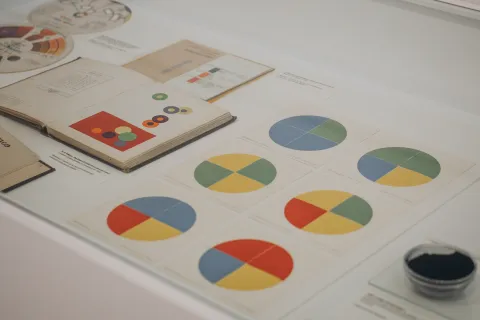
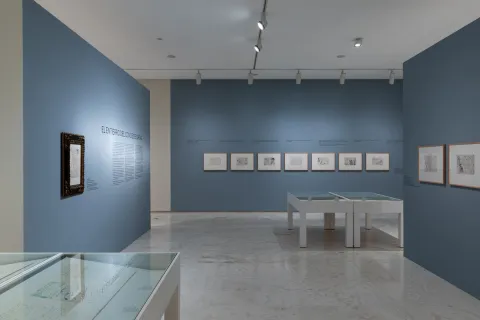
Together with the artwork, the exhibition has two distinctive spaces. In the first, before going into the gallery, there is a small cabinet of curiosities where visitors can discover the origins of colour through minerals, dye plants, pigments, natural dyes and their uses in textiles. These are accompanied by samples of synthetic and industrial pigments, evidence of inventions —such as the patent for colour in tubes—, and documents that point to the ideological, political and social impregnation of colour.

Behind the white gallery and visually separated from it, is Coloramas. An expansive experience in a space that recalls early dioramas, camera obscuras and zoetropes, where an audiovisual tale tells the fascinating story of colour and its progression, first gradual and later disruptive, towards autonomy. Coloramas unfolds through scenes that explore colour as a physical phenomenon, a perceptual construction and a symbolic language.

This exhibition has its origins in Lo tienes que ver. La autonomía del color en el arte abstracto [You Have to See It. The Autonomy of Colour in Abstract Art], held at the Fundación Juan March in Madrid in 2025 and it is the result of the collaboration and support between institutions.


Imagen
foto
Rosa María Castells, María Zozaya y Aníbal Santaella

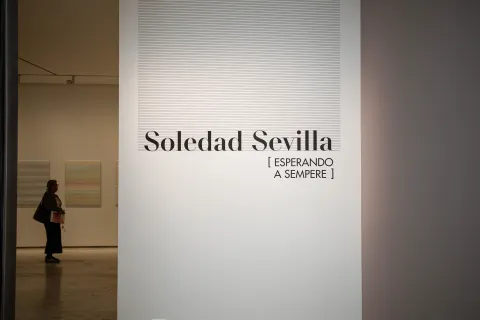
Soledad Sevilla [Waiting for Sempere]

Submitted by maca on

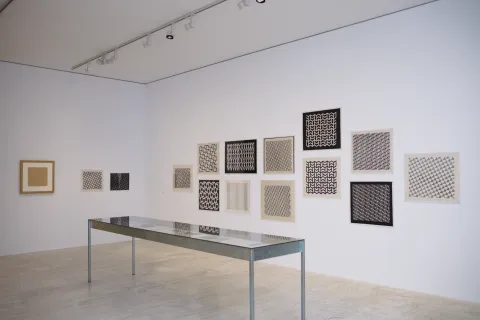
Soledad Sevilla [Waiting for Sempere] is a special exhibition in the artist's trajectory: a project that closes a vital and creative circle and that, at the same time, is essential for the MACA, a museum whose origins are intimately linked to the collection of Alicante artist Eusebio Sempere.
 

Sevilla and Sempere met in the 1960s. Between them arose a mutual admiration and "a deep and heartfelt friendship," while they coincided in some of the most relevant projects around geometric abstraction in the Spanish artistic context. A common interest in line, a rigorous practice of composition, and a drift toward the sensitive—toward a softer and more emotional geometry—connect the work of Sempere and Sevilla. This poetic affinity with the Alicante artist runs through Sevilla's entire career: from the beginnings to her most recent production, such as the series painted since the summer of 2022 conceived as inspiration and homage to her friend. Sevilla finds in light and line, like Sempere, a sensible emotion, a rigorous and deliberate stillness.
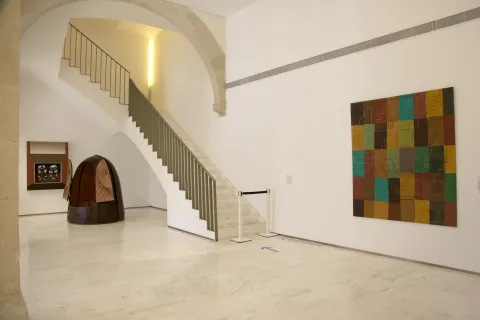
 

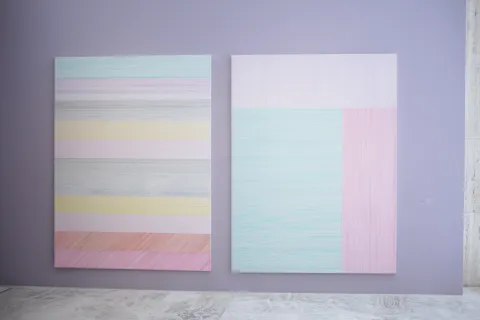
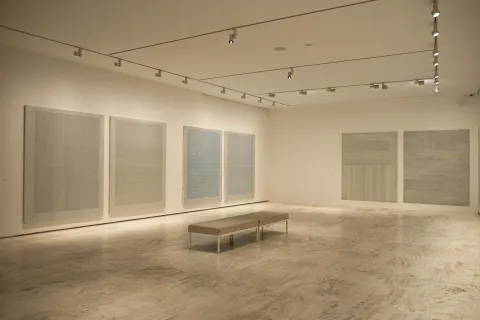
Starting from the pieces from the 1970s that we preserve in the museum's collections, the exhibition focuses its attention on the artist's most recent series. These are large-format paintings in which the vibration of the line, as filament or thread, generates surfaces that expand and continuously recompose themselves. These works envelop the viewer and invite them to experience the painting not only from sight, but also in a performative way, from the body that shares the space with it. Contemplation thus becomes a physical experience that unleashes intimate emotions. Sevilla manages to show the total space as a unity and, within it, deploy a wide range of registers and subtle variations. Geometry, far from being cold or distant, acquires here an intimate and introspective character.
 

A rigorous and disciplined artist, Sevilla works guided by intuition… As she herself states, her frameworks are "background for thought and art passes over it like a kind of reflection." Sempere himself describes it perfectly: "Why speak of painting if you are seeing it?"

EXPO-0084
Imagen
Sala
/sites/default/files/2026-03/Castellano_textos-sala-QR-1.pdf
Rosa María Castells
Obras pertenecientes a la Colección del MACA, a la Colección de Soledad Sevilla, del Museo Nacional Centro de Arte Reina Sofía, del Instituto Valenciano de Arte Moderno (IVAM) y de la Galería Maisterravalbuena.

Black [nocturnal] landscape

Submitted by brandcode_deweloper on
Joan Fontcuberta and Alberto García Alix in the Fundación Caja Mediterráneo Collection

It is not that fiction and reality are opposing terms, but rather that fiction is a mode, an instrument for articulating a certain model of the real, reflects Joan Fontcuberta.

Fiction that Fontcuberta proposes confronted with the reality that García Alix constructs. Memory and ambiguity that are present in the work of these two artists so disparate, so opposed in their way of understanding photography that they seem to reach the same levels of truthfulness and falsehood. A documentary value that is granted to the images that make up this small collection emerged from the night.
Black and white photography is a classical technique but so difficult that it is only discovered through great photographers. It is no wonder they were awarded the National Photography Prize in 1998 and 1999.

EXPO-0088
Imagen
Sin-titulo-4.jpg
/sites/default/files/inline-images/resources/exposiciones/EXPO-0088/hoja-negro-nocturno.pdf

Building stories

Submitted by brandcode_deweloper on
Coca Cola Foundation Collection

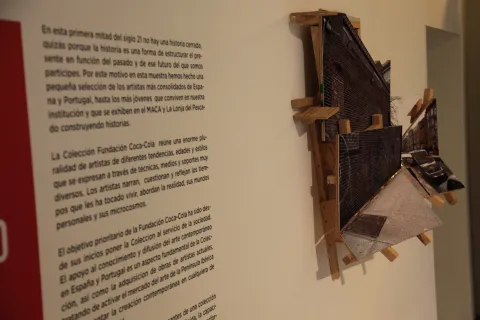
In this first half of the 21st century there is no closed history, perhaps because history is a way of structuring the present based on the past and that future of which we are participants. For this reason, in this exhibition we have made a small selection of the most established artists from Spain and Portugal, to the youngest who coexist in our institution and who are exhibited in this exhibition.

The Coca-Cola Foundation Collection brings together an enormous plurality of artists of different tendencies, ages and styles who express themselves through very diverse techniques, media and technological supports. The artists narrate, question and reflect the times they have lived through, they address reality, their personal worlds and their microcosms. This Collection is an example of the diversity of creation in Spain and Portugal and was established from its beginnings as an open project that proposed a constant dialogue with the art of our time and assumed through its acquisitions the continuous expansion of contemporary creation. 

In this exhibition we wanted to offer a variety of languages that coexist in this Collection and is only surpassed by the quality and projection of the artists that make it up and who are accomplices in our way of understanding art. Through their works they generate an enriching dialogue with the viewer and invite us to reflect. It is the challenge of a creative restlessness that opens new possibilities for us when it comes to drawing a portrait of the future, and therein lies its complicity, in those stories that they are capable of building. 

EXPO-0086
Imagen
AAFF_Lona_lonja_-122x244_OK-001.jpg
/sites/default/files/inline-images/resources/exposiciones/EXPO-0086/recorrido-cocacola.pdf
Lorena Corral

1977. Portrait of a Character and an Era. Eusebio Sempere photographed by Luis Pérez Mínguez

Submitted by brandcode_deweloper on

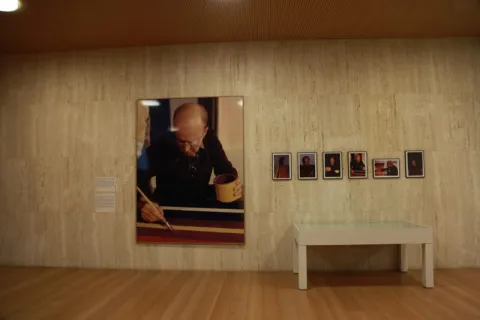
Luis Pérez Mínguez, photographer and friend of Eusebio Sempere who captured an era and with whom the museum has maintained a close relationship. As a result of this are these photographs of Sempere in the Trazos program in 1977, which reached us in a very personal envelope from Luis Pérez Mínguez.

Spanish Television began broadcasting in April 1977 the program Trazos where Paloma Chamorro served as deputy director with Ramón G. Redondo, to later take over the direction of it, until June 1978 when the program's broadcast ended. It was a program of artistic current events. Trazos began broadcasting in black and white because its directors considered that this way the color of the paintings would not be distorted. However, by mandate of the state and public network's management, the program began to be broadcast in color starting in November 1977, which required the creation of a set design. For this, and very ingeniously, Paloma Chamorro invited eleven painters, each of whom created a panel of approximately 250 x 180 centimeters. José Manuel Broto, Gerardo Delgado, Carlos Franco, Luis Gordillo, José Guerrero, Guillermo Pérez Villalta, Manolo Quejido, Gerardo Rueda, Eusebio Sempere, Gonzalo Tena and Jorge Teixidor painted live under the watchful camera of the photographer of an entire era.

EXPO-0085
Imagen
IMG_0168.jpg
Eusebio Sempere y Luis Pérez Mínguez.
Rosa Castells

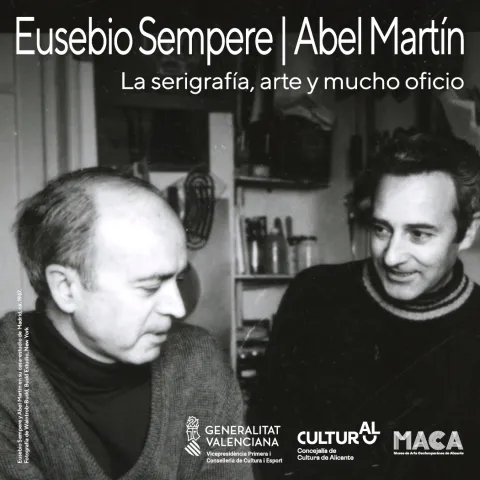
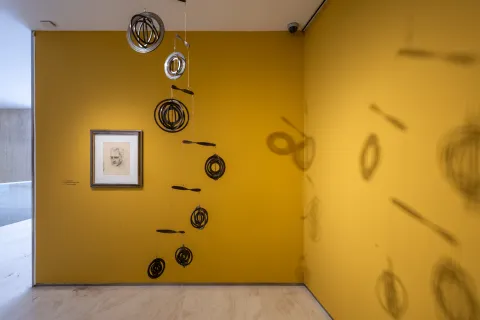
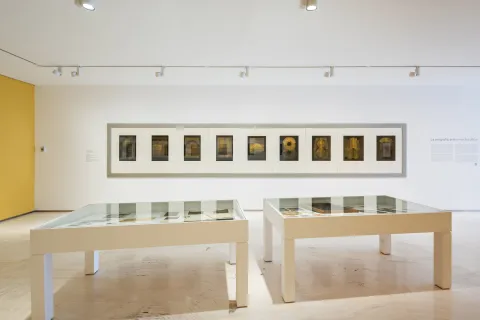
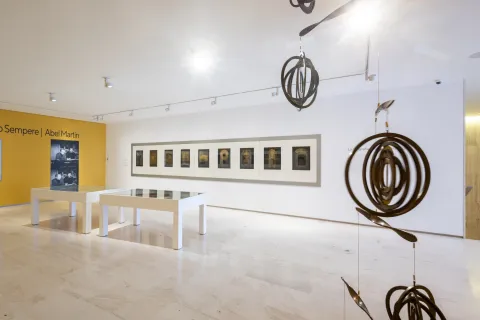
Eusebio Sempere and Abel Martín. Silkscreen Printing: Art and Much Craft

Submitted by brandcode_deweloper on
Sempere Collection of the MACA

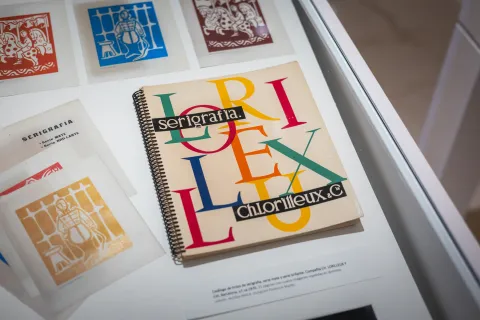
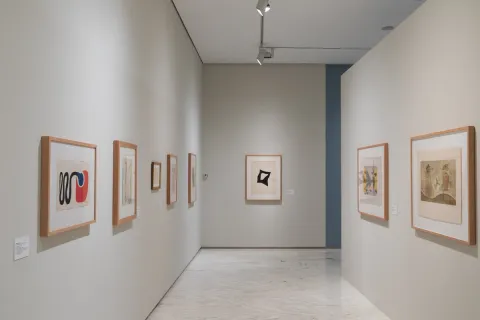
Eusebio Sempere (Onil, Alicante, 1923-1985) and his partner Abel Martín (Mosqueruela, Teruel, 1931-Madrid, 1993) learned the silkscreen printing technique in Paris, in the workshop of Cuban artist Wifredo Arcay. Upon their return in 1960, now in Madrid, both set up a workshop to print the first artistic silkscreens in Spain. A complex book by Lucio Muñoz with textured sand attracted, due to its perfection, commissions from other artists. From the mid-60s onwards, it was Abel who took charge of the entire technical process and became an expert silkscreen printer, a key figure in the reproduction and dissemination of contemporary art. 
 

The deep conviction that graphic work deserved the status of an original work, which brought contemporary art within reach of a large majority of the public, turning it into a mass phenomenon, and the respect and enthusiasm that both professionals profess for graphic work, has an impact on their own artistic production. Sempere creates two hundred silkscreens, all printed by Abel Martín, grouped in series, published in portfolios or individually, and some of them accompanied by literary texts, a display of technique and craftsmanship. 

EXPO-0063
Imagen
MACA - Museo de Arte Contemporáneo de Alicante
/sites/default/files/2026-02/TEXTO-EXPO-SEMPERE-Y-ABEL-MARTIN_LECTURA-FACIL.pdf
Eusebio Sempere y Abel Martín
Rosa María Castells

Pablo Picasso. I say nothing more than what I do not say

Submitted by brandcode_deweloper on
Pablo Picasso and a Century of Artists

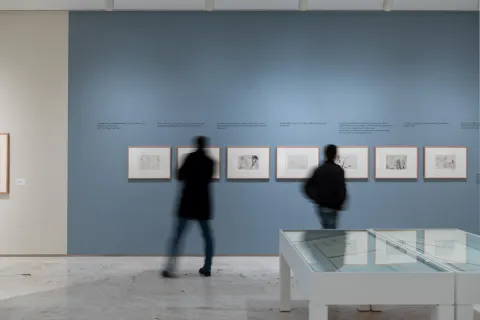
Pablo Picasso spans almost a century of art and alongside him, an essential series of artists radically transform the history of art while blurring the boundaries between figuration and abstraction. Many of them are represented here.

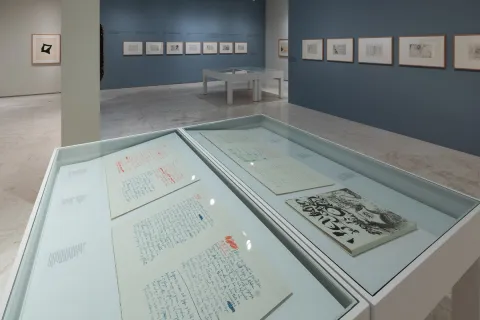
The 20th Century Art Collection holds among its holdings a large number of works on paper including drawings, engravings, lithographs and silkscreens that complete an extensive roster of essential artists, traversing the most suggestive territories of the artistic framework of the past century. 
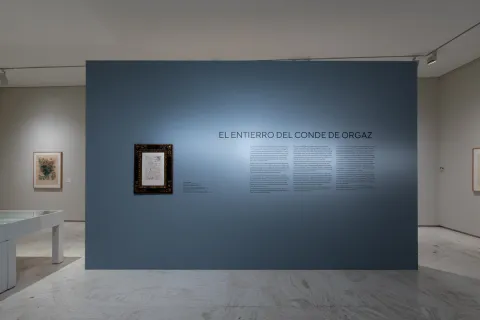
And it is so because Eusebio Sempere and his companion Abel Martín, after experimenting in Paris with various printing techniques, introduced artistic silkscreen printing to Spain, creating beautiful prints of their own works and those of their artist friends. And they are deeply convinced that graphic work deserves the status of "original" and that it places contemporary art within reach of a majority of the public, democratizing it.

With that aesthetic and political conviction, Sempere always admired the figure of Pablo Picasso. He acquired Picasso's engraving belonging to the Vollard Suite, Fernando Zóbel gave him the Portrait of Rimbaud as a gift, and he bought The Burial of the Count of Orgaz, works that are shown here. In the same way that he participated in the Homage to Picasso that took place during the celebration of the artist's 90th birthday in November 1971, suffering as a result detention, imprisonment and a substantial economic fine. 

EXPO-0089
Imagen
042A9824bis.jpg
/sites/default/files/inline-images/resources/exposiciones/EXPO-0089/Folleto-Picasso-un-siglo-de-artistas-AF-para-imprenta-3.pdf
Rosa Castells

Contemporary Art of the Valencian Generalitat

Submitted by brandcode_deweloper on
Amparo Tormo, Teresa Lanceta and Paloma Navares

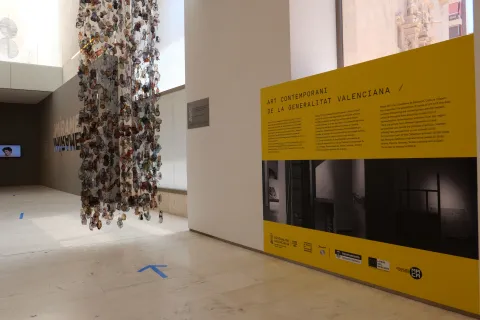
Since 2017, the Department of Education, Culture and Sport has maintained a line of acquisition of artworks with the dual purpose of stimulating the contemporary art market, while also gathering a collection of works representative of the current artistic scene in our Community. Different generations and sensibilities that approach the artistic creation process, offering new perspectives on our closest world.

A selection of three pieces by three artists: Paloma Navares, Teresa Lanceta and Amparo Tormo can be enjoyed at the MACA.

EXPO-0090
Imagen
P1058486.jpg
/sites/default/files/inline-images/resources/exposiciones/EXPO-0090/CATALOGO-PRIMERS-MOMENTS.pdf
Paloma Navares
Rosa Castells