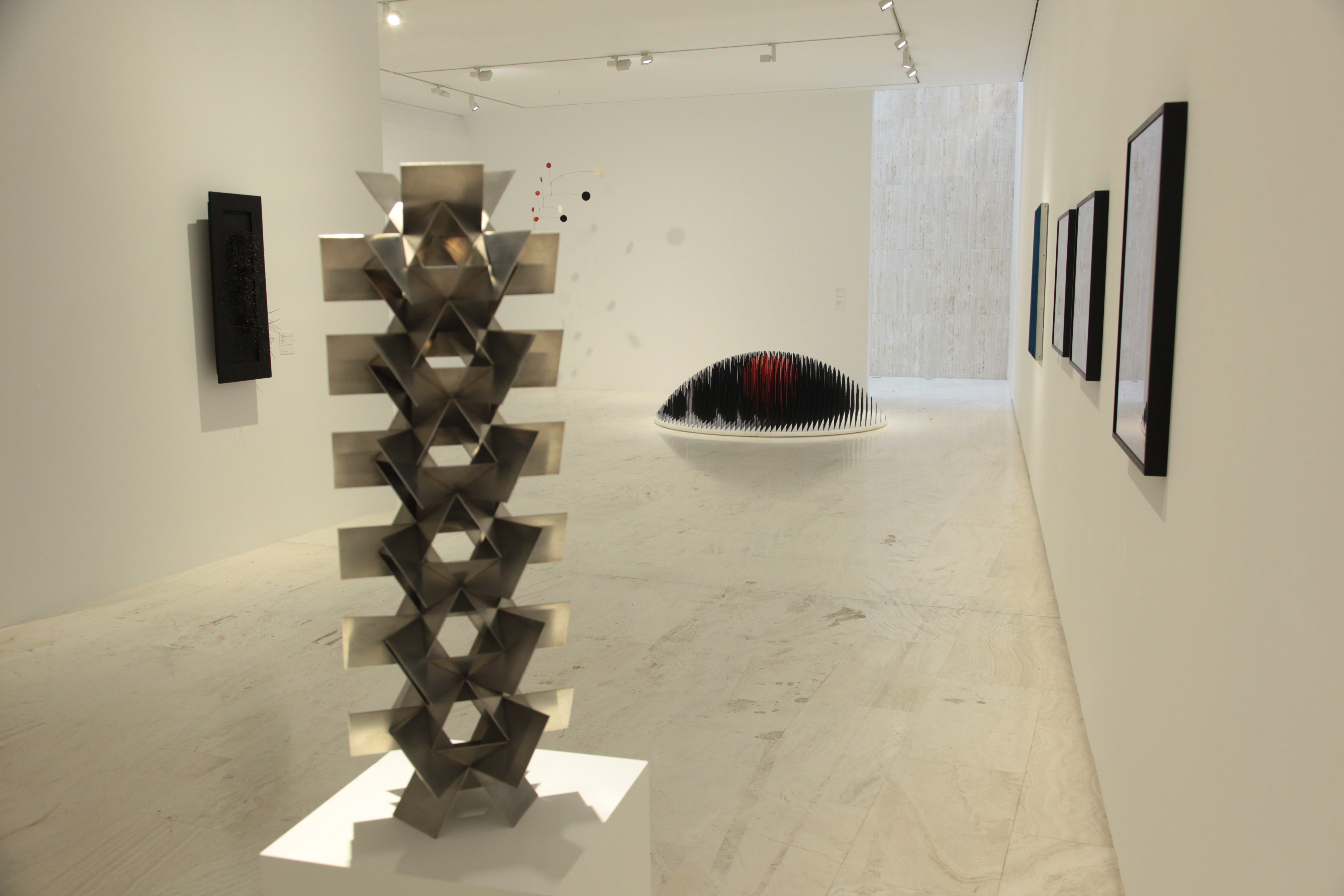
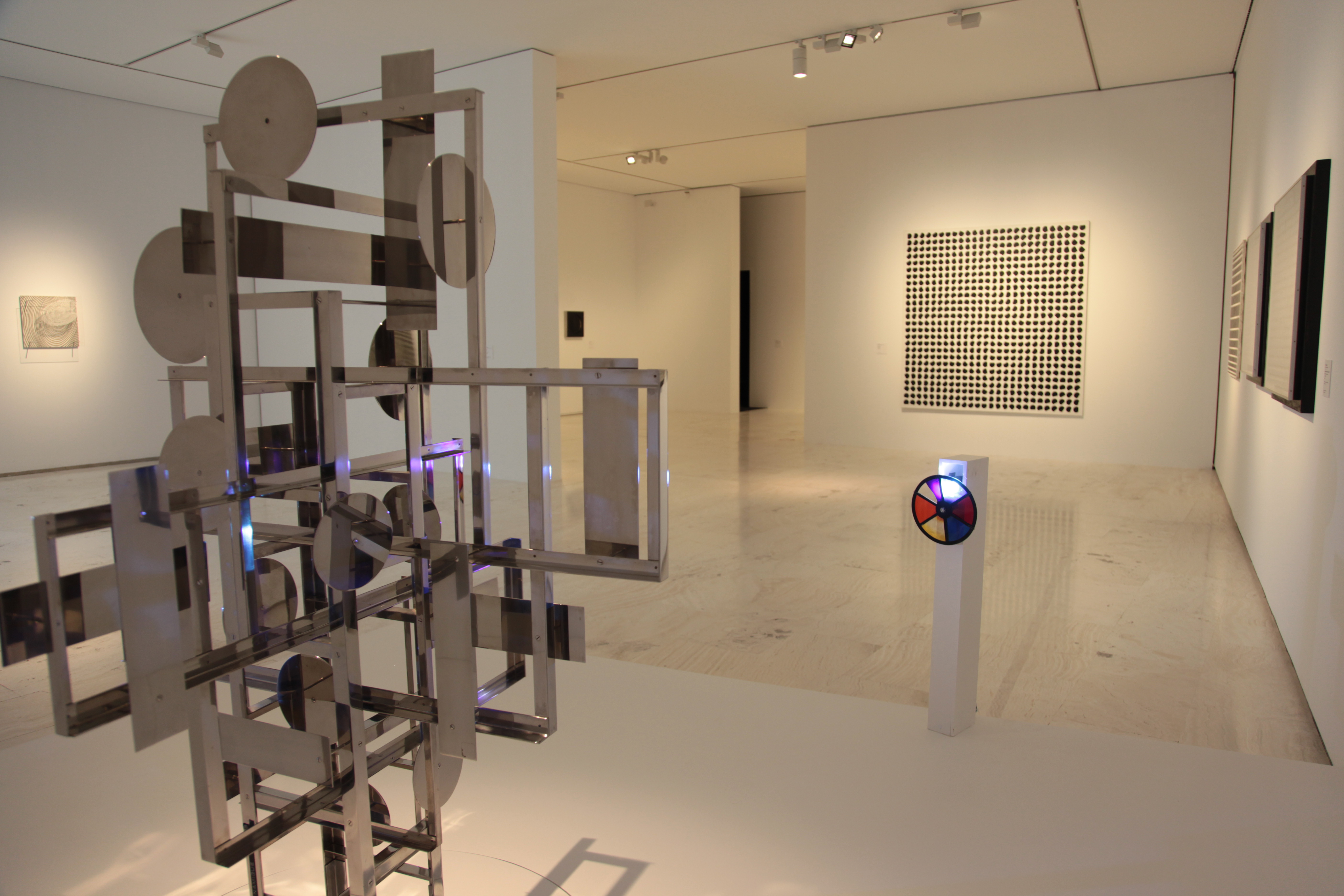
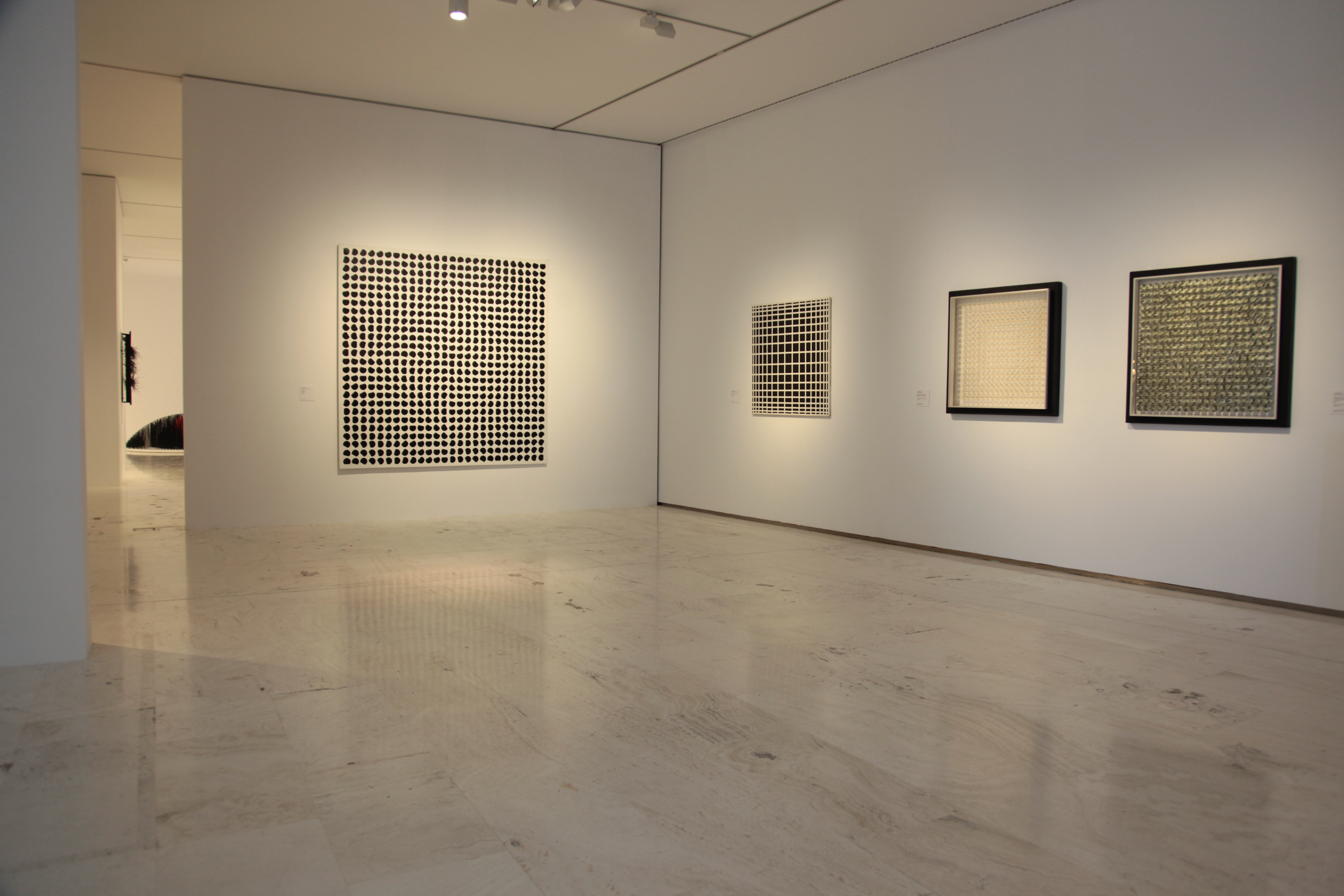
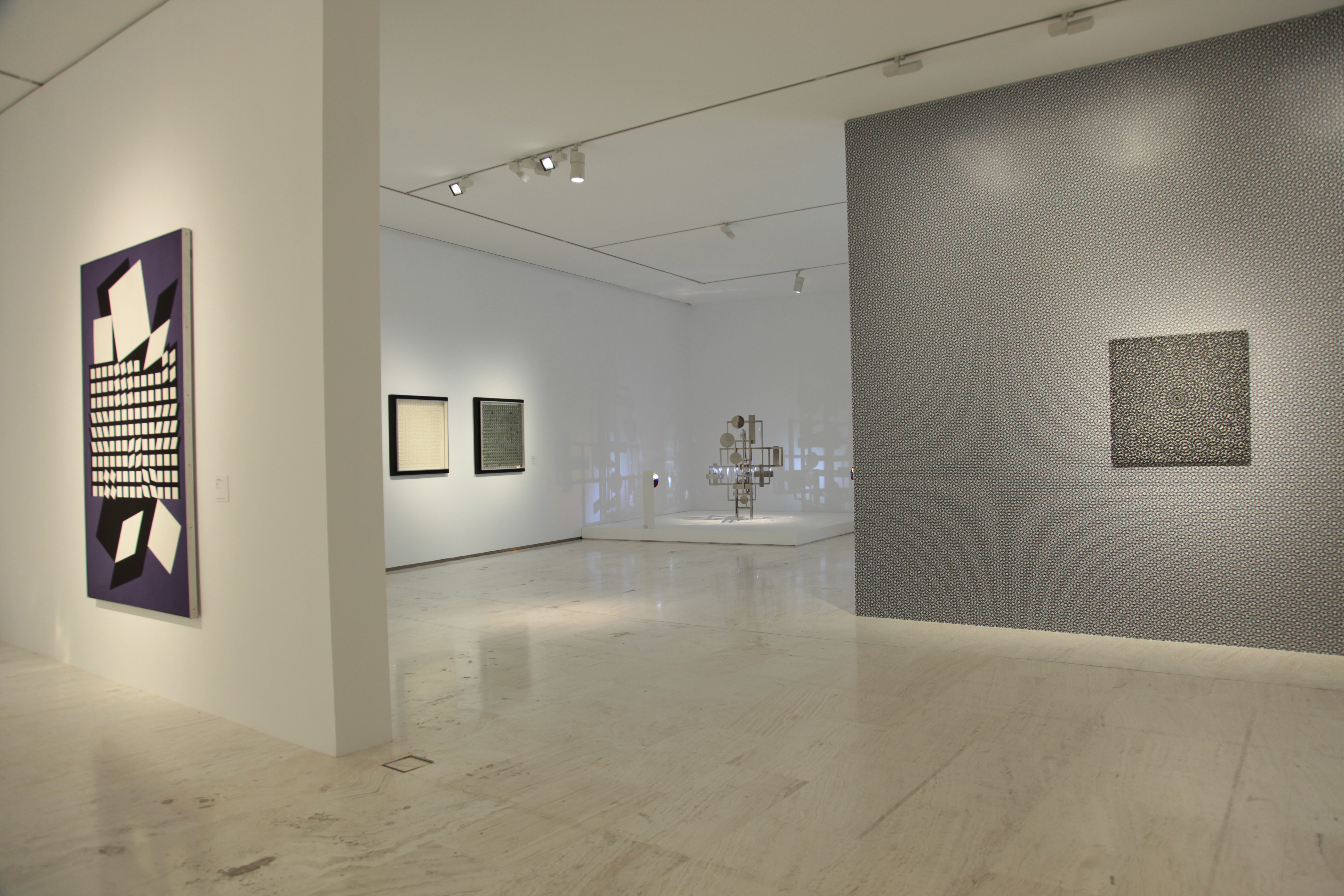
The question of movement, light and their representation runs through the history of art. From the 1950s onwards, following in the footsteps of pioneers such as Naum Gabo, Antoine Pevsner and László Moholy-Nagy, Marcel Duchamp and Alexander Calder, artists began to integrate these forces into their creations, shaping a new vision of reality in which nothing is fixed and definitive but rather unstable and indeterminate, in constant movement: the works live in the present, change, are never exhausted. Kinetic movement develops in Europe as an international constellation formed by a new generation of artists who want to radically transform art by opposing the myth of the work, a unique, defined and totemic object destined for an elite, personal expression of the artist, creative genius secluded in their ivory tower. These new breed of artists want to modernize the artistic object, open it to reality by integrating new materials and industrial techniques; from a social perspective, to produce art for a wider audience, participatory art, to propose an active role for both the artist and the spectator.
Movement embodies the new mutual relationship, physical and emotional, that is established between spectator and work, it is a mouvement émouvant [moving movement], as Vasarely describes it in 1955: the works are living bodies that are reflected in the moving body of the spectator and enter into relationship with him, involving him in an exercise of conscious freedom.
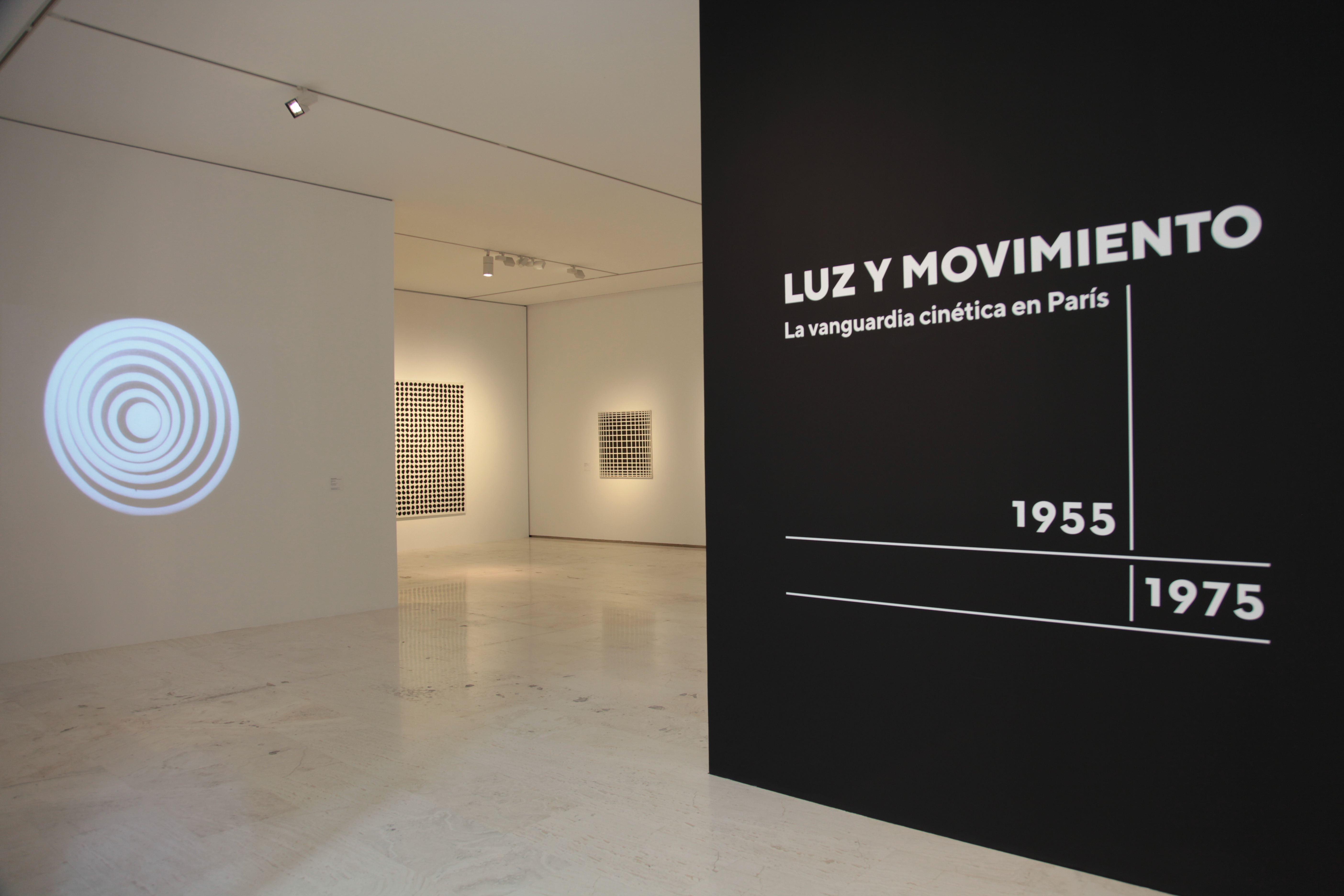
Light and Movement opens a perspective on the rich vitality of this international tendency in the active Parisian context, whose influence will also nourish Spanish artistic debate, focusing on the period of its fascinating creative development and maximum recognition between 1955, the year of the historic exhibition Le Mouvement at the Denise René gallery in Paris, and 1975. The works of the protagonists of this avant-garde, coming from private collections, galleries and Parisian institutions, will resonate and be enriched in dialogue with the exceptional collection of kinetic works at the MACA, a donation by Eusebio Sempere.
Takis (Panagiotis Vassilakis), Marina Apolonio, Pol Bury, Alexander Calder, Carlos Cruz-Diez, Ángel Duarte, Marcel Duchamp, Julio Le Parc, François Morellet, Jordi Pericot, Nicolas Schöffer, Francisco Sobrino, Jesús Rafael Soto, Víctor Vasarely, Eusebio Sempere, François Morellet, Horacio García, Joël Stein, Robert Breer y Brian de Palma.
Curated by:
Jordi Ballart, Marianna Gelussi
Produced by:
Consortium of Museums of the Valencian Government, Alicante City Council
Organized by:
MACA – Museum of Contemporary Art of Alicante
More information:
En colaboración con Fundación Catalunya La Pedrera
Photo gallery
Related activity
Workshop exhibition. Light and movement. The kinetic avant-garde in Paris, 1950-1975
Primary Education
...
,
14.02.2019
-
26.05.2019
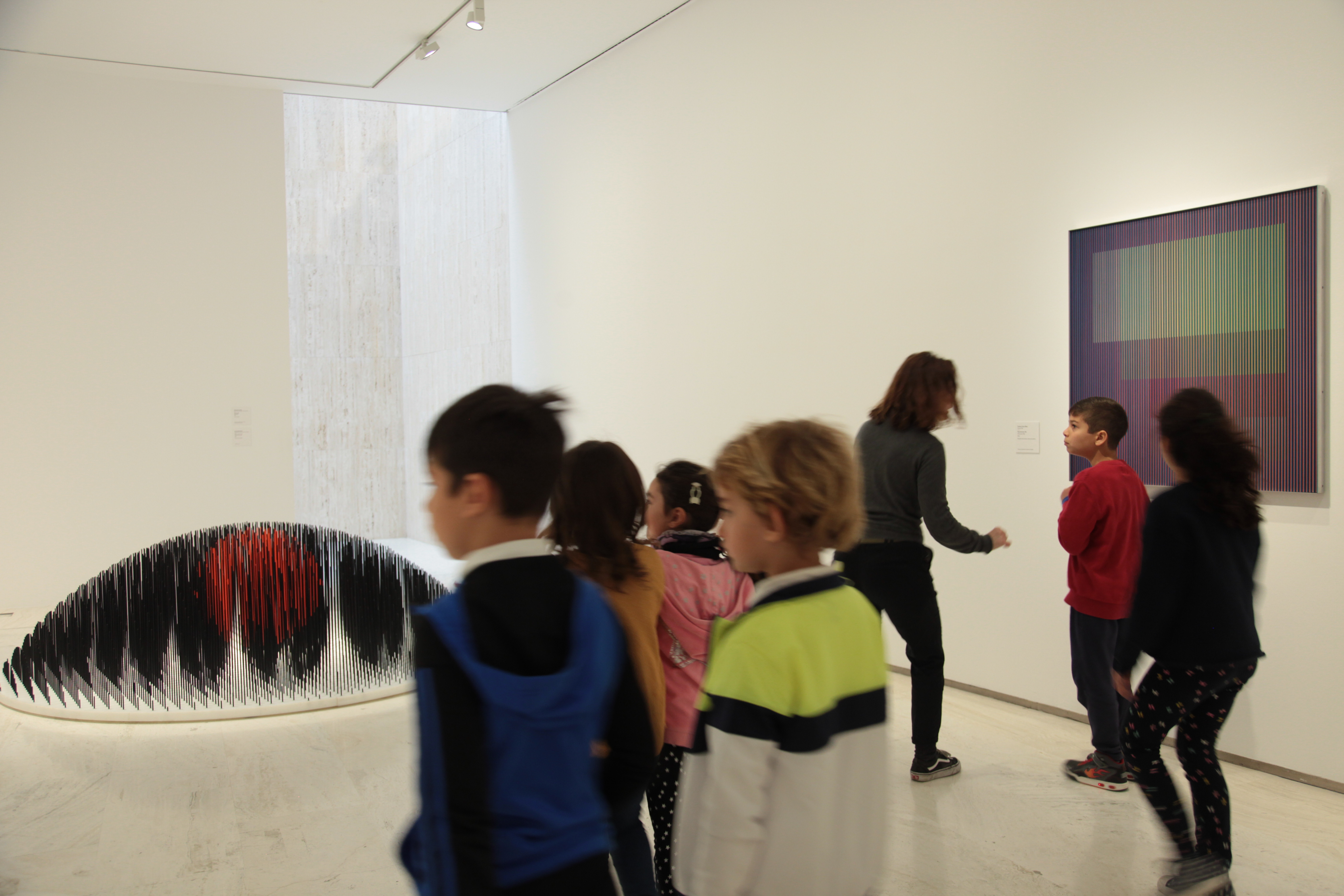
It is an exhibition in which a series of works are presented that speak of movement, light and space through basic plastic elements such as geometry. These are open works that require the intervention and interpretation of the viewer to complete them, so the exchange of information between the mediators and participants is fundamental. In this way, dialogue is enhanced around a series of ideas and we can verify that, behind every plastic expression, there are particular, emotional or reflective interests.The visits seek to create a dialogue based on the observation of the works and reflection. Throughout this dialogue, the educator raises the different themes that revolve around the works with the aim of discerning all those aspects, both conceptual and formal, that help us understand them. Thus, through the analysis of each part, we will be able to understand the whole.We also aim to create a visual and also corporeal experience in a playful way. The viewer acts as a factor of change for the works. The idea is for the visitor to co-act with the work and the artist in the same space. We try to help illustrate or consolidate the ideas that are emerging or connect the work with our experience using reinforcement materials (images, objects, etc).In collaboration with the Explicarte Association.