Out of Series. Ibero-Swiss Silkscreens in the UPV Collection
The exhibition titled Out of Series. Serigraphs from Ibero-Suiza in the UPV Collection, produced by the Universitat Politècnica de València, the Consortium of Museums of the Generalitat Valenciana and the City Council of Alicante and curated by Antonio Alcaraz opens on January 21, 2014.
Serigraphs from Ibero-Suiza
The Ibero-Suiza serigraph workshop was founded in Valencia in 1963, and with the incorporation of José Llopis Dasí, the workshop specialized in the production of graphic work. They relocated to work in their Liria workshops, becoming in the seventies one of the most complete serigraphic workshops dedicated to artistic printing in Spain.
In 1964 they came into contact with Toledo, Valdés and Solbes (Equipo Crónica) establishing a fluid relationship. Both Equipo Crónica, and later Equipo Realidad, installed their studios at some point in the same space occupied by Ibero-Suiza. This relationship of closeness and friendship, combined with political affinity with the artists, meant that collaborations were continuous.
In 1972 the "Compositions" portfolio by Equipo Crónica was created, published by Gustavo Gili for La Cometa editions. This series was the most important they had produced up to that date and from that moment on the demand for artistic serigraphs increased until it constituted 80% of the company's production, whose workshops moved to Liria in 1973 while maintaining a commercial office in Valencia. That same year Paco López joined the company, directing it together with Ignacio Llopis, from the death of José Llopis in 1982, until its closure in 1998.
The extensive list of authors served by Ibero-Suiza is surprising. Fundamental names in the history of Spanish art in the second half of the twentieth century, from Renau and Tàpies, to Saura and Equipo Crónica, passing through Chillida, Arroyo, Torner, Zóbel, Sempere, Yturralde, Teixidor and Equipo Realidad, all passed through these workshops that exercised such importance in the consolidation and dissemination of an art linked to the abstract proposals of the time and to the most politically committed positions existing in that era.
The recent acquisition by the Universitat Politècnica de València of a large number of prints composed of workshop and artist proofs, as well as works that completed the commercial edition, constitutes the axis of this exhibition. It includes a significant part of the collection that, from now on, completes the graphic work holdings that our University has been accumulating since the creation several decades ago of the Fons d´Art, a notable heritage collection that, through works such as those now being exhibited, is enriching its value and importance.
Exhibition
From the late 1960s until the 1990s, the main Spanish artists worked with Ibero-Suiza. Eusebio Sempere was the first of them to discover this technique. The artists, with a clear anti-Franco commitment, used serigraph as a means to disseminate both their ideological concerns and their art.
For decades, the family of José Llopis has preserved part of the printed material, from prints dedicated to numbered and signed proofs, posters, workshop proofs, color proofs and incomplete prints that were left out of the edition. Material that today allows us to understand the creative process of the artists and the workshop technicians and that is of great interest to specialists and researchers in the field of contemporary graphic work.
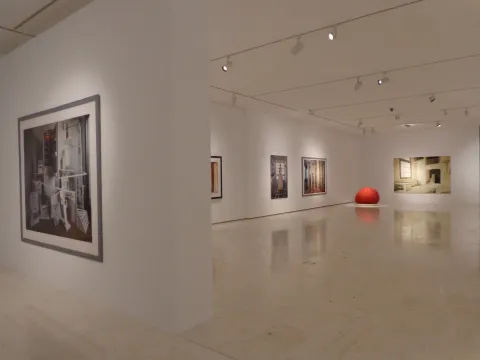
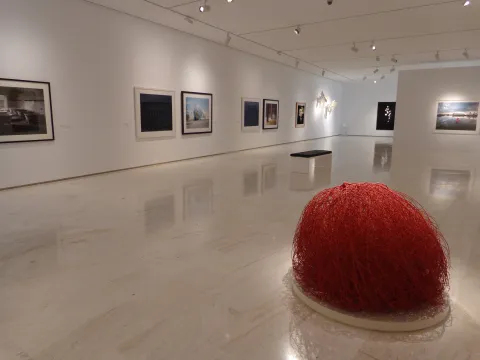
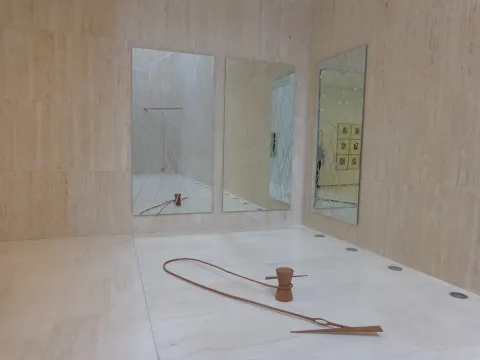
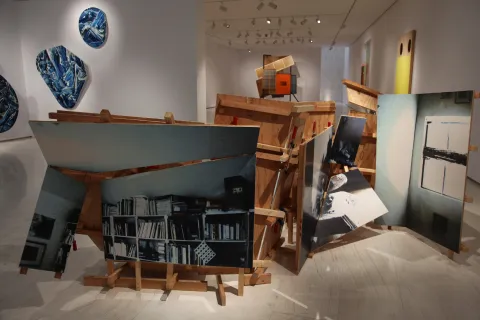
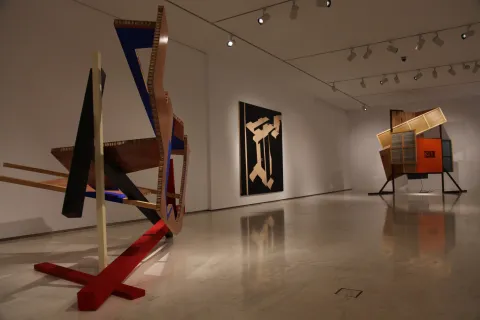
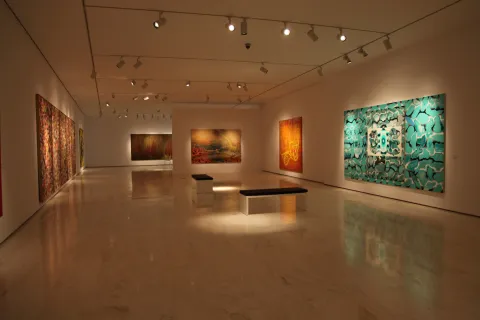
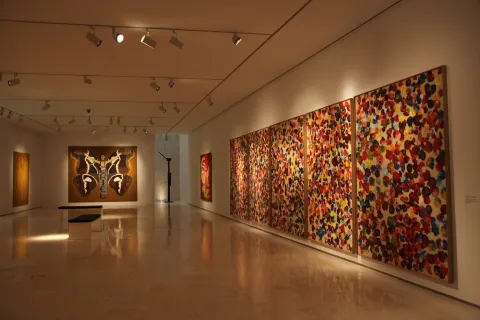
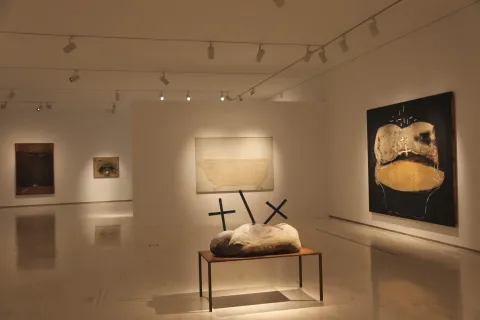
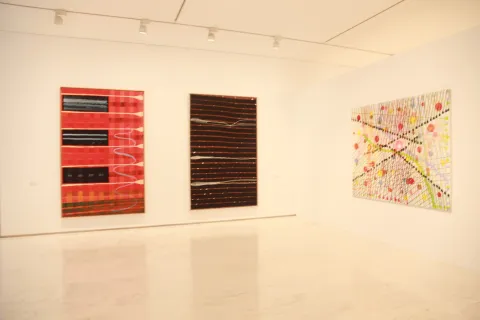
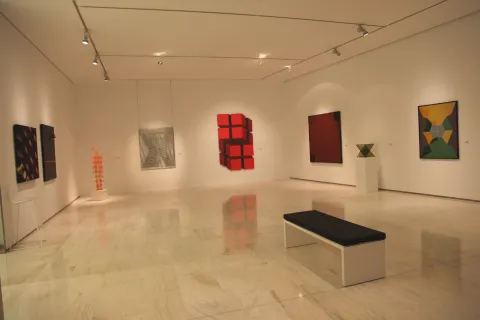
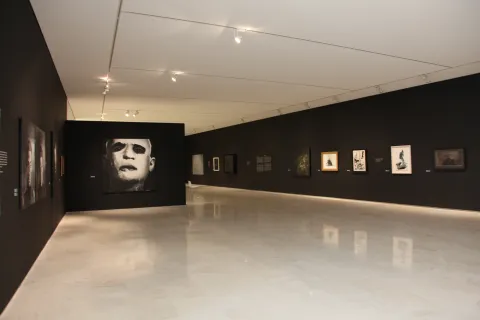
The exhibition, which can be visited until March 2 in the temporary exhibition room, is composed of 46 pieces, two of them from the MACA. 44 serigraphs and 1 original work. In addition to documentary material, letters, drawings, screens, photographs....and a selection of posters also printed in serigraph.
Serigraphs from Ibero-Suiza
The Ibero-Suiza serigraph workshop was founded in Valencia in 1963, and with the incorporation of José Llopis Dasí, the workshop specialized in the production of graphic work. They relocated to work in their Liria workshops, becoming in the seventies one of the most complete serigraphic workshops dedicated to artistic printing in Spain.
In 1964 they came into contact with Toledo, Valdés and Solbes (Equipo Crónica) establishing a fluid relationship. Both Equipo Crónica, and later Equipo Realidad, installed their studios at some point in the same space occupied by Ibero-Suiza. This relationship of closeness and friendship, combined with political affinity with the artists, meant that collaborations were continuous.
In 1972 the "Compositions" portfolio by Equipo Crónica was created, published by Gustavo Gili for La Cometa editions. This series was the most important they had produced up to that date and from that moment on the demand for artistic serigraphs increased until it constituted 80% of the company's production, whose workshops moved to Liria in 1973 while maintaining a commercial office in Valencia. That same year Paco López joined the company, directing it together with Ignacio Llopis, from the death of José Llopis in 1982, until its closure in 1998.
The extensive list of authors served by Ibero-Suiza is surprising. Fundamental names in the history of Spanish art in the second half of the twentieth century, from Renau and Tàpies, to Saura and Equipo Crónica, passing through Chillida, Arroyo, Torner, Zóbel, Sempere, Yturralde, Teixidor and Equipo Realidad, all passed through these workshops that exercised such importance in the consolidation and dissemination of an art linked to the abstract proposals of the time and to the most politically committed positions existing in that era.
The recent acquisition by the Universitat Politècnica de València of a large number of prints composed of workshop and artist proofs, as well as works that completed the commercial edition, constitutes the axis of this exhibition. It includes a significant part of the collection that, from now on, completes the graphic work holdings that our University has been accumulating since the creation several decades ago of the Fons d´Art, a notable heritage collection that, through works such as those now being exhibited, is enriching its value and importance.
Exhibition
From the late 1960s until the 1990s, the main Spanish artists worked with Ibero-Suiza. Eusebio Sempere was the first of them to discover this technique. The artists, with a clear anti-Franco commitment, used serigraph as a means to disseminate both their ideological concerns and their art.
For decades, the family of José Llopis has preserved part of the printed material, from prints dedicated to numbered and signed proofs, posters, workshop proofs, color proofs and incomplete prints that were left out of the edition. Material that today allows us to understand the creative process of the artists and the workshop technicians and that is of great interest to specialists and researchers in the field of contemporary graphic work.
The exhibition, which can be visited until March 2 in the temporary exhibition room, is composed of 46 pieces, two of them from the MACA. 44 serigraphs and 1 original work. In addition to documentary material, letters, drawings, screens, photographs....and a selection of posters also printed in serigraph.
NP-0012
Imagen

maca.comunicacion@alicante.es