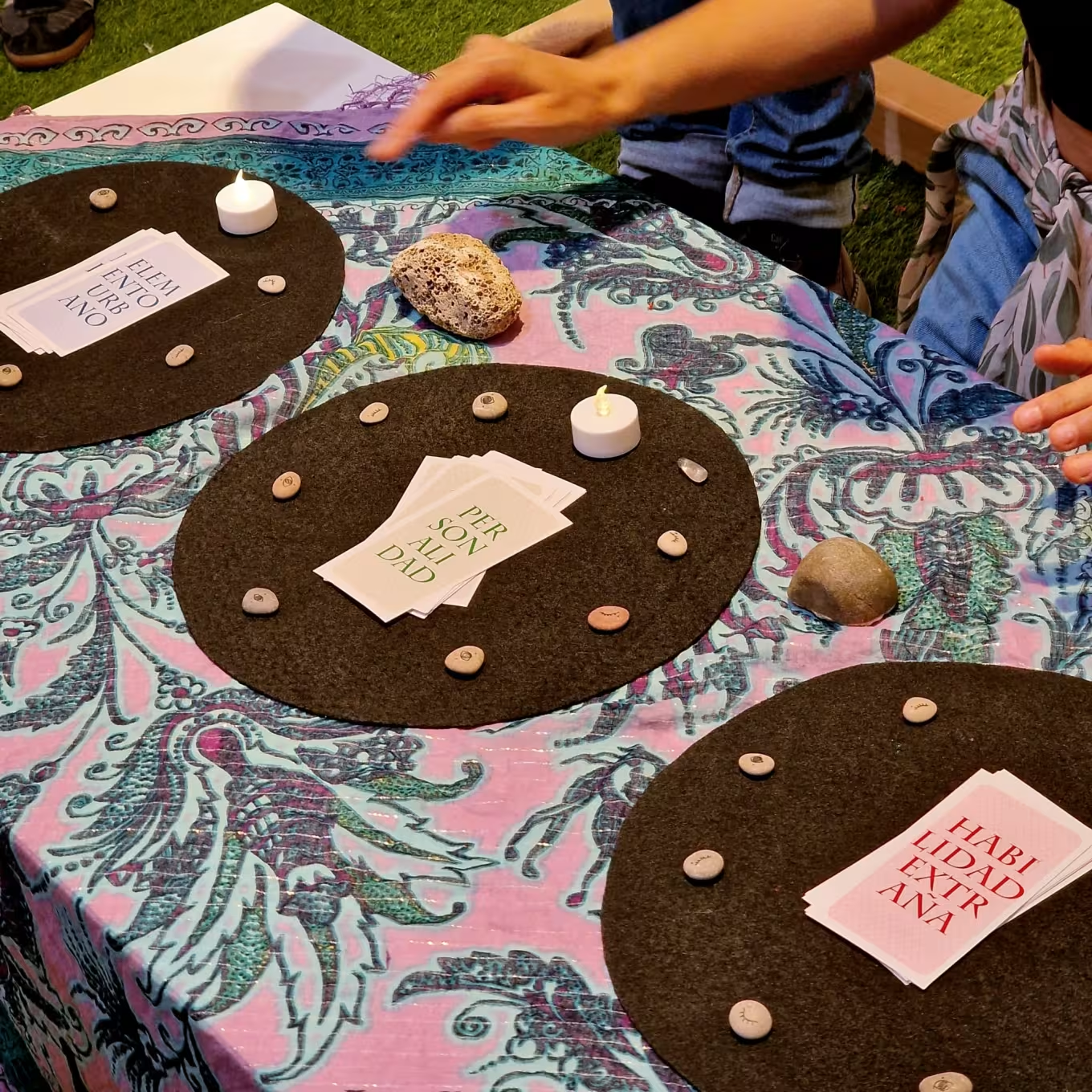
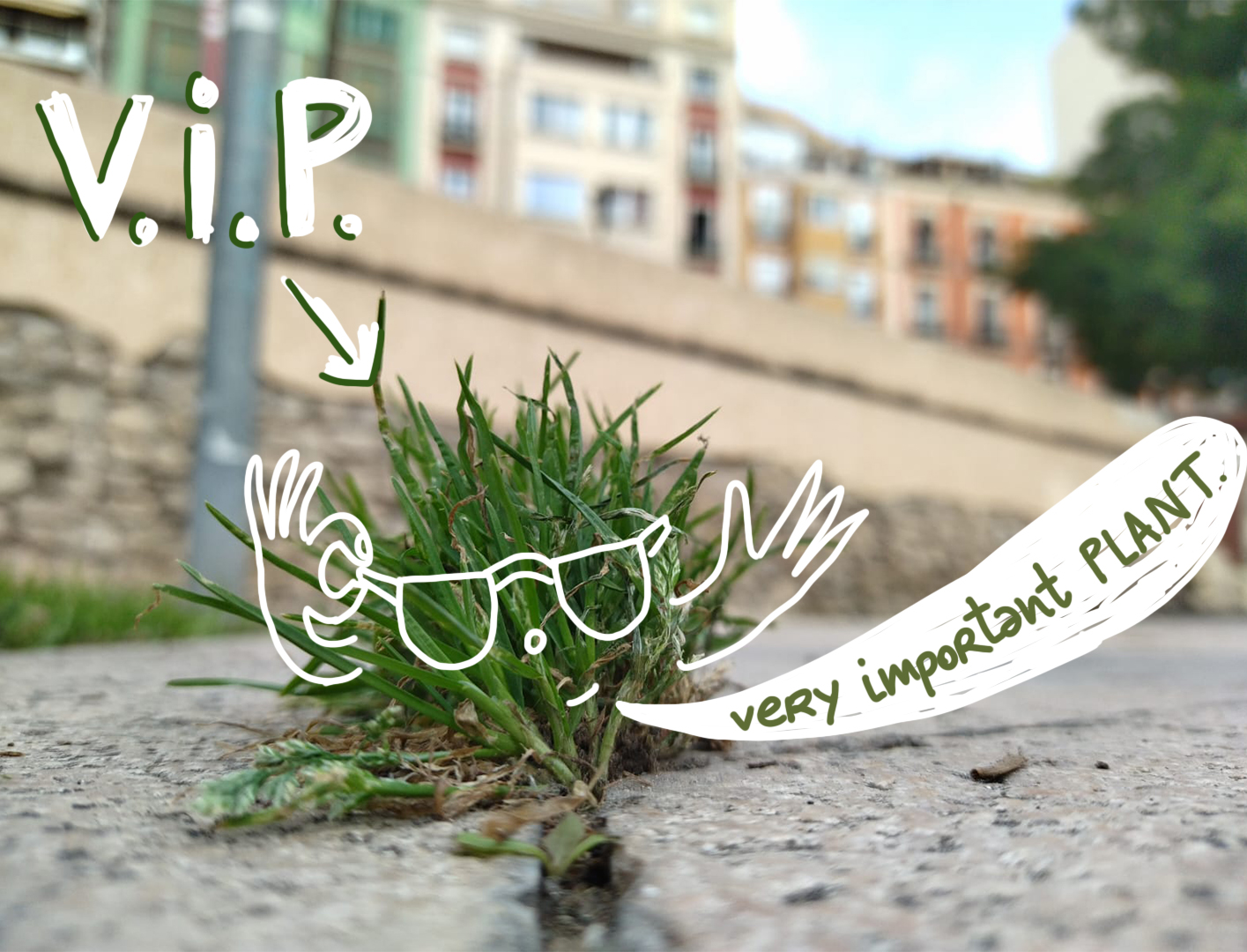
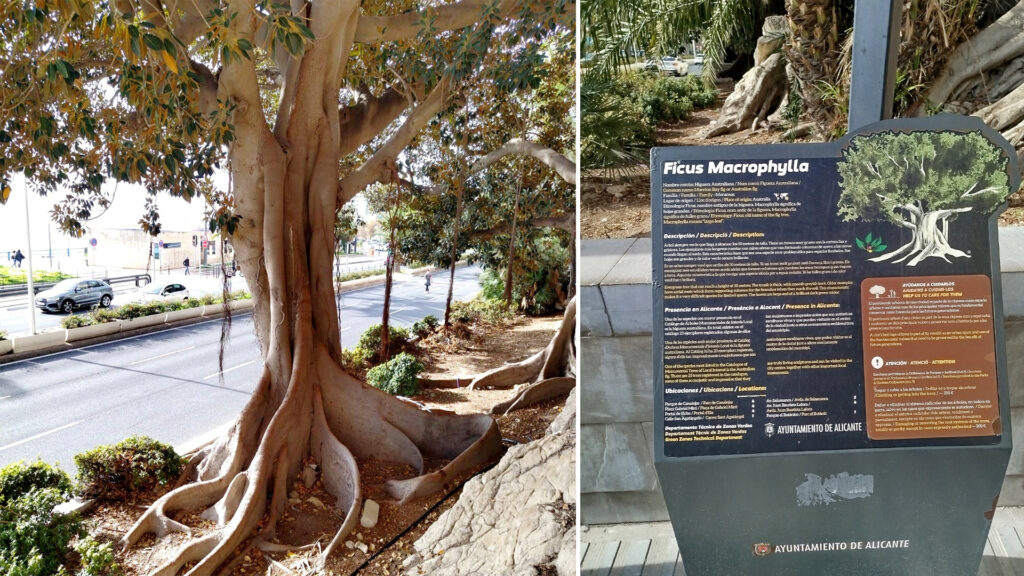
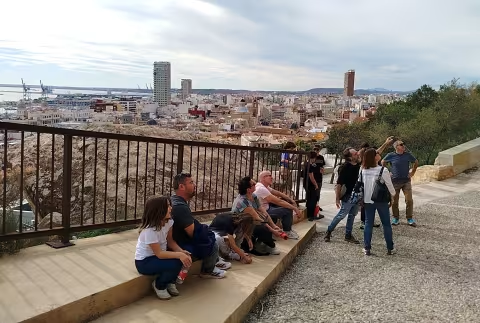
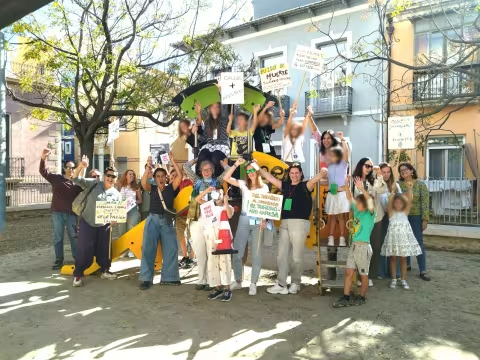
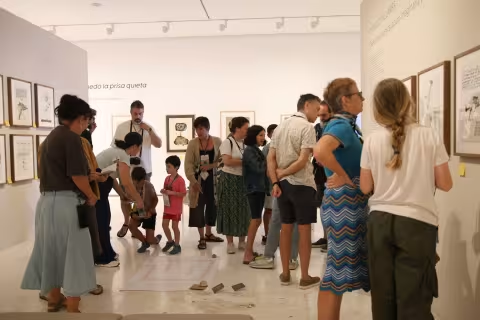
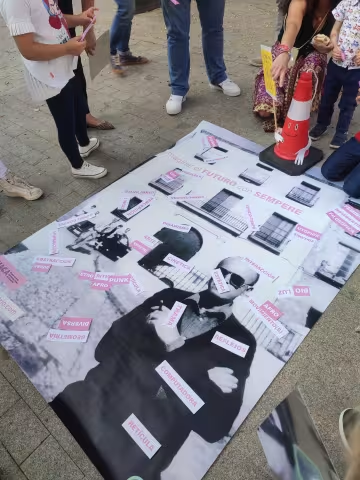
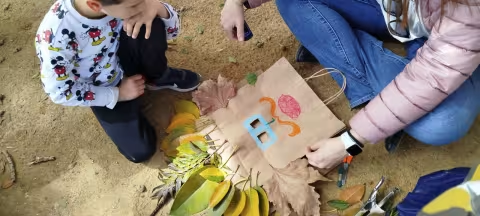
In the previous session of Arborescentes we were left wanting to talk about the small plants that emerge freely from cracks and hard-to-clean corners. So much monumental ficus and so little brave weeds drove us to dedicate the following session to them, to the VIP plants! (very important plants). We tell you how we went about it.
Why are plants that grow in asphalt cracks important?
Plants that grow in asphalt cracks in cities are not only symbols of biological resistance, but also key agents within new approaches to urban biodiversity.
To rethink urban plants not as "green waste" but as living agents that claim their place, we must understand that preserving the wild is not just about protecting distant forests, but also respecting a crack where life springs forth.
They constitute spontaneous laboratories of life and evolution. They are "zones of freedom," where vegetation grows without direct human intervention.
They play an essential role as green micro-corridors. They act as connectors between fragments of dispersed urban habitats, allowing the flow of species—from pollinating insects to soil microorganisms.
Urban biodiversity depends on these unplanned spaces. The biodiversity that these plants provide increases ecological resilience.
"VIP Plants" as cultural and social mediators: A novel reading of these plants is to understand them as cultural and social mediators. Their presence challenges the traditional narrative of human control over urban nature and proposes an aesthetic of disorder that invites us to rethink city design. Rather than eradicating these spontaneous manifestations, we could integrate them into a new model of urbanism that accepts the unplanned, fostering a more flexible and ethical relationship between the built and the living. This approach can be connected with recent concepts such as the right to the wild in the city.
The Mitolatorio began its journey in April 2020. During the pandemic, it functioned as a digital collaborative map of contemporary myths. It was a way to stay connected with the outside world, redefining public space from our homes.One of the pillars of the Mitolatorio has always been urban redefinition, because reviewing our emotions about public space empowers us within it, because paying special attention to it makes us more aware of its peculiarities, and it helps us value all elements of the public and urban landscape by placing on the samelevel the architectural (a building with an emblematic façade), the vegetal (the tree in the plaza where we played) and the human (the neighbor who always sat on the same park bench), among others. We believe that this perspective can becomeradical in an unexpected way if it is carried out from the perspective of a work from the Museum previously seen, smelled, and creatively discussed.The mediation of the works and places will be based on carrying out creative actions with them as objects, to promote critical and expanded observation of the work and subjective, bodily and also critical exploration ofurban space. To the significant power of the work-place binomial we thus add two contributions: that of the practices of mediated plastic creation from the workshops and laboratories of María Maraña, and that of the techniques of proprioceptive exploration and identity fabulation from the interactive practices of Sergi Hernández.