Contemporary Art Collection of the Valencian Generalitat
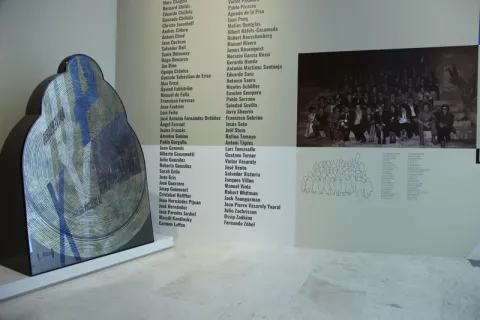
Isidro Blasco visits the MACA whenever he comes to Alicante and always finds his father's work at the foot of the staircase, framed between the arches of the old Casa de la Asegurada. The exceptional piece by Arcadio Blasco, Enclosure for a Legal Murder from 1971 is an emblematic work of the 20th Century Art Collection. It is a sculpture in iron and ceramic that envelops a space of ideological repression and political resonances.
Trapped by that space and by the dialogue that Arcadio's work establishes with the museum's architecture, Isidro needs to return to it and rethink it, in a kind of nostalgic but obsessive journey. During one of these visits the project takes shape: the artist analyzes and measures the void, draws and photographs, goes up and down the staircase, peers in and measures sections. Isidro Blasco has decided to destroy the place and construct a new space to prevent it from falling into oblivion. And thus this site-specific installation emerges.
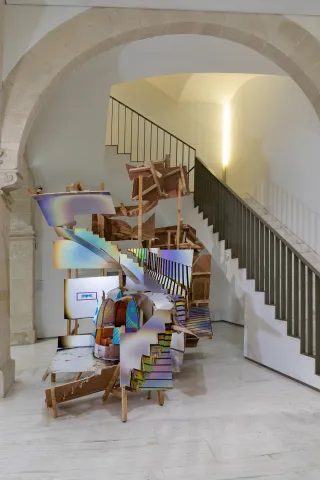
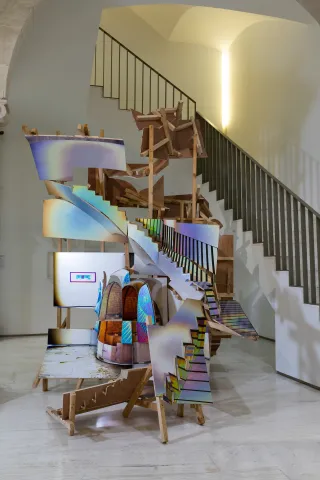
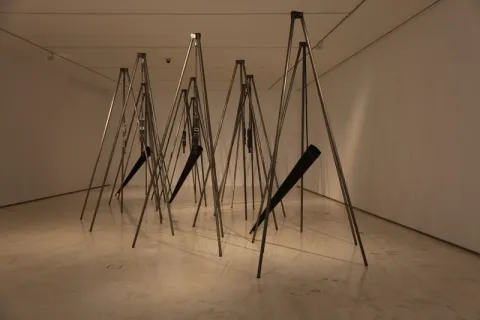
Only Two Voices, it is a complex work between architecture, photography and sculpture. An installation in unstable equilibrium that deploys in three-dimensional form the same space it occupies in the museum. A space within the same space. The photography architecturally cohesifies the elements although the structure has been fragmented and the 90-degree angles have been destroyed. With great economy of means: some sheets of plywood, some screws and carpenter's jacks and some photographs, the artist has constructed an irrational artifice that reflects on the problem of representation and offers a legacy of fragments, a perfect analogy for attending to the affects on-over-inside the Blascos that functions in turn as a revealer of the image of the contemporary world.
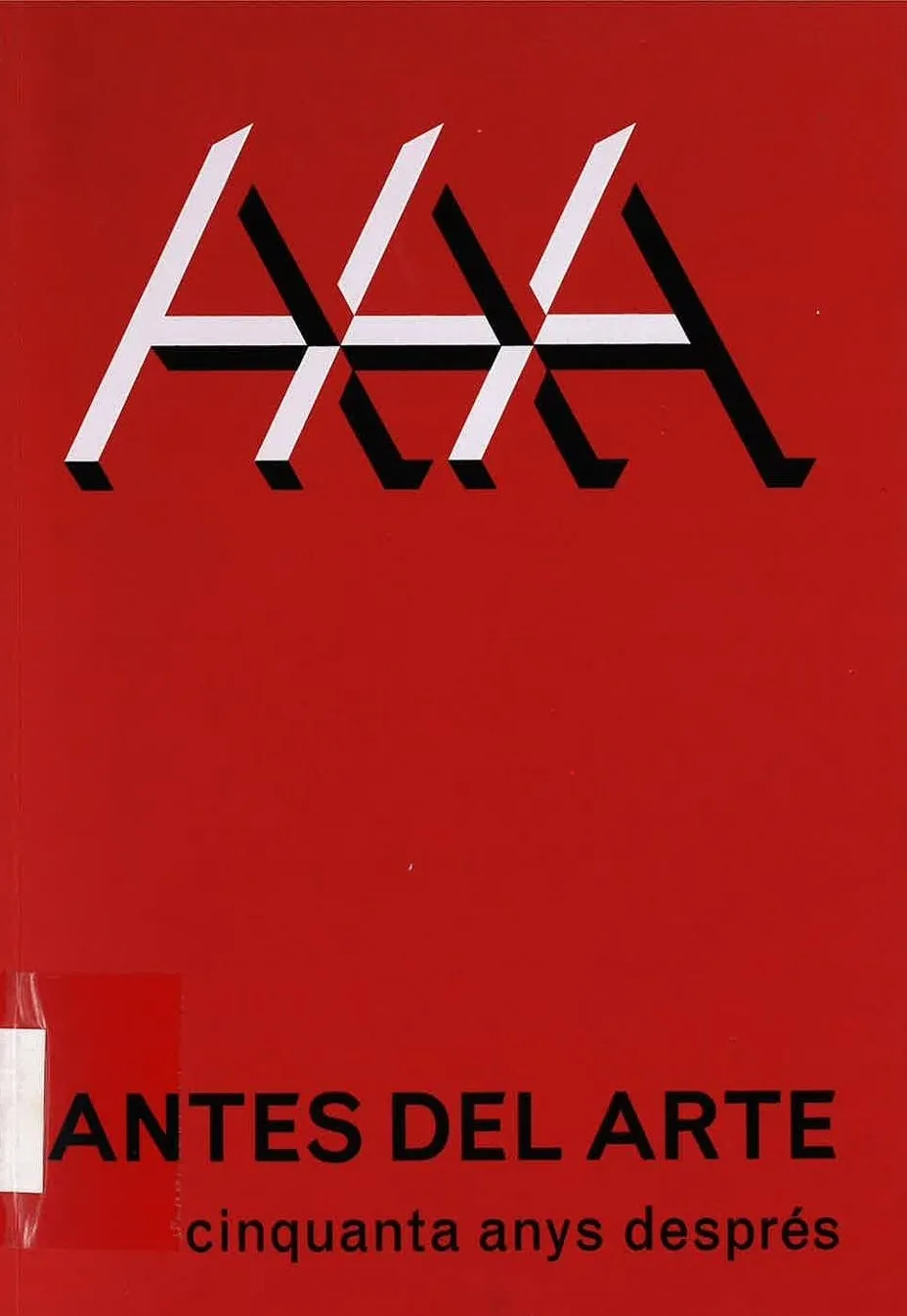
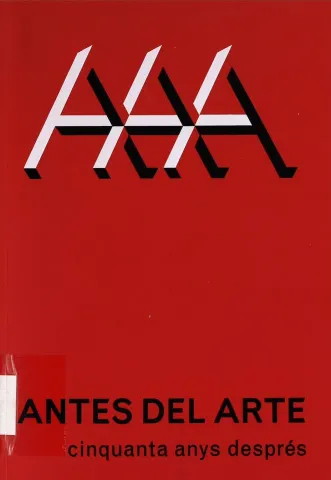
Before Art was a group of artists formed in Valencia, at the end of the sixties of the last century, whose trajectory enjoys singular importance in the course that Spanish contemporary art has followed. The interest of their investigations lies in their special approach to the relationship between art and science; or, rather, in the consideration tending, in conceptual terms, to the undifferentiation of the possibilities of action between both fields of knowledge.
The proposed exhibition constitutes a retrospective look at the short, yet tremendously intense, trajectory of this artistic collective in a time of special historical significance, such as that surrounding the year 1968. Fundamentally, a considerable part of the works that made up the three main exhibitions of the group is brought together (School of Architects, Valencia, 1968; Eurocasa Gallery, Madrid, 1968; and As Gallery, Barcelona, 1969).
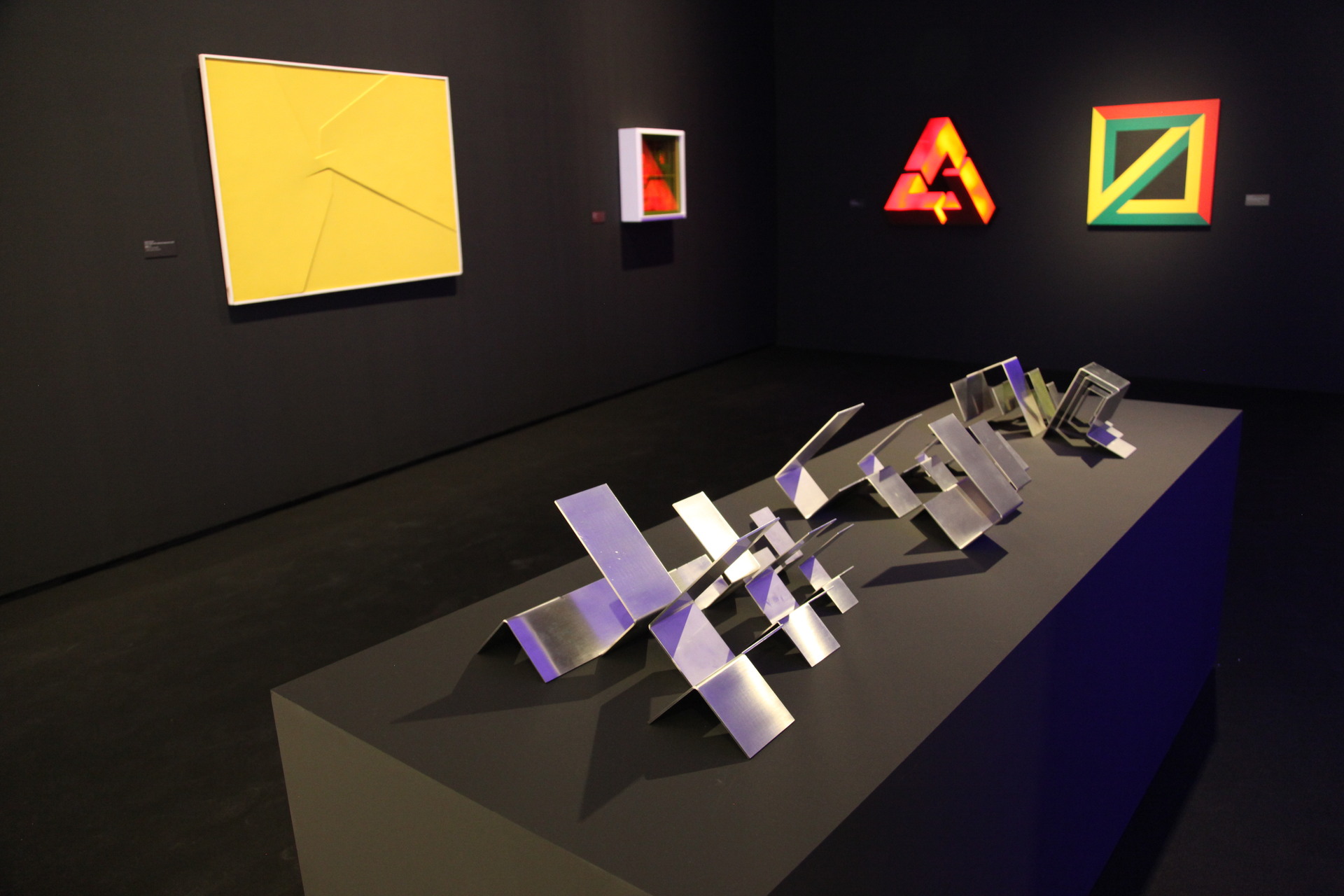
It is intended to reproduce, half a century later, the atmosphere of those exhibitions in which objects and mobile devices capable of generating diverse optical, perceptual and structural experiences were presented to the viewer (resorting, by the way, in many occasions, to the same physical foundations that the mass media and advertising companies of the time employed). And this is done with the dual intention of highlighting the interest and relevance of that initiative and, furthermore, to assess the influence it had on the trajectories of the participating artists.
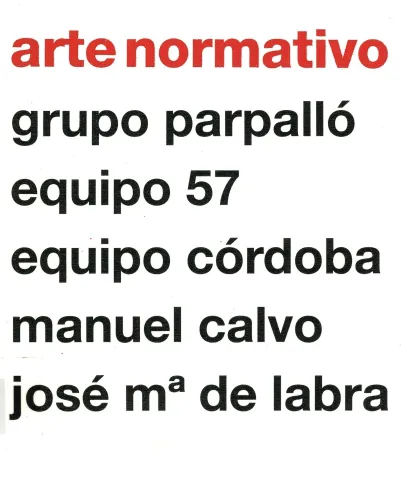
Joaquín Michavila, Ramón de Soto, Eusebio Sempere, Eduardo Sanz, Francisco Sobrino, Jordi Teixidor, José María Yturralde, Víctor Vasarely y Eduardo Sanz.
En colaboración con Fundación general de la Universitat de València
Before Art, fifty years later
Authors:Santiago Pastor Vila
Year:2019
Page:246
Edition:General Foundation of the University of Valencia
Legal deposit:V-2226-2019
ISBN:978-84-9133-242-8
Design:Santiago Pastor Vila, Mercedes Jaén Ruiz
Binding:Rústica
Dimensions:24 x 17 cm
Exhibition catalog of the Valencian group "Antes del Arte" to commemorate the 50th anniversary of its creation, constituting one of the most interesting episodes of Valencian constructive art. Exhibition curated by Santiago Pastor, organized in collaboration. Martínez Guerricabeitia Hall of the Centre Cultural La Nau of the Universitat de València, from February 22 to June 9, 2019. MACA. Museum of Contemporary Art of Alicante, from June 18 to September 15, 2019.
Before Art was a group of artists formed in Valencia, at the end of the sixties of the last century, whose trajectory enjoys singular importance in the course that Spanish contemporary art has followed. The interest of their investigations lies in their special approach to the relationship between art and science; or, rather, in the consideration tending, in conceptual terms, to the undifferentiation of the possibilities of action between both fields of knowledge.The proposed exhibition constitutes a retrospective look at the short, yet tremendously intense, trajectory of this artistic collective in a time of special historical significance, such as that surrounding the year 1968. Fundamentally, a considerable part of the works that made up the three main exhibitions of the group is brought together (School of Architects, Valencia, 1968; Eurocasa Gallery, Madrid, 1968; and As Gallery, Barcelona, 1969).It is intended to reproduce, half a century later, the atmosphere of those exhibitions in which objects and mobile devices capable of generating diverse optical, perceptual and structural experiences were presented to the viewer (resorting, by the way, in many occasions, to the same physical foundations that the mass media and advertising companies of the time employed). And this is done with the dual intention of highlighting the interest and relevance of that initiative and, furthermore, to assess the influence it had on the trajectories of the participating artists.
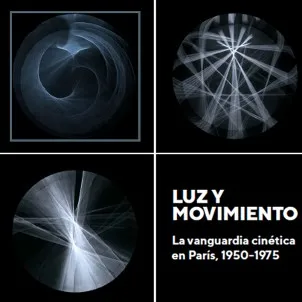
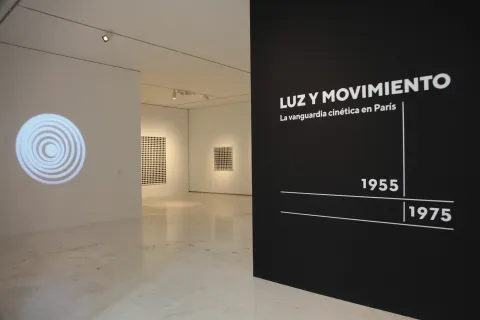
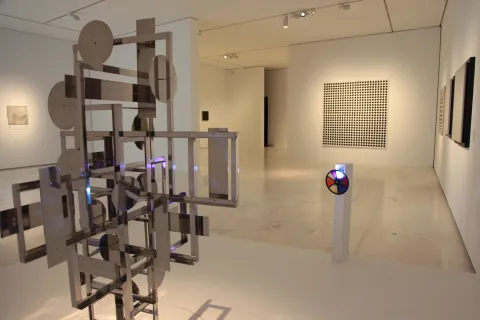
The question of movement, light and their representation runs through the history of art. From the 1950s onwards, following in the footsteps of pioneers such as Naum Gabo, Antoine Pevsner and László Moholy-Nagy, Marcel Duchamp and Alexander Calder, artists began to integrate these forces into their creations, shaping a new vision of reality in which nothing is fixed and definitive but rather unstable and indeterminate, in constant movement: the works live in the present, change, are never exhausted. Kinetic movement develops in Europe as an international constellation formed by a new generation of artists who want to radically transform art by opposing the myth of the work, a unique, defined and totemic object destined for an elite, personal expression of the artist, creative genius secluded in their ivory tower. These new breed of artists want to modernize the artistic object, open it to reality by integrating new materials and industrial techniques; from a social perspective, to produce art for a wider audience, participatory art, to propose an active role for both the artist and the spectator.
Movement embodies the new mutual relationship, physical and emotional, that is established between spectator and work, it is a mouvement émouvant [moving movement], as Vasarely describes it in 1955: the works are living bodies that are reflected in the moving body of the spectator and enter into relationship with him, involving him in an exercise of conscious freedom.
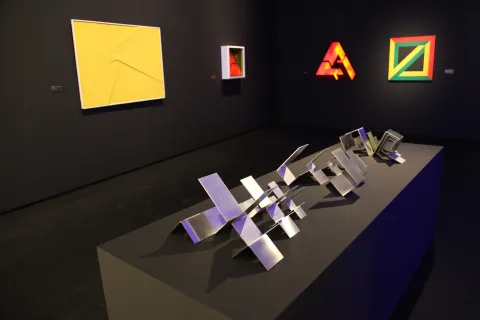
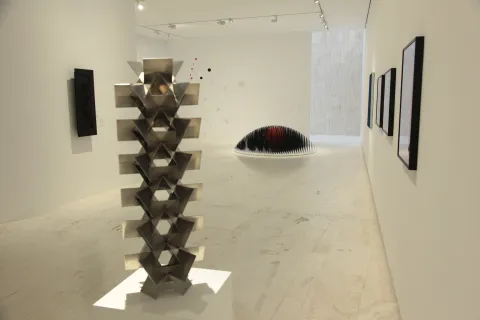
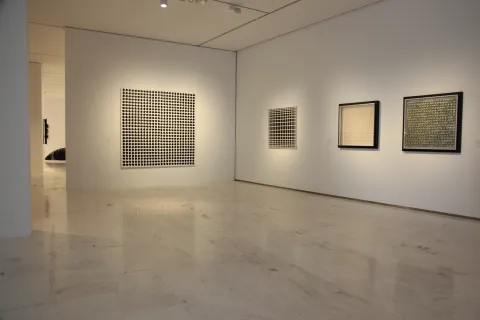
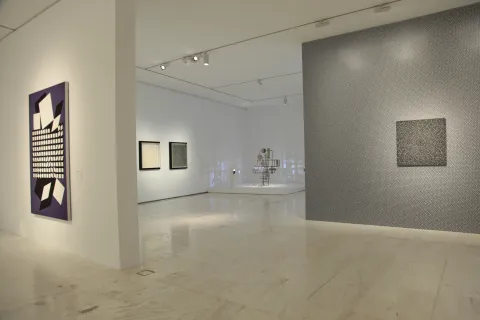
Light and Movement opens a perspective on the rich vitality of this international tendency in the active Parisian context, whose influence will also nourish Spanish artistic debate, focusing on the period of its fascinating creative development and maximum recognition between 1955, the year of the historic exhibition Le Mouvement at the Denise René gallery in Paris, and 1975. The works of the protagonists of this avant-garde, coming from private collections, galleries and Parisian institutions, will resonate and be enriched in dialogue with the exceptional collection of kinetic works at the MACA, a donation by Eusebio Sempere.
Takis (Panagiotis Vassilakis), Marina Apolonio, Pol Bury, Alexander Calder, Carlos Cruz-Diez, Ángel Duarte, Marcel Duchamp, Julio Le Parc, François Morellet, Jordi Pericot, Nicolas Schöffer, Francisco Sobrino, Jesús Rafael Soto, Víctor Vasarely, Eusebio Sempere, François Morellet, Horacio García, Joël Stein, Robert Breer y Brian de Palma.
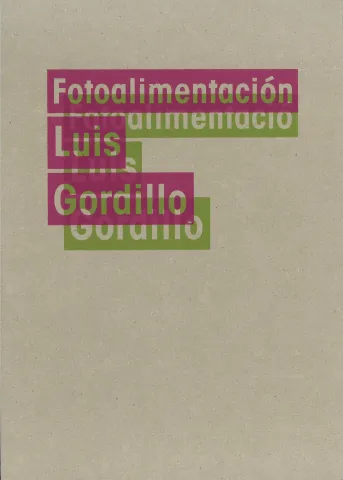
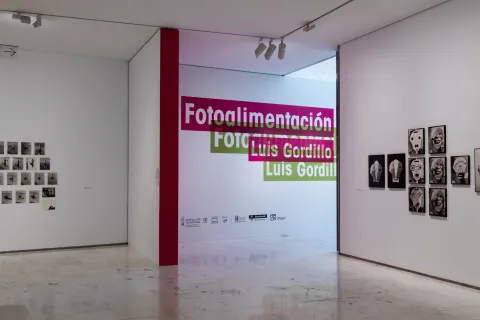
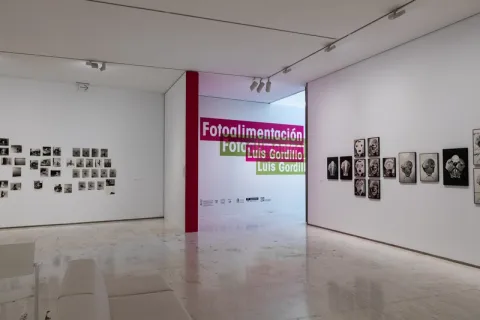
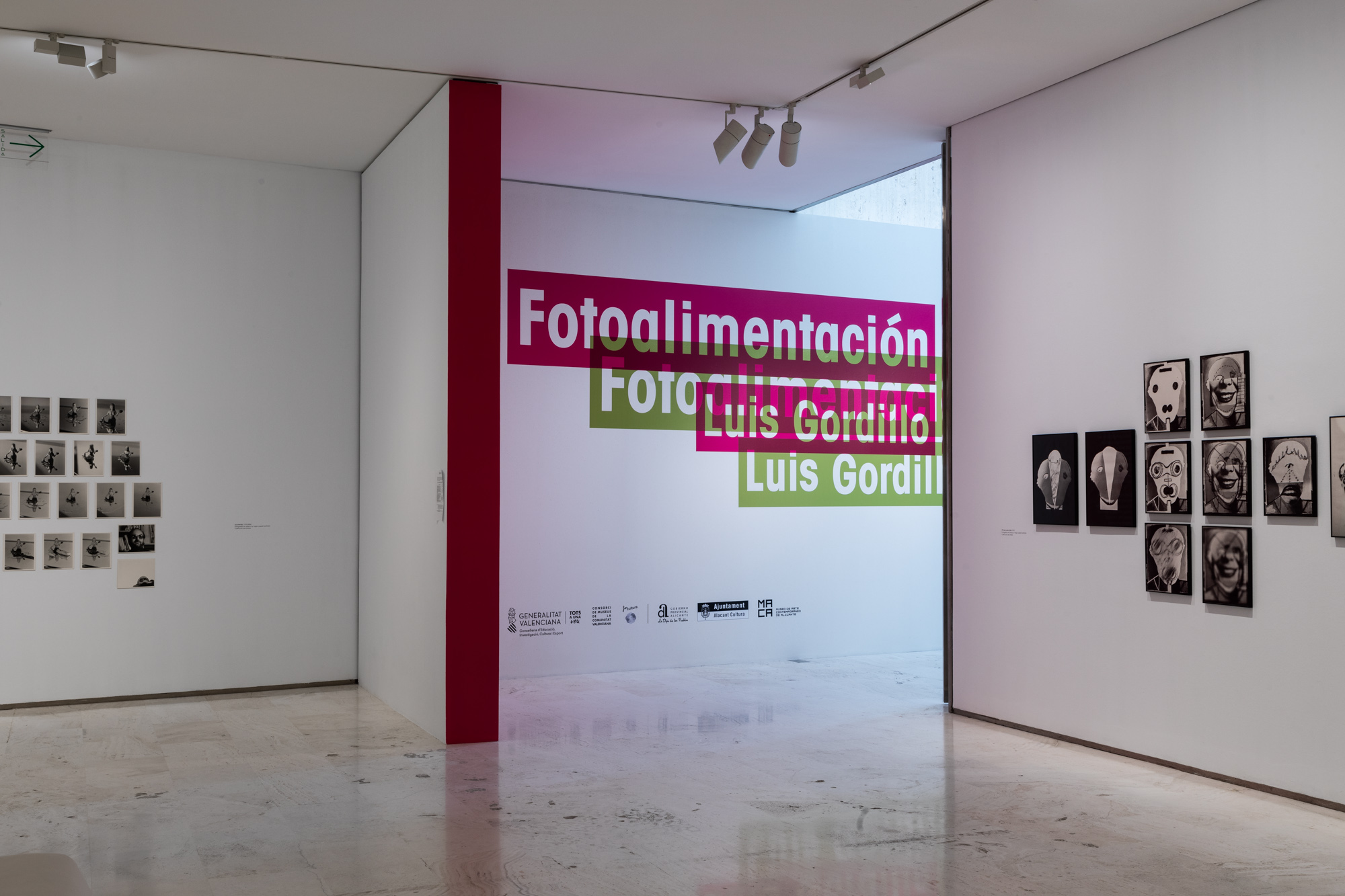
The artist has been using photography since the early 1970s with the aim of finding other options to the dominant color in his painting: to open an investigation that neutralizes his violent use of complementary colors.
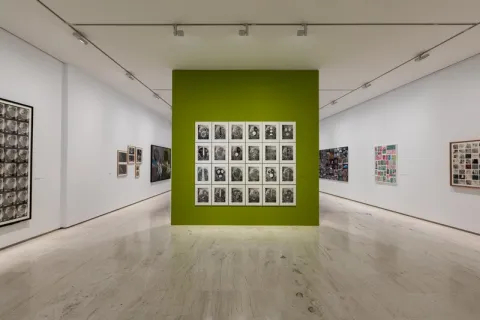
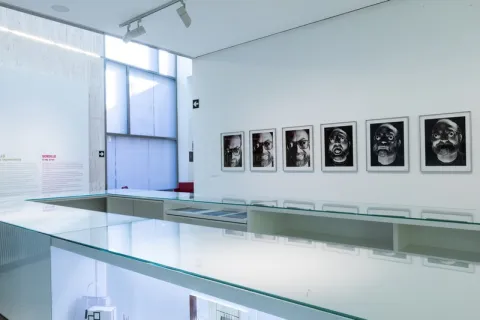
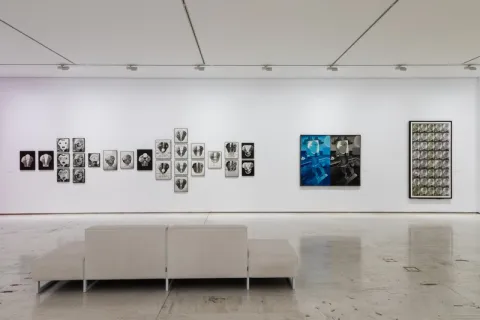
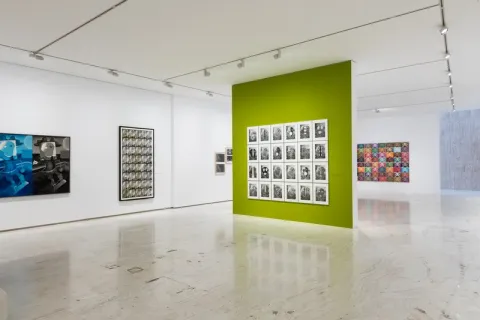
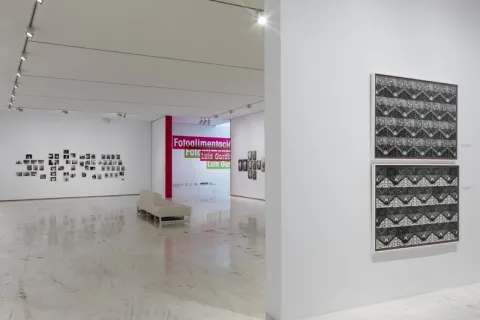
This experimental photographic practice allows him to investigate the construction, reconstruction and destruction of the image. Transformation techniques such as photography, but also printing, photocopying and collage recycling themselves and working in a spiral. Through these techniques Gordillo adopts modes of optical and constructivist art such as serialization, repetition, variants and differences between the almost identical that allow him to unfold, simultaneize and obsessively copy the same image.
Working with the negative and positive of the image, superimposed or sometimes slightly displaced, and also decomposed into the four colors of four-color printing, Gordillo converts the resulting images into "schizoid," a singular style steeped in ironic melancholy partly influenced by his long psychoanalytic practice.
Gordillo, in his collector's zeal, accumulates both banal objects from popular culture and images from the press, making a broad radiography of reality; from all of this psychedelic images emerge, sometimes close to pop.
The photographic processes carried out basically in the 1970s illuminate a way of understanding the creative process of Luis Gordillo, sometimes stranded between chance and automatism, but always disturbing where some of the artist's obsessions emerge: the encounter with absurd objects, the incoherent and endless accumulation of items he has been collecting for years. Decontextualized things and laden with plastic significance that he uses as visual material that result in psychedelic images sometimes close to pop, laden with a preset and manic humor. And this so libertarian way of making photography leads us to propose this series of works transcribed from psychoanalysis to make up the exhibition of Luis Gordillo.
Authors:Luis Gordillo, Rosa María Castells, Enric Mira, Mª Jesús Tudelilla, Isabel Tejeda
Year:2019
Page:189
Edition:Consortium of Museums of the Generalitat Valenciana
Legal deposit:V-1840-2019
ISBN:978-84-482-6374-4
Design:Lydia Girón Plaza
Binding:Rústica
Dimensions:30 x 21 cm
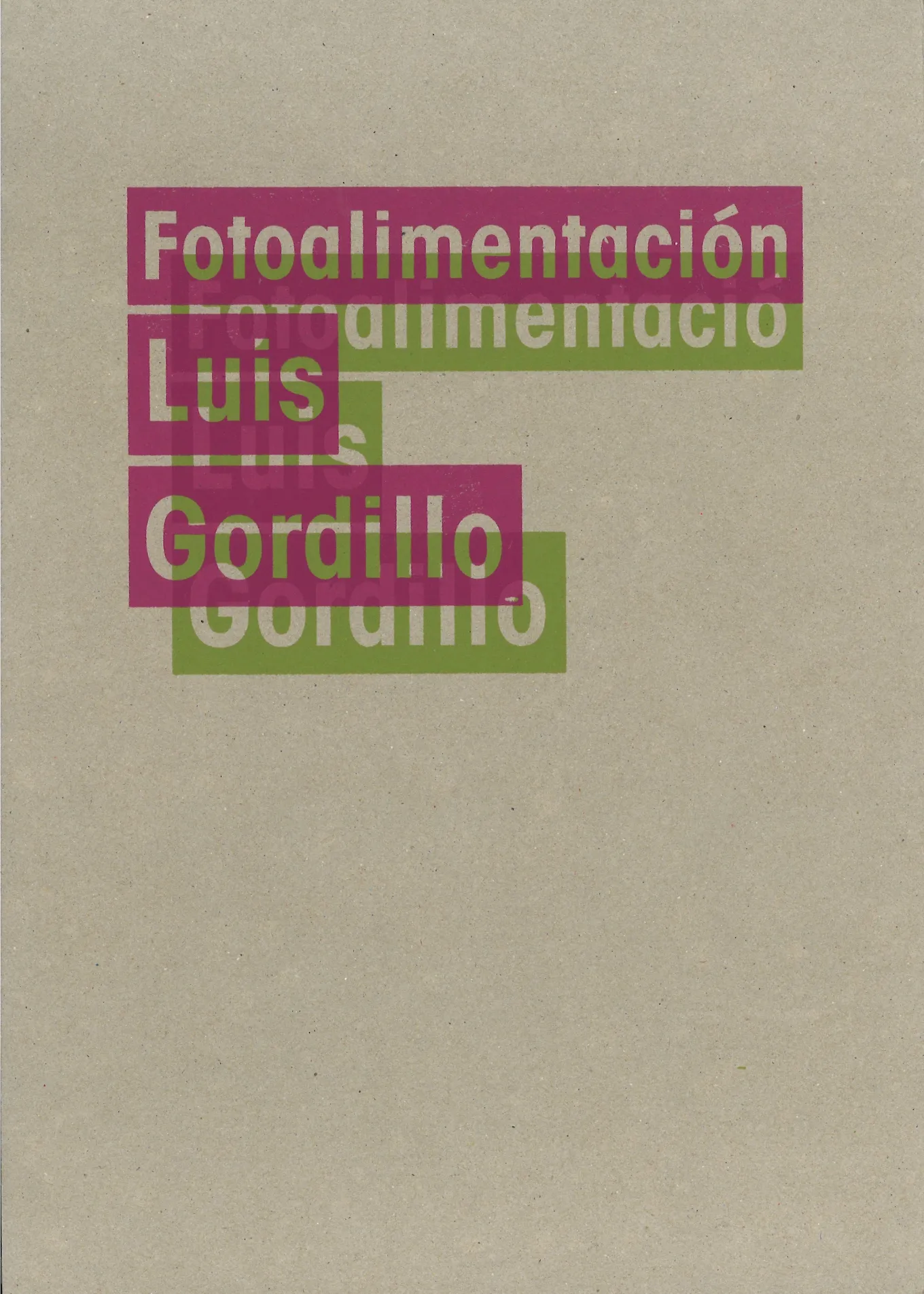
Exhibition catalog showing Gordillo's work closest to photography. Working with the negative and positive of the image, superimposed or sometimes slightly displaced, and also decomposed into the four colors of four-color printing, Luis Gordillo converts the resulting images into "schizoids," a singular style steeped in ironic melancholy partly influenced by his long psychoanalytic practice. Exhibition curated by Luis Gordillo and Rosa Mª Castells. MACA. Museum of Contemporary Art of Alicante, October 2018-January 2019. Centre del Carme Cultura Contemporània, Valencia, May-September 2019.
The artist has been using photography since the early 1970s with the aim of finding other options to the dominant color in his painting: to open an investigation that neutralizes his violent use of complementary colors.This experimental photographic practice allows him to investigate the construction, reconstruction and destruction of the image. Transformation techniques such as photography, but also printing, photocopying and collage recycling themselves and working in a spiral. Through these techniques Gordillo adopts modes of optical and constructivist art such as serialization, repetition, variants and differences between the almost identical that allow him to unfold, simultaneize and obsessively copy the same image.Working with the negative and positive of the image, superimposed or sometimes slightly displaced, and also decomposed into the four colors of four-color printing, Gordillo converts the resulting images into "schizoid," a singular style steeped in ironic melancholy partly influenced by his long psychoanalytic practice.Gordillo, in his collector's zeal, accumulates both banal objects from popular culture and images from the press, making a broad radiography of reality; from all of this psychedelic images emerge, sometimes close to pop.The photographic processes carried out basically in the 1970s illuminate a way of understanding the creative process of Luis Gordillo, sometimes stranded between chance and automatism, but always disturbing where some of the artist's obsessions emerge: the encounter with absurd objects, the incoherent and endless accumulation of items he has been collecting for years. Decontextualized things and laden with plastic significance that he uses as visual material that result in psychedelic images sometimes close to pop, laden with a preset and manic humor. And this so libertarian way of making photography leads us to propose this series of works transcribed from psychoanalysis to make up the exhibition of Luis Gordillo.
Around 1980, Juana Francés abandons social criticism to venture once again into abstraction, evoking, with subtle references, comets and underwater landscapes. A kind of journey, from the depths of the sea to the sky, with the circle and rectangle as essential geometric figures. These are works on paper in which movement and color burst forth in lyrical harmony with a clear vocation for transcendence.
This path of fullness and maturity would be definitively cut short by the death of Pablo Serrano, her companion, in 1985. Juana then returns to canvases of great gestural violence and material density, dark and dramatic sidereal spaces where pain is reflected and which relate to the first informal paintings of the Alicante artist.
The title of the exhibition Esteban Vicente. Painting Must Be Poor alludes to a text written by the artist, originally in English "Painting should be poor" that speaks to us about the creative process of a work of art and the meaning of his painting. The exhibition comprises a selection of 27 works from the Permanent Collection of the Esteban Vicente Contemporary Art Museum that allows for a journey through the artist's evolution across his different creative stages.
Esteban Vicente trained in Spain, close to the postulates of the Paris School and the painter-poets of the Generation of '27. In 1936 he moved to the USA and settled in New York, joining the abstract expressionism movement. From the tangled and cluttered compositions of the early 1950s, his painting evolves, in the 1960s, toward greater prominence of forms that simultaneously order the composition. In the 1970s color completely conquers the work and he exchanges the brush for the use of the airbrush, which allows him to capture light thanks to color saturation. Esteban Vicente shows an interior landscape reduced to color, glazes and nuances, in a constant search for color and light. In the 1980s and 1990s, Esteban Vicente's painting achieves freedom; diverse organic forms reclaim nature as the main theme in large format, colors multiply, light emanates from the works, color is light.
A search for light that becomes essential also in the creation of Eusebio Sempere in this case through geometric abstraction and that is perceived in the very architectural space of the MACA. This exhibition is the result of collaboration between the Esteban Vicente Contemporary Art Museum and the Contemporary Art Museum of Alicante, kindred institutions in that they contemplate among their functions, that of promoting the programming of temporary exhibitions that complement the vision and study of contemporary art.
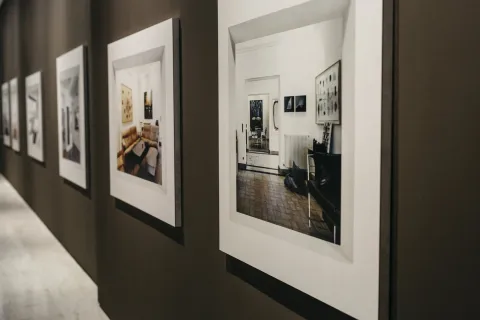
One of the most important lines of research in Montserrat Soto's work is the reflection on art through the spaces where it is displayed and housed. In 1997 - in Silences - the artist focuses her attention on the storage facilities of artworks in various museums, the places where art is not seen, where art rests. Subsequently, Soto undertakes the Secret Landscape project for five years, a series of photographs that captures the interiors of a collection of contemporary art collectors' homes in America and Europe. Art now becomes exclusive, accessible only to the owners and their guests in privacy. In the halls of MACA we can contemplate 13 of these photographs, belonging to the Telefónica Collection.
To carry out her project, the artist managed to slip into these homes; private spaces, inaccessible yet everyday, and far removed from the sacralization that surrounds artworks in museums. Bedrooms, living rooms, dining rooms, offices and even bathrooms are the containers of artistic works, many of them by highly sought-after authors, whose primary objective is to decorate these spaces. However, she transforms the private into the public and opens the door to an endless array of conceptual, symbolic and even psychological aspects, related to collecting.
Painting, sculpture, photography, ethnographic objects or decorative arts populate this series of photographs of anonymous residences awaiting to provoke in the spectator, who observes surprised and even astonished, all kinds of sensations and questions: For whom is such a quantity of objects gathered? What is the objective of owning a collection? What determines the selection of purchases? Does a collector always have good taste…?
Art as self-reference from its most unknown backstage for the common of mortals becomes a symbolic radiograph of the values of contemporary society. And it builds memory that, sometimes, belongs to everyone.
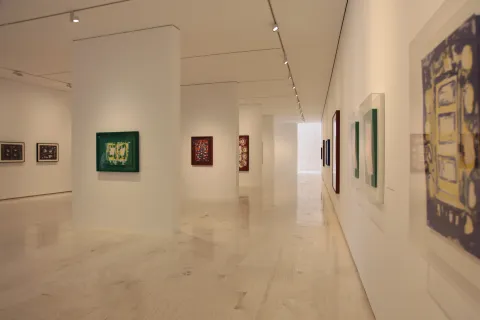
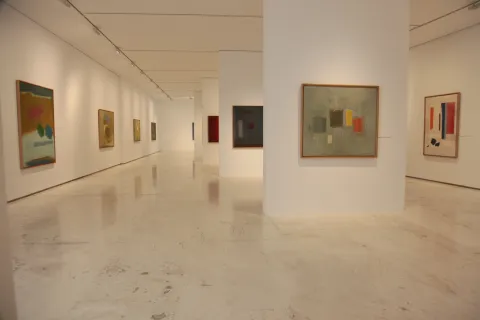
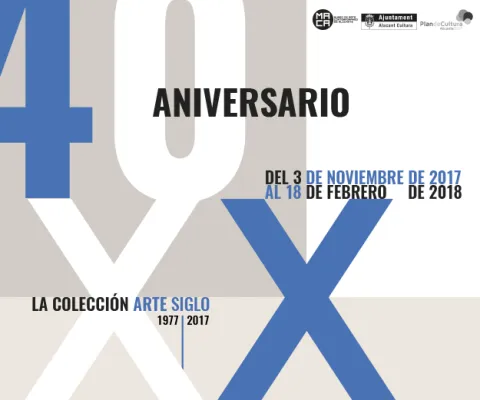
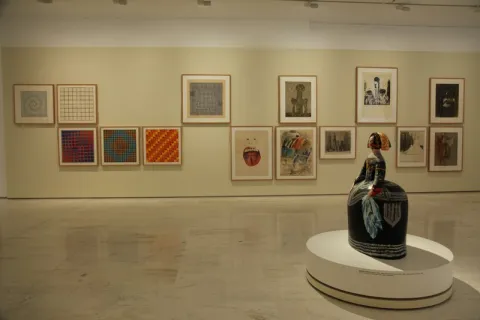
The 20th Century Art Collection was donated by the Alicante artist Eusebio Sempere to the city of Alicante to inaugurate the La Asegurada Museum on November 5, 1977, one of the first contemporary art museums in Spain. That was 40 years ago. Founding a museum during the democratic transition was a political act in itself: for Sempere, it was an attitude and a conviction. Donating his private collection stemmed from a profound commitment to contemporary art. It was an extremely generous act of faith that brought together the most important artistic figures that day, along with a Sempere brimming with pride, convinced of the significance of his gesture.
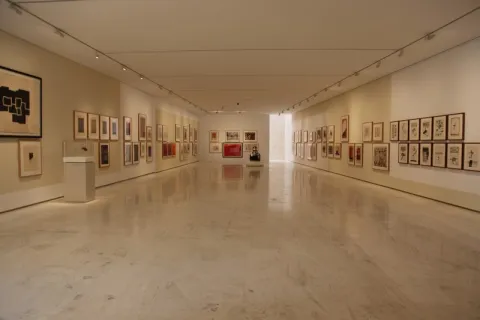
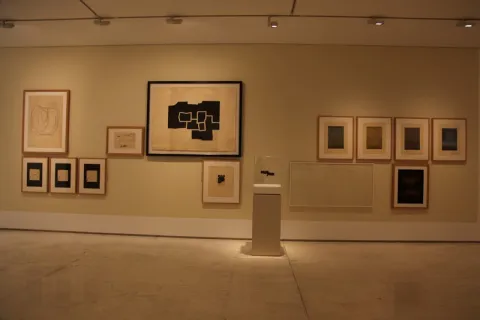
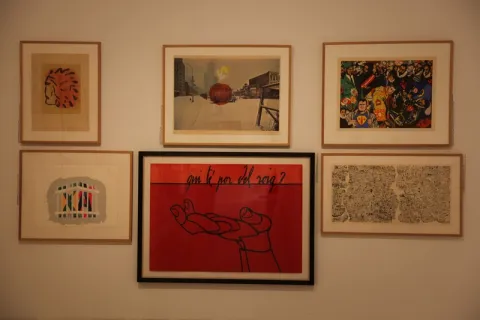
Today, the 20th Century Art Collection forms the cornerstone of the MACA - Museum of Contemporary Art of Alicante. An excellent collection, with an international focus, coherent and effective, it houses the finest works by the leading figures of almost every artistic movement of the 20th century. It comprises 177 works by 117 artists, including paintings, sculptures, drawings, and prints, which have been exhibited piecemeal throughout history for various reasons.
Never before has the entire collection been displayed at once. And this 40th anniversary is a fitting occasion. Occupying the Ground and First Floors, we can discover the immense importance of this 20th Century Art Collection. The 177 pieces, the 117 artists, share the same objective as its founder: to facilitate public access to contemporary art.
Valerio Adami, Yaacov Agam, Alberto Sánchez, Andreu Alfaro, Richard Anuszkiewicz, Jean Arp, Elena Asins, Amalia Avia, Francis Bacon, Joaquín Barceló, Juan Barjola, André Gustave Beaudin, Arcadio Blasco, Eduardo Martínez Bonati, Bonifacio Alfonso, Georges Braque, Claudio Bravo, Alexander Calder, Rafael Canogar, Joaquín Capa, Marc Chagall, Bernard Childs, Eduardo Chillida, Gonzado Chillida, Christo Javacheff, Andrés Cillero, Antoni Clavé, Jean Cocteau, Salvador Dalí, Sonia Delaunay, Hugo Demarco, Jim Dine, Equipo Crónica, Gonzalo Sebastian de Erice, Max Ernst, Öyvind Fahlström, Manuel de Falla, Francisco Farreras, Jean Fautrier, Luis Feito, José Antonio Fernández Ordóñez, Ángel Ferrant, Juana Francés, Amadeo Gabino, Pablo Gargallo, Joan Genovés, Alberto Giacometti, Julio González, Roberta González, Sarah Grilo, Juan Gris, José Guerrero, Josep Guinovart, Cristobal Halffter, Joan Hernández Pijuán, José Hernández, José Paredes Jardiel, Wassili Kandinsky, Carmen Laffon, Louis Latapie, Julio Le Parc, Julio López Hernández, Antonio Lorenzo, César Manrique, Marisol Escobar.Marcel Martí.Abel Martín, Maryan Pinchas, Georges Mathieu, Roberto Matta, Fernando Mignoni, Manuel Millares, Joan Miró, Manuel Hernández Mompó, François Morellet, Richard Mortensen, Franco Muela, Lucio Muñoz, Claes Oldenburg, Pablo Palazuelo,Victor Pasmore, Pablo Picasso, Águeda de la Pisa, Joan Ponç, Matías Quetglas, Albert Ràfols-Casamada, Robert Rauschenberg, Manuel Rivera, James Rosenquist, Horacio García Rossi, Gerardo Rueda, Antonio Martínez Santonja, Eduardo Sanz, Antonio Saura, Nicolas Schöffer, Eusebio Sempere, Pablo Serrano, Soledad Sevilla, Jerry Sheerin, Francisco Sobrino, Jesús Soto, Joël Stein, Rufino Tamayo. Antoni Tàpies, Luis Tomasello, Gustavo Torner, Victor Vasarely, José Vento, Salvador Victoria, Jacques Villon, Manuel Viola, Robert Whitman, Jack Youngerman, Jean Pierre Vasarely Yvaral, Julio Zachrisson, Ossip Zadkine y Fernando Zóbel.
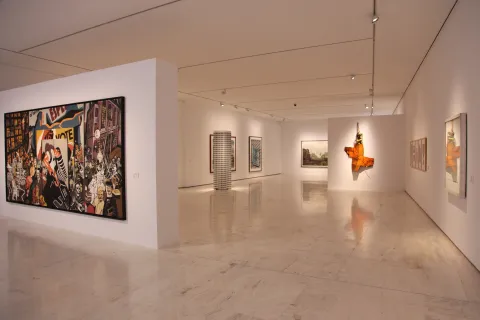
The city is one of the most characteristic symbols of modern society. Cities are at the forefront of the most outstanding experiences and the boldest behaviors, the place of maximum development of the arts. For this reason, many artists have the life in cities as a central element of their works, cities understood (often) as a collage of a multitude of discontinuous and fragmented memories and experiences, as a confusing labyrinth in which inhabitants cross paths immersed each in their own thoughts.
The central idea of this exhibition is to show works that allow us to know the multiple visions, the different spaces and the great quantity of human existences that have shaped life in cities in the last century, through works from the IVAM collection. The institution holds among its collections the most comprehensive and complete vision on this subject that can be found in a Spanish museum.
Valerio Adami, Eduardo Arroyo, Gabriele Basilico, Bernd y Hilla Becher, John Chamberlain, Horacio Coppola, Gregory Crewdson, Equipo Crónica, Candida Höffer, Gordon Matta- Clark, Julian Opie, Robert Rauschenberg y Thomas Ruff.
As the third exhibition in the series "Every Landscape is Fiction," the work of Ángeles Marco is presented, one of the main figures responsible for the renewal of the Spanish sculpture landscape since the 1980s. She belonged to that generation that transformed sculptural art and was called the New Spanish Sculpture alongside artists such as Juan Muñoz, Jaume Plensa, Susana Solano, Eva Lootz, Miquel Navarro, Cristina Iglesias, Txomin Badiola, Pello Irazu, Sergi Aguilar, etc.
Minimalism, constructivism, and conceptual art are some of the influences that can be traced in her installations and sculptures, grouped in series that address different metaphors and to which the artist returns again and again. She employs iron preferentially and occasionally other materials such as rubber, wax, or glass. Feelings of solitude and anguish give life to her pieces and installations, endowed with a particular narrative sense.
The series "Leap into the Void" and "The Transit" is one of the most representative of the Valencian artist and defines her experimental character. The artist adopts treatments and resources from different techniques, directly transferred from the world of industrial engineering to sculptural practice. She mastered the craft technically in order to dedicate herself to artistic research. "Leap into the Void" is the stance that Ángeles Marco adopts in the face of reality. Her anguish is literally a sensation of infinite freedom in space. Her "leaps into the void" are a consequence of that vertigo of freedom. Anguish is the continued presence of nothingness: the cold sweat of standing at the edge of a window, the joyous terror of the fall.
"The Transit" is the second recurring theme of the artist. The passage from one place to another, from one stage to another. They are images of corridors, bridges, stairs, passages, alleys… But also the transit from one chemical state to another or, even, the camouflage that seeks to make a presence invisible. Transition as a shiver, a movement from darkness to darkness.