Project from pre-existence. Daría de Seta

Submitted by brandcode_deweloper on
The architecture table 10

Daría de Seta. Architect. "Designing from Pre-existence" - A Cultural and Sustainable Approach to Place.

-Attention to Place.

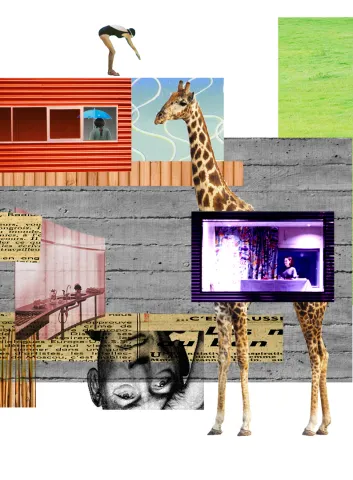
The architectural project aims to be a process guided by the character of the place (condensed from society, territory, landscape, culture, environment), an opportunity to read and reinterpret what exists, whether natural or anthropized, urban or rural, center or periphery, historical heritage or abandoned area. The transformation of the place and its surroundings produced by the architectural intervention becomes a precious opportunity to re-read, adapt and enhance the riches of the context.

-Dialogue Between the Existing and the New.

Far from interpreting the project as a conservative process, we believe that the aspect we project through our work should be the result of a contemporary sensibility capable of dialoguing with the present, with those who use it today. The project should propose solutions that speak the language of those who live there, being images of our time. To add an honest piece to the mosaic of the history of places, it is essential to escape historicism, mimicry and, instead, it is necessary to operate in a contemporary key.

– What is Really Necessary?

Answering this question before beginning to design solutions is very important to us. For some time now we have been convinced that, to achieve the best project, solutions with the greatest expressive and conceptual impact are fundamental to understanding what is strictly necessary, not only in terms of reducing impacts and costs, but above all in terms of rigor and precision. Analysis of needs and existing qualities. An ethical way of relating through our profession to the world in which we live and investigating new forms of beauty.

Coordinates: Santiago Varela

Collaborates: College of Architects of Alicante

ACTI-0354
Imagen
Perspective-2_B.jpg
7:00 PM
90 minutes
Library

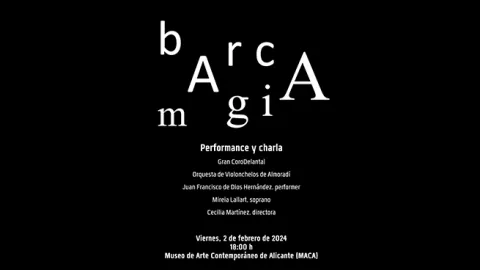
Performance and talk Barca Magic

Submitted by brandcode_deweloper on

"Barca Magia. Performance and Talk" Activity that is part of the Barca Magia 28/82 Festival of Experimental Music.

[embed]https://youtu.be/_HJL7zmFyuM[/embed]

Performers:

Gran CoroDelantal

Almoradí Cello Orchestra

Juan Francisco de Dios Hernández, performer

Mireia Lallart, soprano

Cecilia Martínez, director

Program:

6 Duos for Violas_ (1989)* ……………. Ramón Barce

Spoken Choir (1966) …………….……… Barce

Embrace & Breathe (2023) …………. Sonia Megías

Duo 11 (1989)* …………………........…. R. Barce

LBaila (2006) …………………........……. S. Megías

Duo 17 (1989) * ………….........………… Barce

The Journey (2023) …....………. Armbruster/Megías

Duo 18 (1989) * …………………………… Barce

Barca Magia (2024) …………………….. Megías

* version by Sonia Megías for cellos

ACTI-0352
Imagen
6.jpg
6:00 PM
Assembly Hall

Inside their homes. Yolanda Cónsul

Submitted by brandcode_deweloper on
The architecture table 10

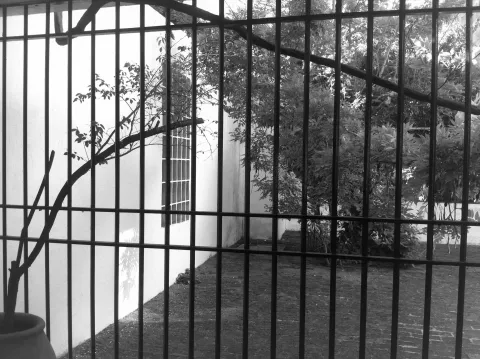
Yolanda Cónsul Pascual. Architect. "Inside Their Homes".

What does a master of Spanish architecture, such as Julio Cano Lasso, do when he designs his own house? Does he investigate? Does he consolidate? And above all... how far does his involvement in the design go?

There were many questions that prompted the development of an investigation that culminated in a doctoral thesis presented at the School of Architecture of Madrid in February 2015, and from which we now extract in this lecture the chapter referring to Julio Cano Lasso's residence in La Urbanización de La Florida in Madrid (Spain).

The residence on Calle Güecho has been the subject of many publications, but perhaps in none of them has the eye "peeked" into the protected space, into the intimacy of the home. That is why today we speak of interior space, of the envelope that shelters and allows the development of family life beyond the walls that delimit the dwelling. Much has been written about one's own house, and in this lecture we aim to give a new twist to the perspective, moving from studying their houses to looking "inside their homes".

In such a delicate territory the architect must combine decisions that affect his surroundings, turning his own family into the people who will experience that space, which also accompanies them over time, adapting to the different situations that a family inevitably goes through in its life journey.

The client is the most demanding. The margin for error... narrow.

Let us enter then...

Yolanda Cónsul

Coordinated by: Santiago Varela

In collaboration with: Territorial College of Architects

ACTI-0350
Imagen
39.-CANCELA-patio-estudio.jpg
7:00 PM
90 minutes
Library

Solstice Sempere. Corodalental

Submitted by brandcode_deweloper on

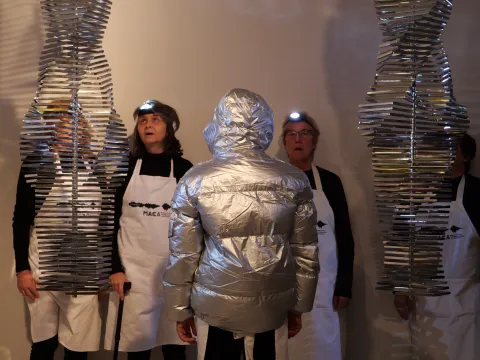
To celebrate the centenary of Eusebio Sempere's birth, CoroDelantal will offer the performance "Solsticio Sempere".

How do parallel lines sound?, How do the different effects of Eusebio Sempere's kinetic art sound?

We will savor all of this thanks to the CoroDelantal MACA, directed by Sonia Megías

ACTI-0349
Imagen
P1058997.jpg
7:00 PM

Christmas Carol Concert by CoroDelantal Choir

Submitted by brandcode_deweloper on

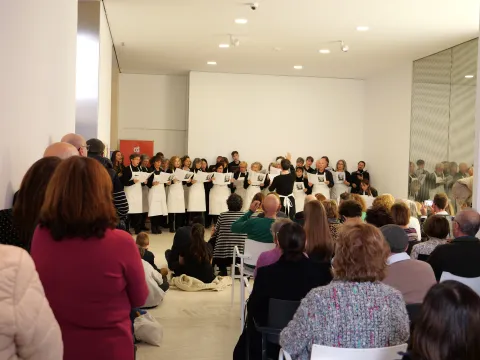
The MACA Choir, directed by Sonia Megías, the choir of the Óscar Esplá Superior Conservatory and the Cor de Cambra d'Elx directed by Inma Dolón, will offer a selection of Christmas carols by New York-born composer John Gilbert.

ACTI-0347
Imagen
P1058568.jpg
12:30 hours
Ground Floor

On white. Daniel Abreu

Submitted by brandcode_deweloper on
MACA Live

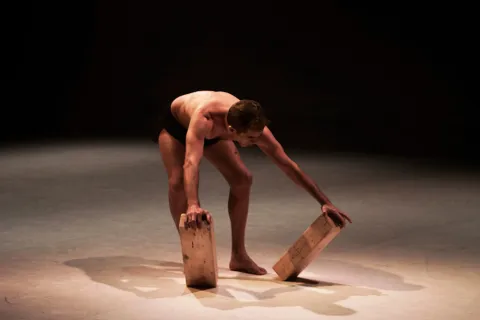
«This work that I present here is an intervention in space based on the ideas I work with for scenic works. A contained body, gestural and at the same time hollow, are the first steps that bring me closer to this proposal. To dance and create a landscape in balance with what I am and what the space gives. After all, it is about relating to the void, and seeing what it can offer».

Daniel Abreu

Dancer and choreographer, born on the island of Tenerife where his curiosity and interest in physical movement and scenic expression began. Furthermore, during his artistic training he earned a degree in Psychology, which has been very present in his choreographic works through careful poetic symbolism.

As a performer, he has developed his work in different dance and theater companies and collectives on the national scene such as Provisional Danza and Matarile Teatro, and as a creator, he boasts an extensive creative trajectory marked by more than sixty productions, which have been seen in more than 40 countries, where they have been recognized by critics, audiences and various awards, placing it as one of the most outstanding groups in the current dance scene for years.

His company project emerged almost imperceptibly in 2004, with the volume of creations and collaborations giving rise to the concept of what we now know as Cía. Daniel Abreu.

As a result of all this creative work, Daniel Abreu has been invited to teach different workshops and courses, in which he shares his creative vision and tools for physical and expressive technique.

In 2018 he was appointed artistic director of Lava Compañía de Danza, resident at the Auditorio de Tenerife, for whom he created the award-winning work Abisal.

In parallel, he continues close to other creative realities, such as directing projects for other groups and creators like Fattoria Vittadini, Zagreb Dance Company, Compañía Nómadas, 10 & 10 Danza, Proyecto Titoyaya and Teatre Tanca Zawirowania, among others.

In 2011 he became part of the prestigious group of artists that make up the European program Modul Dance.

Among the recognition garnered throughout his career, the following stand out: the National Dance Award 2014 in the creation category, awarded by the Ministry of Education, Culture and Sport; the Best Direction Award at the INDIFESTIVAL in Santander 2010; the Jury Prize for Choreography at the XVIII Madrid Choreographic Competition (2005); the AISGE Foundation Award for an outstanding dancer, to attend the American Dance Festival (2005) received at the XVIII Madrid Choreographic Competition (2005) and the mention as Most Outstanding Dancer of the IV Maspalomas Choreographic Competition (1999).

In 2018, his work La Desnudez received the Max Award for Best Choreography, Best Dance Performance and Best Male Dance Performer, and in 2019, his work Abisal received the Réplica Award for Best Dance Performance, Best Soundtrack and Best Costume Design for Leo Martínez.

In 2015 he was named Favorite Son by the Illustrious City Council of La Matanza de Acentejo (Tenerife).

Produces: Consorci de Museus de la Generalitat

Organizes: Abril en Danza and MACA.

ACTI-0346
Imagen
Julio_Falero_2-1000x667-1.jpg
7:00 PM
Ground Floor

Mood Sempere

Submitted by brandcode_deweloper on

MOOD SEMPERE is a project of cultural and artistic mediation proposed by Ester García Guixot and Juan Diego Cerdá Martínez, educators at MACA, on the occasion of the Centenary of the birth of Eusebio Sempere and which is aimed at students of EASDA, School of Art and Higher Design of Alicante.

The result of this incredible project is the unique exhibition "Mood: Sempere". In it, students of Ceramics and Interior Design from EASDA pay an emotional tribute to Eusebio Sempere. They have reimagined his artistic vision through a creative exploration of his life and work, capturing the essence of Sempere, and reinterpreting his legacy through a contemporary perspective.

To achieve this, students have used a wide variety of materials and techniques, demonstrating how Sempere's influence remains profound and enduring in the world of art and design. It is a testament to how art can transcend time and continue to inspire new generations.

We invite you to immerse yourself in this exhibition and discover how students have reinterpreted the work of Eusebio Sempere, and how his memory remains alive and vibrant in today's world.

Works

Milagros Alfaro and Eva Mulet

Big-Bang

This work uses lines and the number 3 as a symbol of balance. It is composed of 81 pieces of black CH stoneware clay on a transparent methacrylate base, forming a 6-pointed star and a spiral of 17 heights. Its meaning reflects the transition from order to chaos and from implosion to expansion, evoking the concept of the Big Bang and the organization of matter in time and space.

This work, intertwining 81 pieces of black CH stoneware clay on methacrylate, creates a cosmic dance of lines and the number 3. In a 6-pointed star and spiral of 17 heights, it reflects the transition from order to chaos, from implosion to expansion, evoking the Big Bang and harmony in matter throughout time and space.

Various Authors

Collective Altarpiece

The piece is a collective creation made by both students and teachers of EASDA participating in Mood: Sempere during one of the sessions, in which the technique of screen printing was worked on, introduced in Spain by Abel Martín and Eusebio Sempere. It is a wooden panel 110x166 with screen printing inks and trappings.

Collaboration between EASDA students and teachers. This wooden panel, 110x166, with screen printing inks and trappings, pays tribute to Spanish screen printing by Abel Martín and Eusebio Sempere, merging creativity in a unique expression of innovation and legacy.

Elena Pérez Méndez

Soul in Change

This optical-kinetic art installation is made of ceramic with pieces joined by an iron wire and separated by metal brakes. Designed to rotate, the orange rods rotate together while the green ones rotate freely. The work seeks to convey that, despite the uncontrollable turns of life, by keeping ourselves connected to our center and essence we can reorganize ourselves internally and recover our identity.

Kinetic art in ceramic: rotating rods express balance amid the chaotic turns of life. Orange and green dance, conveying the idea of reconnecting with our essence to recover identity in the midst of challenges.

Luís Sanus

Ceramic Tribute

The installation is a ceramic tribute to the master of Onil. It is composed of 23 ceramic pieces that form the letter "S", so often used by the artist. On the ceramic surface are arranged the geometric lines of "Semperian" inspiration that make up the whole, which rests on mirror-paper to give it kinetic quality and depth.

Ceramic tribute to Sempere: 23 pieces form the emblematic "S". "Semperian" geometric lines on mirror-paper add dynamism and depth in a vibrant visual tribute.

Agustina Álvarez, Alicia Miota, Elena Pérez and Ramón Cortés

Parar taula

The everyday object elevated to the rank of conceptual work: a series of plates decorated in the screen printing workshop, applied on ceramic and made with decorative motifs inspired by geometric designs. These designs intertwine with each other, creating an evolutionary sequence.

Agustina del Valle Álvarez and Alicia Miota Shepherd

Transcend

The piece seeks to represent the process of reconnection with oneself that occurs after a fall. Through geometric forms represented in an organic manner and a gradient from black and white to color, the work consists of three parts: an upper part with eleven pieces of size 1 hanging from a support anchored to the wall, an intermediate section with nine pieces of size 2 adhered to the wall, and a final piece on the floor.

Reborn after the fall: geometric forms evolve from black and white to color in three sections. A visual account of reconnection with oneself, captured in a work that fuses the organic and the geometric.

Eva Mulet Plaza

Evolution

This work, inspired by the artistic and personal evolution and revolution of Eusebio Sempere, is composed of 108 pieces of Stoneware clay with paper fiber, which reflect his personal growth. The upper part glazed in yellow alludes to the fruits of effort and perseverance, while the lower part smoked represents how he turned his visual difficulty into a tool to overcome the impossible.

108 pieces of Stoneware clay honor the evolution of Eusebio Sempere. Yellow is fruitful effort; smoked, the overcoming of visual difficulty. An ode to personal growth.

Milagros Alfaro Martínez

The project consists of two pieces, "Moonlight" and "Being Between Space and Time", inspired by geometric abstraction. Both pieces use lines, geometric forms and colors to represent the abstraction of time, matter and space.

Moonlight

"Moonlight" represents space as a horizon through parallel black lines in CH ceramic stoneware on a transparent polycarbonate background, framing the moon, which is represented by a circle of stoneware with fine parallel and broken lines in different shades of blue, creating a dynamic and luminous figure. From the moon emerge curved figures and straight lines in CH stoneware painted in different shades of blue, symbolizing the trail of light reflected in the sea.

"Moonlight": lines of stoneware on polycarbonate frame a vibrant moon, displaying blue tones that simulate dancing light on the sea. A visual symphony of space and horizon.

Being Between Space and Time

"Being Between Space and Time" uses space and time as central elements, represented by inclined parallel lines that converge in the center forming a diamond, symbolizing the sky. These lines, of black CH stoneware, are located on a transparent polycarbonate background. In the center, time is represented by a circle of black CH stoneware painted with 24 circles, 12 of them in different colors, which symbolize the different experiences and emotions we experience throughout life. An angle within the circle changes color, reminding us that these experiences are in constant change. The work concludes with a representation of the earth through pieces of black CH stoneware parallel and inclined upward.

"Being Between Space and Time" fuses lines of black stoneware on polycarbonate, creating a celestial diamond. In the center, time unfolds in a circle painted with 24 shades, reflecting changing experiences. The earth emerges with pieces of black stoneware, forming a work that explores the connection between being, space and time.

Juan Ramón Cortés and Paco Máñez

Manises Urban Geometry

In this piece, the traditional technique of tile painting has been used but with an airbrush and the application of paper reserves and solid elements that allow the creation of light zones. The line and the alternation of empty spaces construct a grid, a landscape.

Luisa Blasco López

Two

"Two" is a work inspired by the synergy between the life and work of Sempere and Abel Martín. Formed by 8 plates of white and black clay in which you can see engraved parts of the face of both Abel and Eusebio, forming a unity, a whole completed by the TWO. This reclaims the collective work between both and the richness they brought to each other in their works.

"Two" fuses the lives of Sempere and Abel in 8 clay plates. Their engraved faces symbolize collaboration and mutual richness, highlighting the value of collective work and complementarity in their creations.

EPHEMERAL ARCHITECTURE

Alejandro Alfaro Enguídanos

Kinetic Waves

"Kinetic Waves" is an ephemeral pavilion in which a symbiosis between art and design is created. In this space, the lyrical and sinuous geometry along with the light of the kinetic art of Eusebi Sempere can be seen reflected through curved and dynamic forms in which the lights create a "moiré" effect in a unique and immersive space.

Paula Cánovas Martinez and Lucía Real Joven

The Kinetics of Sempere

In this piece we find an evocation of Sempere's work through water, sun and movement. This movement is perceived through the structure of the pavilion, thanks to the light that enters through the textured glass slabs that generates a shadow that varies according to the movement of the sun, providing luminosity to the space and an aquatic sensation. The water, always in motion, accompanies the flow of radiations and visitors, providing brightness, freshness and sound in this experiential space.

Evoking Sempere, this work plays with light and aquatic shadows. Solar movement transforms the space, while water brings freshness and sounds. A multisensory experience.

Miriam F.

Flow

The work is created through straight profiles at different heights that produce a curved and dynamic movement. In different shades of bright blue, they provide light and recall the materials that Sempere used in his sculptures, such as chrome steel. There is a tension between a basic order and mobility, chance. As the piece rotates on its axis, an entire game of combinations is created, multiplied by the play of light on the columns and the shadows that are projected.

This work, with straight profiles in bright blue tones, recalls the chrome steel used by Sempere. The tension between order and mobility is revealed as it rotates, generating dynamic combinations. Light plays with the columns, creating ever-changing shadows.

Diana and Mathilda

The Dream

The space questions sensory perception by creating hypnotic and dreamlike effects. The architecture is divided into two layers, a subtle outer skin and a solid and massive architecture. The outer layer represents consciousness while the inner represents a psychedelic world in which the visitor is surprised by the distorting effects of each space they enter.

This dual space challenges perception: a subtle outer layer symbolizes consciousness, while the inner reveals a psychedelic world with distorting effects. The experience is hypnotic and dreamlike, guiding the visitor through surprising paths.

Andrea Alarcón and Lucía Fernández.

Meraki

Meraki, in Turkish, means doing something with soul, with love and creativity, leaving a piece of yourself in the work. This is represented in a space that generates a kinetic experience in the visitor through dynamic forms that reproduce textured and distorting shadows and the play of transparencies and translucency. The passerby is the protagonist of that movement, both in the external vision of the space and in their experience as they traverse it, at which point they will discover that the paths are not as clear and certain as they might imagine.

"Meraki", in Turkish, expresses creating with soul and love. This space offers a kinetic experience with dynamic forms, textured shadows and distortions. The visitor becomes the protagonist, discovering that the internal paths are as unexpected as they are suggestive. A work that invites you to explore with your heart.

ACTI-0344
Imagen
55.jpg

Dream, idea and project. Javier Arias

Submitted by brandcode_deweloper on
The architecture table 10

Javier Arias Madero. Arias Garrido, architects. Dream, idea and project.

The presentation led by Javier Arias, partner at Arias Garrido Architects, will focus on his research work on the relationship between surrealism and the architecture of Rem Koolhaas, reviewing some of the most recognizable works by the Dutch architect and emphasizing his connection with the search for the irrational. In the final part of the talk, some of the buildings and projects designed by Arias Garrido architects will be shown, which also participate in this design practice.

Coordinated by: Santiago Varela

In collaboration with: College of Architects of Alicante

ACTI-0343
Imagen
original.jpg
7:00 PM
90 minutes
Library

Meetings with local artists with Milagros Martos

Submitted by brandcode_deweloper on
Big words

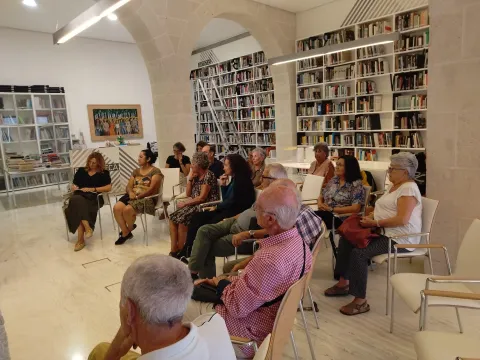
Palabras mayores arrives at MACA to go beyond the apparent. Because museums are places where we discover and learn, but also spaces designed for citizens to experience and reinvent.

This is a mediation project aimed at people over 60 years old who want, first of all, to learn about and reflect on contemporary art, the function of museums, and the vision of both established and emerging creators. On the other hand, the participating individuals will establish synergies with the collections existing in the museum, developing their own narrative based on what they find in the galleries through guided visits, open debates, artistic creation activities, and social and cultural empowerment dynamics.

The main objective is to transform the museum into a laboratory for cultural and artistic experimentation in which participants will contribute their vision and experience to the contents present in the museum, while carrying out an activity that provides them with new knowledge. It is an encounter in which the dialogue between the visitor and the museum takes place through contemporary art and the MACA collections, with the mediation of an educator who will act as a link between both.

As a result of these meetings, the Group proposes the creation of a platform to give visibility to artists living in Alicante. This pilot project at MACA, titled Visibility: an open window to the local creator, aims to showcase different Alicante creators, deepen and expand knowledge about contemporary art, and learn to view the collections housed in MACA from another perspective.

Visibility: an open window to the local creator will materialize with a series of sessions in which an artist will be invited to present their artistic trajectory, sharing their artistic concerns and reflections, the development of their creative process, their techniques, etc.

[gallery link="file" columns="2" ids="37825,37822"]

ACTI-0342
Imagen
WhatsApp-Image-2023-10-13-at-13.52.16.jpeg
5:30 PM
Library

Artistic Practice in the Era of Artificial Intelligence. From Sempere to the Present Day

Submitted by brandcode_deweloper on
Ross Film Festival

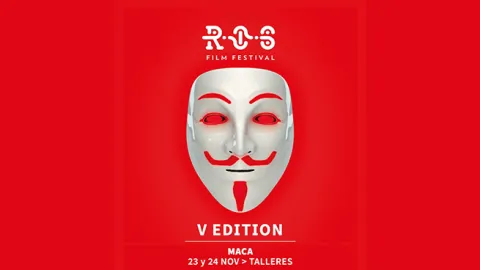
Artistic Practice in the Era of Artificial Intelligence. From Sempere to Today. The workshop, taught by Daniel G. Andújar, is included within the Ross Film Festival (international and online festival of science fiction short films with robots).

Thursday, November 23 from 4:00 PM to 7:00 PM

Friday, November 24 from 4:00 PM to 6:00 PM and final discussion from 6:00 PM to 7:00 PM with Daniel García Andújar and jury members (Javier Ordoñez, Professor of History of Science at the Autonomous University of Madrid and president of the ROS Film Festival jury; Lorena Sánchez, Editor-in-Chief of QUO magazine and science journalism writer since 2000; Natalia Pérez-Galdós, writer and science communicator; and Edite Felgueiras, scientific communicator at CERN)

This workshop proposes a dynamic intersection between art, science, and technology. Not only will the broad possibilities that emerging technologies offer to the artistic field be explored, but also homage will be paid to a visionary who crossed these boundaries long before they became a trend: Eusebio Sempere.

Sempere was a pioneer in his time, an artist who ventured into the world of calculation and programming to bring his artistic visions to life. His time at the Computing Center of the University of Madrid in the 1960s positions him as one of the precursors in the experimentation of art and technology. Using computers and algorithms, Sempere explored new forms of expression that challenged the artistic conventions of his era, always from a critical distance and logical prudence in an incipient stage of computer use in art.

Today, in a world where artificial intelligence, robotic assistance, deep learning, virtual reality, and other advanced technologies are reshaping the way we experience and create art, it is more relevant than ever to look back and learn from those who broke down the barriers between these seemingly disparate worlds. Each of these technologies presents its own ethical and practical challenges, but they also offer enormous potential to expand the boundaries of what is possible in the field of art.

The objective of this workshop is to update this dialogue and contextualize it in our contemporary reality. The aim is to foster an artistic practice that reflects both the concerns and opportunities of our time, using current technological tools, just as Sempere did with the technologies of his era.

Challenges and Critiques: The Double Face of Collaboration between Art, Science, and Technology

While we celebrate the possibilities that the union of art and technology brings us, it is crucial to also address the challenges and limitations inherent to this collaboration. We live in an era where technology not only facilitates creation, but also raises ethical and philosophical questions that we cannot ignore.

First, there is the issue of accessibility. Advanced technologies, while increasingly available, remain limited resources that can exacerbate existing inequalities in the art world. Who has access to these tools and who decides how they are used?

Furthermore, the incorporation of artificial intelligence and other technologies in art raises questions about authorship and originality. In a world where an algorithm can "create" a work of art, where do we draw the line between the machine and the human artist? Do we risk dehumanizing art, a field traditionally associated with the deepest expression of humanity?

We also face ethical dilemmas related to privacy and data exploitation. Many of these technologies depend on large datasets that often include personal information. How do we navigate this ethical terrain without compromising the integrity of our artistic work?

Finally, but no less importantly, there is the risk of excessive commercialization. With large corporations investing in the development of artistic technologies, how do we ensure that art does not simply become another commodity, stripped of its ability to provoke, question, and transform?

These are difficult questions with no easy answers. But these are discussions we need to have, especially in a workshop like this, where we seek not only to create, but also to critically reflect on what it means to be an artist in the digital age.

"Every Prompt Matters" Hamelin 77, a Spanish short film, wins first prize at the V edition of the ROS Film Festival

By consensus, the jury of the V edition of the ROS Film Festival has chosen a Spanish short film, Hamelin 77, as the winner. It is the first short film to address prompt engineering and its importance in the new communication between humans and machines. The announcement of the winners took place at the Teatre Arniches last weekend, presented by comedian Raquel Sastre and composer Alfonso Vilallonga.

The jury, whose deliberation took place at MACA, highlighted the relevance of the subject matter, as well as the different tools used in its development and the quality of the performances. "Every prompt matters," warn its creators.

The second prize was awarded to the British short film Doll+: Body Transmigration. Through the surreal spectacle of plastic dolls spinning in the sky to the rhythm of electronic music, the film reflects on capitalism, virtual existence, and the very essence of the human body.

The third prize was awarded to In too Deep, a disturbing short film in the style of Black Mirror proposals, which addresses the use of artificial intelligence to achieve the immortality of loved ones.

We highlight the mention awarded to an anti-war short film created by an Iranian director, Sprayer, the mention given to a short film made entirely with artificial intelligence, Ambient Piano No. 1. And the mention to Things were better before as best music video. The jury's vote was unanimous in all categories.

ACTI-0341
Imagen
104.jpg