Water Diffractions. The Invisible Fabric of the City

Submitted by maca on

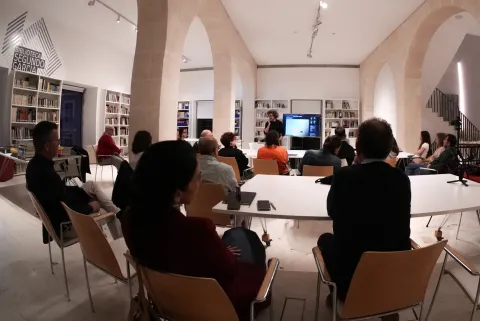
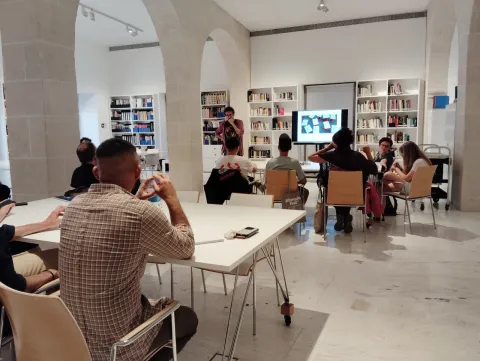
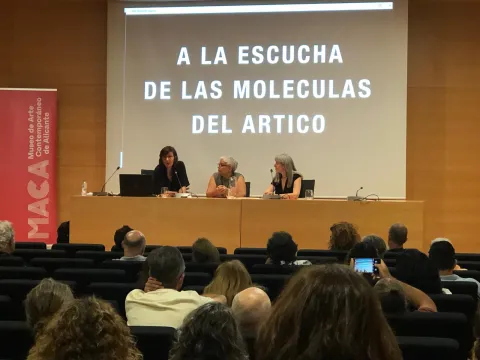
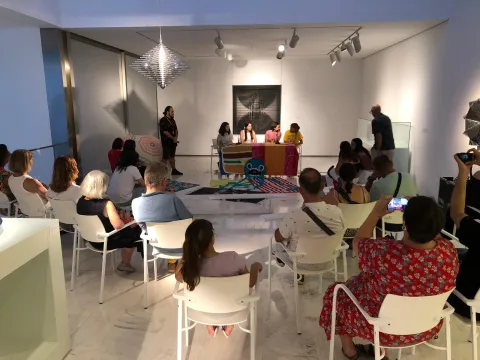
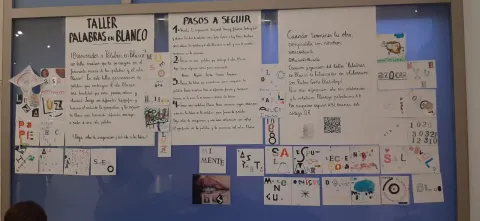
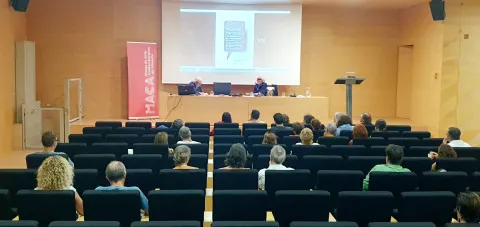
Public presentation of the results of the workshop Water Diffractions. The Invisible Fabric of the City led by Daniel G. Andújar.

We will have a public session in which the conclusions of the first phase of the workshop will be presented. The workshop will take place from March 16 to 18 (the group is already closed), in which we will work with open data from the urban water cycle and analog and digital tools to produce visual and narrative prototypes that make visible the "invisible city" of water beneath the asphalt.

Imagen
foto
Desactivado
18:30
Library
Entrada libre

Summer Scenic Campus – No More Boring Artists

Submitted by brandcode_deweloper on

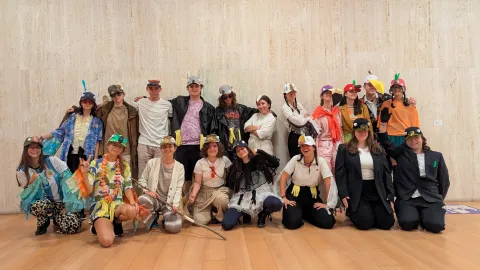
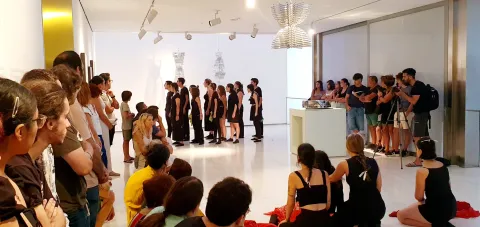
This summer, MACA hosts for the fourth consecutive year the Summer Scenic Campus – No More Boring Artists, an intensive laboratory of collective creation that combines contemporary art, critical thinking, and scenic practice.

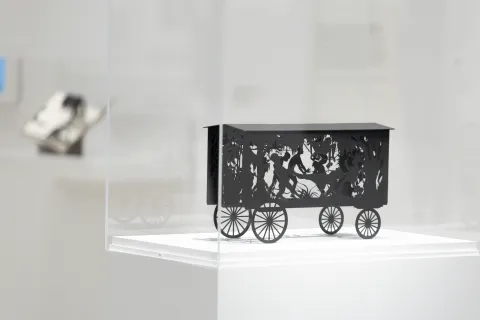
For two weeks, young people between 15 and 30 years old will work alongside Cía Ambulantes Lab in a creative process inspired by Afro-descendant artist Kara Walker, especially her work "Burning Village".

Kara Walker is one of the most impactful voices in contemporary art today. Her work uses drawing, film, sculpture, and shadow theater to confront the history of slavery, structural racism, gender, symbolic violence, and power tensions. With an aesthetic that combines the beautiful and the grotesque, the poetic and the brutal, Walker dismantles official narratives and invites us to look at what many prefer to hide.

Inspired by these themes, the group will develop a collective scenic creation where the body will be the main vehicle to explore concepts such as memory, cultural heritage, injustice, and the need for reparation.

The campus will culminate with a final presentation open to the public on Saturday, July 19, as a result of the collaborative work among participants.

An immersive, political, and challenging artistic experience… to stop being spectators and start to burn.

This is a project by the scenic company Ambulantes Lab for MACA and with the support of the Culture Department of Alicante and the Ministry of Education, Culture, Universities and Employment (GVA).


ACTI-0455
Imagen
Alt text
From 10:00 to 13:30 hours
Assembly Hall

Concert of Graphic Music

Submitted by brandcode_deweloper on

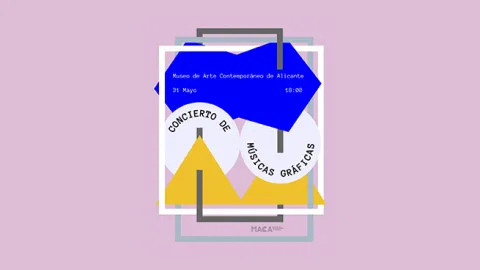
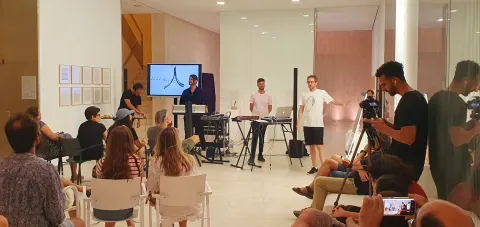
End of the Graphic Music Workshop at the museum. An experimental concert based on scores, algorithms, improvisation and collective creation. Come participate as an audience member!

Mariana Gutiérrez, Natalia Fernández and Héctor Bardisa will perform graphic scores that have been created during these months over six sessions.

ACTI-0446
Imagen
108.jpg
6:00 PM
90 minutes
3rd floor

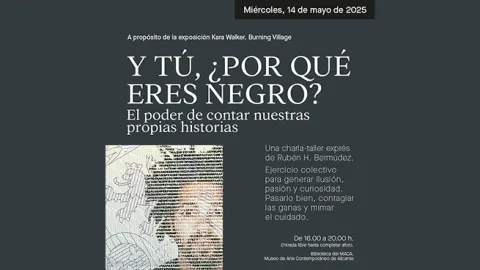
Afro-consciousness. About the project "And why are you Black?"

Submitted by brandcode_deweloper on
Museum Day 2025

Talk-workshop "Afroconsciousness", about the project Why are you Black? and workshop to create a collective work. The power of telling our own stories.

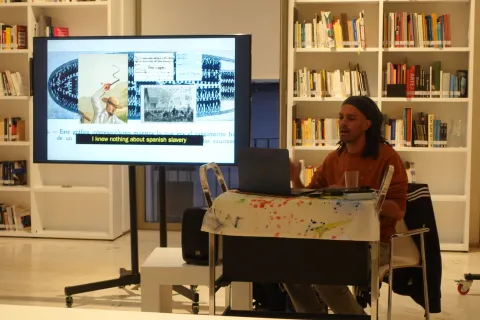
In the first part, Rubén H. Bermúdez will share the creative process behind his project 'Why are you Black?', from how the idea came about to its transformation into a book, exhibition and audiovisual piece. We will talk about the desire to tell stories, about doubts, creative blocks, family archives, the secrets of creative processes and the impulse to turn personal experience into something collective. It will be an intimate and open talk, with fragments of work, cross-references and ideas that invite you to create.

In the second part, we will create a small collective film in real time, inspired by the process of 'We All Like Bananas'. We will think together about what we want to talk about, we will divide tasks, we will record ourselves with whatever we have at hand and we will edit something together. A practical exercise to enjoy, share stories and learn how to manage a creative process.

Biography

In 2014 he started the project 'Why are you Black?'. Since then he has published a photo book with the same name (2017) and directed a film ('We All Like Bananas', 2021). His work is part of the collection of the Reina Sofía National Museum of Art.

He is co-founder and communications manager of 'Afro Consciousness', a cultural initiative founded in 2016 focused on advocating for, celebrating and disseminating the realities and knowledge of the Black, African and Afro-descendant community from Spain.

ACTI-0441
Imagen
36.jpg
From 4:00 PM to 8:00 PM
Library

Workshop of Graphic Music

Submitted by brandcode_deweloper on
Museum Day 2025

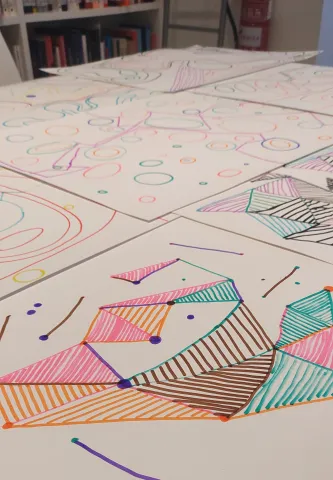
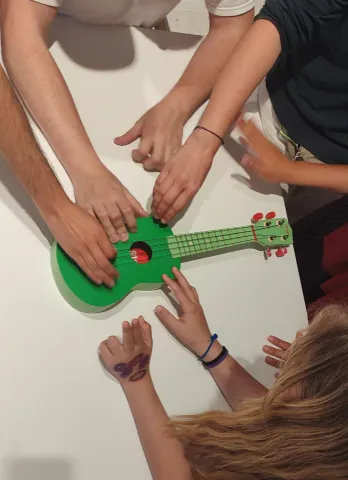
Discover the intersection between music and visual art in the Graphic Music Workshop, a creative laboratory where sound and image communicate with each other. This space is an invitation to play, experimentation, and collective imagination, in which participants of all ages and levels discover unique forms of expression through graphic scores.

Each session is unique and different. Throughout the workshop you will explore how to draw music and how to sonically interpret visual works, with inspiring examples from artists and composers who have worked on this artistic frontier. Through participatory dynamics, you will learn to create your own graphic scores and make them sound in surprising ways.

It is recommended to bring your own drawing materials. No prior training is necessary.

ACTI-0443
Imagen
WhatsApp-Image-2025-05-16-at-17.54.05.jpeg
5:30 PM
60 minutes
Library

Microworlds: Hidden Art in Plain Sight

Submitted by brandcode_deweloper on

Discover a hidden and fascinating world through the microscope in the workshop "Microworlds: Hidden Art in Plain Sight". We will explore the complex organic forms of a museum artwork, revealing details and textures that normally go unnoticed. Inspired by this invisible beauty, each participant will be able to reinterpret these patterns and fragments in their own fanzine, creating a unique publication that captures the essence of this hidden world and transforms it into art.

ACTI-0407
Imagen
Alt text
5:30 PM
60 minutes
Library

White Night 2024

Submitted by brandcode_deweloper on

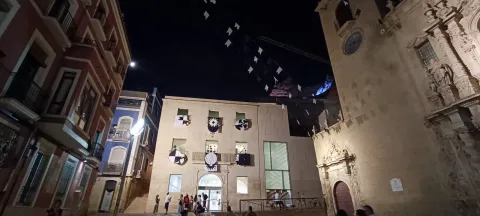
Museums and cultural centers present the programming of the White Night, the second major joint event of the year, which will take place on Friday, July 12.

The City Council, the Provincial Council, The Ocean Race Museum, the University and Aguas de Alicante propose a varied program of activities that includes guided tours, family workshops, music, cinema and lectures, for all tastes and ages during the afternoon and evening of Friday.

The MACA, Las Cigarreras, the Exhibition Hall of the Fish Market (on behalf of the City Council), the MUBAG, the MARQ and the Alicante Cultural Institute Juan Gil Albert (on behalf of the Provincial Council), the University Museum (MUA), the University Headquarters City of Alicante, the Water Museum and The Ocean Race Museum, following the good reception of previous editions, expect a large influx of visitors.

ACTI-0381
Imagen
noche-blanco-alicante.jpg
From 20:00 to 23:30 hours

Artistic Practice in the Era of Artificial Intelligence. From Sempere to the Present Day

Submitted by brandcode_deweloper on
Ross Film Festival

Artistic Practice in the Era of Artificial Intelligence. From Sempere to Today. The workshop, taught by Daniel G. Andújar, is included within the Ross Film Festival (international and online festival of science fiction short films with robots).

Thursday, November 23 from 4:00 PM to 7:00 PM

Friday, November 24 from 4:00 PM to 6:00 PM and final discussion from 6:00 PM to 7:00 PM with Daniel García Andújar and jury members (Javier Ordoñez, Professor of History of Science at the Autonomous University of Madrid and president of the ROS Film Festival jury; Lorena Sánchez, Editor-in-Chief of QUO magazine and science journalism writer since 2000; Natalia Pérez-Galdós, writer and science communicator; and Edite Felgueiras, scientific communicator at CERN)

This workshop proposes a dynamic intersection between art, science, and technology. Not only will the broad possibilities that emerging technologies offer to the artistic field be explored, but also homage will be paid to a visionary who crossed these boundaries long before they became a trend: Eusebio Sempere.

Sempere was a pioneer in his time, an artist who ventured into the world of calculation and programming to bring his artistic visions to life. His time at the Computing Center of the University of Madrid in the 1960s positions him as one of the precursors in the experimentation of art and technology. Using computers and algorithms, Sempere explored new forms of expression that challenged the artistic conventions of his era, always from a critical distance and logical prudence in an incipient stage of computer use in art.

Today, in a world where artificial intelligence, robotic assistance, deep learning, virtual reality, and other advanced technologies are reshaping the way we experience and create art, it is more relevant than ever to look back and learn from those who broke down the barriers between these seemingly disparate worlds. Each of these technologies presents its own ethical and practical challenges, but they also offer enormous potential to expand the boundaries of what is possible in the field of art.

The objective of this workshop is to update this dialogue and contextualize it in our contemporary reality. The aim is to foster an artistic practice that reflects both the concerns and opportunities of our time, using current technological tools, just as Sempere did with the technologies of his era.

Challenges and Critiques: The Double Face of Collaboration between Art, Science, and Technology

While we celebrate the possibilities that the union of art and technology brings us, it is crucial to also address the challenges and limitations inherent to this collaboration. We live in an era where technology not only facilitates creation, but also raises ethical and philosophical questions that we cannot ignore.

First, there is the issue of accessibility. Advanced technologies, while increasingly available, remain limited resources that can exacerbate existing inequalities in the art world. Who has access to these tools and who decides how they are used?

Furthermore, the incorporation of artificial intelligence and other technologies in art raises questions about authorship and originality. In a world where an algorithm can "create" a work of art, where do we draw the line between the machine and the human artist? Do we risk dehumanizing art, a field traditionally associated with the deepest expression of humanity?

We also face ethical dilemmas related to privacy and data exploitation. Many of these technologies depend on large datasets that often include personal information. How do we navigate this ethical terrain without compromising the integrity of our artistic work?

Finally, but no less importantly, there is the risk of excessive commercialization. With large corporations investing in the development of artistic technologies, how do we ensure that art does not simply become another commodity, stripped of its ability to provoke, question, and transform?

These are difficult questions with no easy answers. But these are discussions we need to have, especially in a workshop like this, where we seek not only to create, but also to critically reflect on what it means to be an artist in the digital age.

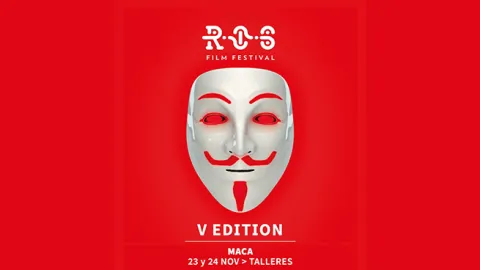
"Every Prompt Matters" Hamelin 77, a Spanish short film, wins first prize at the V edition of the ROS Film Festival

By consensus, the jury of the V edition of the ROS Film Festival has chosen a Spanish short film, Hamelin 77, as the winner. It is the first short film to address prompt engineering and its importance in the new communication between humans and machines. The announcement of the winners took place at the Teatre Arniches last weekend, presented by comedian Raquel Sastre and composer Alfonso Vilallonga.

The jury, whose deliberation took place at MACA, highlighted the relevance of the subject matter, as well as the different tools used in its development and the quality of the performances. "Every prompt matters," warn its creators.

The second prize was awarded to the British short film Doll+: Body Transmigration. Through the surreal spectacle of plastic dolls spinning in the sky to the rhythm of electronic music, the film reflects on capitalism, virtual existence, and the very essence of the human body.

The third prize was awarded to In too Deep, a disturbing short film in the style of Black Mirror proposals, which addresses the use of artificial intelligence to achieve the immortality of loved ones.

We highlight the mention awarded to an anti-war short film created by an Iranian director, Sprayer, the mention given to a short film made entirely with artificial intelligence, Ambient Piano No. 1. And the mention to Things were better before as best music video. The jury's vote was unanimous in all categories.

ACTI-0341
Imagen
104.jpg

White Night 2023

Submitted by brandcode_deweloper on

Museums and cultural centers come together once again to celebrate the White Night.

The City Council, the Provincial Council, The Ocean Race Museum, the University and Aguas de Alicante propose a wide program of activities that includes guided tours, family workshops, music, film screenings and lectures, for all tastes and ages, on July 21st.

The MACA, Las Cigarreras, the Exhibition Hall of the Fish Market (on behalf of the City Council), the MUBAG, the MARQ and the Alicante Cultural Institute Juan Gil Albert (on behalf of the Provincial Council), the University Museum, the Water Museum and The Ocean Race Museum, following the positive reception of previous editions, expect a large number of attendees during the evening of Friday the 21st.

The website is www.museosdealicante.com and you can find all the information about the programs of all the participating museums and cultural centers there.

ACTI-0322
Imagen
noche-blanco-alicante.jpg
From 8:00 PM to 12:00 AM

Creative Creation Processes. A Workshop. Three Authors
Submitted by brandcode_deweloper on

Creative Creation Processes. A Workshop. Three Authors
Manuela Lorante, Alex Domenech and Paula Artés

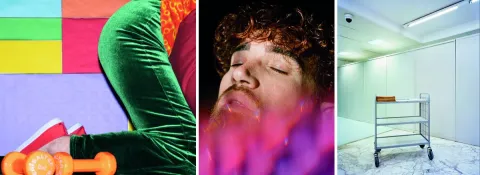
This workshop designed by PHOTOALICANTE proposes to address creative processes from the perspective and work of three antagonistic authors. Over two days, Manuela Lorente, Alex Domenech and Paula Artés will design and conduct three modules in which participants will work on three different ways of approaching the photographic act, the research process and the production results.

ACTI-0294
Imagen
cabecera-taller-scaled-1.jpg
From 10:00 to 13:00 hours and from 15:00 to 18:00 hours
Library