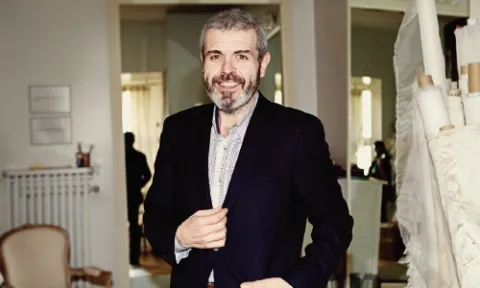
Meeting with Lorenzo Caprile

Submitted by brandcode_deweloper on
Alicante Classical Theater Festival

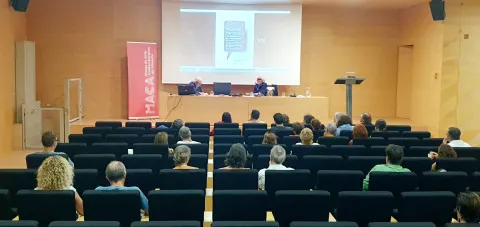
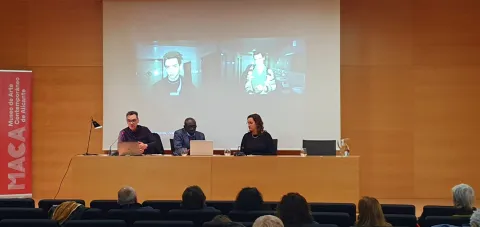
Complementary activity included within the 8th edition of the Alicante Classical Theater Festival.

Born in Madrid in 1967, Lorenzo Caprile trained as a dressmaker at the Fashion Institute of Technology in New York and at the International Fashion Polytechnic in Florence; he is also a graduate in Language and

Literature from the University of Florence.

In 1986 he began working for important fashion firms, both Italian and Spanish. But it was not until 1993 that he opened his workshop in the Salamanca neighborhood of Madrid.

Specialized in custom ceremonial suits, his creations have walked red carpets and his unique and handcrafted garments have been featured on numerous covers of the most well-known publications. Since 2006 his name has also been linked to the creation of costumes for theater, film, dance and opera, due to his other facet: that of costume designer, highlighting his work for the National Classical Theater Company and the November Company.

He is the author of the books "Let's Get Married" and "What We Talk About When We Talk About Style" and regularly participates in round tables and conferences at the country's leading design institutions and schools. He collaborates on El Comanche, a program on Onda Cero directed by Julia Otero.

He has received numerous awards for the excellence of his work as a dressmaker and costume designer. He has been awarded the Gold Medal for Merit in the Fine Arts (2018). And on television he has been one of the jury members of the hugely popular RTVE program "Masters of Sewing" and creator and presenter of the format "Sewing and Telling" on Telemadrid.

[gallery link="file" columns="2" ids="40833,40836,40839,40842"]

ACTI-0385
Imagen
Sin-titulo-2.jpg
6:00 PM
90 minutes
Assembly Hall

White Night 2024

Submitted by brandcode_deweloper on

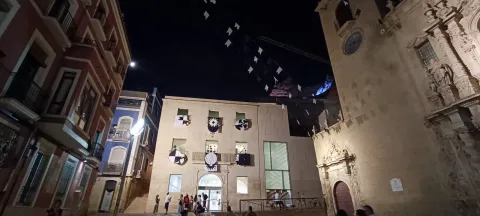
Museums and cultural centers present the programming of the White Night, the second major joint event of the year, which will take place on Friday, July 12.

The City Council, the Provincial Council, The Ocean Race Museum, the University and Aguas de Alicante propose a varied program of activities that includes guided tours, family workshops, music, cinema and lectures, for all tastes and ages during the afternoon and evening of Friday.

The MACA, Las Cigarreras, the Exhibition Hall of the Fish Market (on behalf of the City Council), the MUBAG, the MARQ and the Alicante Cultural Institute Juan Gil Albert (on behalf of the Provincial Council), the University Museum (MUA), the University Headquarters City of Alicante, the Water Museum and The Ocean Race Museum, following the good reception of previous editions, expect a large influx of visitors.

ACTI-0381
Imagen
noche-blanco-alicante.jpg
From 20:00 to 23:30 hours

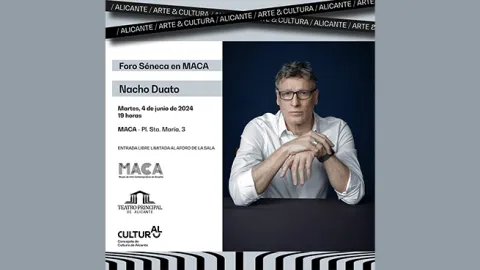
Séneca Forum at MACA

Submitted by brandcode_deweloper on

Spanish dancer and choreographer. Initially trained in Spain and later at prestigious foreign centers, in 1979 he joined the Spanish National Ballet, directed at that time by Víctor Ullate, and two years later became part of the National Theater of The Hague. In 1983 he created his first ballet, Jardí tancat, with music by María del Mar Bonet. He has worked with Maurice Béjart, Alvin Ailey and Jirí Kylian. From 1990 to 2010 he was artistic director and choreographer of the ballet of the National Lyric Theater, currently the National Dance Company.

His work as a dancer and choreographer has earned him numerous awards, including the National Dance Prize (2003) and the Gold Medal for Fine Arts (1998). He also holds the VSCD Gouden Dansprijs (Gold Dance Prize, 1987) and the Benois de la Danse Prize from the Stuttgart Opera (2000). Also occasionally dedicated to film, in 1992 he starred in a documentary by Pilar Miró and in 1994 he made his debut in the short film El bosque de los espejos, where he played a medieval knight. Since then he has acted in titles such as Puro veneno (1996), by Xavier Ribera; Piedras (2002), where he plays the podiatrist who cures the ailments of actress Ángela Molina; and in El forastero (2002), by Federico García Hurtado, where he plays an extraterrestrial. He has also appeared in two television series: La virtud del asesino (1997) and El secreto de la porcelana (1999).

ACTI-0377
Imagen
76.jpg
7:00 PM
90 minutes
Auditorium

Impure Ecological Experiments Inside and Outside Architecture

Submitted by brandcode_deweloper on

Presentation of the book by José María Torres Nadal.

In the Library, a first exhibition "the intervened body" will be displayed, which the book makes special reference to, and a second exhibition at the headquarters of Cuarta Piel, on Jacinto Street of objects "the intervened books".

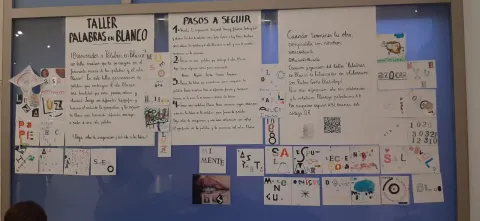
Along the route that runs between one location and the other, an intervention will be carried out that will consist of pasting pages from the book WORDS OF TIME AND CLIMATE edited by Bartlebooth on the walls of the street, in the manner of small posters. This book is a compendium of 26 concepts related to the worlds that concern climate change.

Presentation of the book by José María Torres Nadal.

In the Library, a first exhibition "the intervened body" will be displayed, which the book makes special reference to, and a second exhibition at the headquarters of Cuarta Piel, on Jacinto Street of objects "the intervened books".

Along the route that runs between one location and the other, an intervention will be carried out that will consist of pasting pages from the book WORDS OF TIME AND CLIMATE edited by Bartlebooth on the walls of the street, in the manner of small posters. This book is a compendium of 26 concepts related to the worlds that concern climate change.

ACTI-0364
Imagen
101.jpg
6:30 PM
60 minutes
Assembly Hall

Artistic Practice in the Era of Artificial Intelligence. From Sempere to the Present Day

Submitted by brandcode_deweloper on
Ross Film Festival

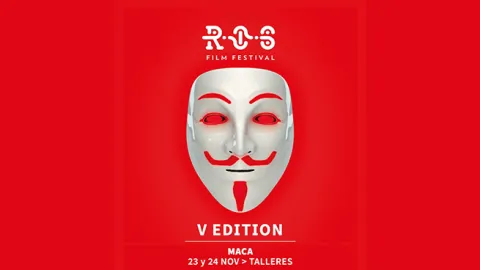
Artistic Practice in the Era of Artificial Intelligence. From Sempere to Today. The workshop, taught by Daniel G. Andújar, is included within the Ross Film Festival (international and online festival of science fiction short films with robots).

Thursday, November 23 from 4:00 PM to 7:00 PM

Friday, November 24 from 4:00 PM to 6:00 PM and final discussion from 6:00 PM to 7:00 PM with Daniel García Andújar and jury members (Javier Ordoñez, Professor of History of Science at the Autonomous University of Madrid and president of the ROS Film Festival jury; Lorena Sánchez, Editor-in-Chief of QUO magazine and science journalism writer since 2000; Natalia Pérez-Galdós, writer and science communicator; and Edite Felgueiras, scientific communicator at CERN)

This workshop proposes a dynamic intersection between art, science, and technology. Not only will the broad possibilities that emerging technologies offer to the artistic field be explored, but also homage will be paid to a visionary who crossed these boundaries long before they became a trend: Eusebio Sempere.

Sempere was a pioneer in his time, an artist who ventured into the world of calculation and programming to bring his artistic visions to life. His time at the Computing Center of the University of Madrid in the 1960s positions him as one of the precursors in the experimentation of art and technology. Using computers and algorithms, Sempere explored new forms of expression that challenged the artistic conventions of his era, always from a critical distance and logical prudence in an incipient stage of computer use in art.

Today, in a world where artificial intelligence, robotic assistance, deep learning, virtual reality, and other advanced technologies are reshaping the way we experience and create art, it is more relevant than ever to look back and learn from those who broke down the barriers between these seemingly disparate worlds. Each of these technologies presents its own ethical and practical challenges, but they also offer enormous potential to expand the boundaries of what is possible in the field of art.

The objective of this workshop is to update this dialogue and contextualize it in our contemporary reality. The aim is to foster an artistic practice that reflects both the concerns and opportunities of our time, using current technological tools, just as Sempere did with the technologies of his era.

Challenges and Critiques: The Double Face of Collaboration between Art, Science, and Technology

While we celebrate the possibilities that the union of art and technology brings us, it is crucial to also address the challenges and limitations inherent to this collaboration. We live in an era where technology not only facilitates creation, but also raises ethical and philosophical questions that we cannot ignore.

First, there is the issue of accessibility. Advanced technologies, while increasingly available, remain limited resources that can exacerbate existing inequalities in the art world. Who has access to these tools and who decides how they are used?

Furthermore, the incorporation of artificial intelligence and other technologies in art raises questions about authorship and originality. In a world where an algorithm can "create" a work of art, where do we draw the line between the machine and the human artist? Do we risk dehumanizing art, a field traditionally associated with the deepest expression of humanity?

We also face ethical dilemmas related to privacy and data exploitation. Many of these technologies depend on large datasets that often include personal information. How do we navigate this ethical terrain without compromising the integrity of our artistic work?

Finally, but no less importantly, there is the risk of excessive commercialization. With large corporations investing in the development of artistic technologies, how do we ensure that art does not simply become another commodity, stripped of its ability to provoke, question, and transform?

These are difficult questions with no easy answers. But these are discussions we need to have, especially in a workshop like this, where we seek not only to create, but also to critically reflect on what it means to be an artist in the digital age.

"Every Prompt Matters" Hamelin 77, a Spanish short film, wins first prize at the V edition of the ROS Film Festival

By consensus, the jury of the V edition of the ROS Film Festival has chosen a Spanish short film, Hamelin 77, as the winner. It is the first short film to address prompt engineering and its importance in the new communication between humans and machines. The announcement of the winners took place at the Teatre Arniches last weekend, presented by comedian Raquel Sastre and composer Alfonso Vilallonga.

The jury, whose deliberation took place at MACA, highlighted the relevance of the subject matter, as well as the different tools used in its development and the quality of the performances. "Every prompt matters," warn its creators.

The second prize was awarded to the British short film Doll+: Body Transmigration. Through the surreal spectacle of plastic dolls spinning in the sky to the rhythm of electronic music, the film reflects on capitalism, virtual existence, and the very essence of the human body.

The third prize was awarded to In too Deep, a disturbing short film in the style of Black Mirror proposals, which addresses the use of artificial intelligence to achieve the immortality of loved ones.

We highlight the mention awarded to an anti-war short film created by an Iranian director, Sprayer, the mention given to a short film made entirely with artificial intelligence, Ambient Piano No. 1. And the mention to Things were better before as best music video. The jury's vote was unanimous in all categories.

ACTI-0341
Imagen
104.jpg

White Night 2023

Submitted by brandcode_deweloper on

Museums and cultural centers come together once again to celebrate the White Night.

The City Council, the Provincial Council, The Ocean Race Museum, the University and Aguas de Alicante propose a wide program of activities that includes guided tours, family workshops, music, film screenings and lectures, for all tastes and ages, on July 21st.

The MACA, Las Cigarreras, the Exhibition Hall of the Fish Market (on behalf of the City Council), the MUBAG, the MARQ and the Alicante Cultural Institute Juan Gil Albert (on behalf of the Provincial Council), the University Museum, the Water Museum and The Ocean Race Museum, following the positive reception of previous editions, expect a large number of attendees during the evening of Friday the 21st.

The website is www.museosdealicante.com and you can find all the information about the programs of all the participating museums and cultural centers there.

ACTI-0322
Imagen
noche-blanco-alicante.jpg
From 8:00 PM to 12:00 AM

Conversation between Juan Carlos Robles and Babacar Mbaye

Submitted by brandcode_deweloper on

On the occasion of the exhibition at Aural Gallery "Floating Crowd (Multitud flotante)". Conversation between Juan Carlos Robles and Babacar Mbaye Diop, curator of the Dakar Biennial.

Subsequently, opening at Aural gallery at 8 PM

ACTI-0287
Imagen
WhatsApp-Image-2023-02-10-at-18.50.05.jpeg
6:30 PM
60 minutes
Assembly Hall

When Form Was a Matter of State

Submitted by brandcode_deweloper on
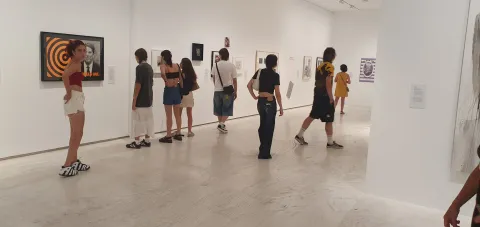
Comments on the Exhibition: Art in a Wasteland 1939-1959

When form was a matter of State.

Comments on the exhibition: Art in a Barren Land 1939-1959 curated by Nacho París.

Friday, November 18 at 6:30 p.m. Free admission until capacity is reached

Early Francoism—whether Falangist or National Catholic—had a determined cultural endeavor: first more of empire, crucifix and race, of academic or popular art, and later more Spanish and mystical, avant-garde and international. But that State—praying to God and striking with the hammer—prohibited or promoted, always decidedly, certain artistic forms or others as it saw fit. That was a fundamental part of its policies, whether for indoctrination or internationalization. And in those script changes, it found the determined support of the American friend—welcome Mr. Marshall, Hiroshima and Nagasaki—who was also fiercely committed to demonstrating, through art, that capitalism was the natural territory of individual freedom. For less time than Francoism enjoyed did Hitler's Germany—a tyrant who had dreamed of being an artist and from whom Oskar Kokoschka snatched a scholarship in Vienna—develop its fierce classicist cultural project, of extermination and "degenerate art."

They were convulsive times, terribly violent, that ended the lives of many, that pushed so many into exile. (And another State cultural project, that of Cárdenas' Mexico, would be a refuge, a new home for artists and intellectuals). Times in which science, culture and reason of state walked hand in hand with horror, leaving a hangover of astonishment and skepticism toward the Western civilizing project. Times in which art was radically conditioned by history and political thought.

Nacho París

Dilettante, art enthusiast (still without knowing what it is or when it happens), has coincided with it by interpreting various roles that time and fortune have proposed to him: that of student, that of spectator, that of artist, that of theorist, that of critic and writer, that of activist, that of transporter and exhibition installer and that of curator or curator—as one prefers—. (And very briefly and with little success that of pedagogue). Consequently he has drawn, photographed, edited videos, has written and spoken, has hung his own paintings and those of others and organized some of his own and others' exhibitions. And in all of this, so as not to feel alone, he has created and participated in various collectives.

ACTI-0275
Imagen
IMG_20221118_183709_032-scaled.jpg
6:30 PM
60 minutes
Assembly Hall

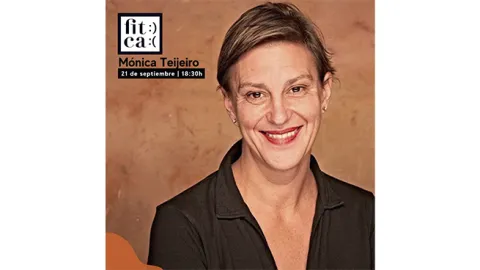
Presence and Inspiration of Contemporary Art in Theatrical Scenography. Mónica Teijeiro

Submitted by brandcode_deweloper on
International Classical Theater Festival of Alicante

International Classical Theater Festival of Alicante

Presence and inspiration of contemporary art in theatrical scenography

Bachelor's degree in Fine Arts and advanced degree in Scenography from RESAD, she combines her work as a set designer and costume designer with teaching. She has been a finalist twice by the Association of Stage Directors for the Joseph Gaudí Award for Scenography in 2018 and 2019 and a candidate for the Max Awards for her work in "Life is a Dream".

Free admission limited to venue capacity.

ACTI-0255
Imagen
28.jpg
6:30 PM
Library

The reading of light in the scene. Juanjo Llorens

Submitted by brandcode_deweloper on
International Classical Theater Festival of Alicante

International Classical Theater Festival of Alicante

One of the most recognized lighting designers in national and international performing arts. Technical director, lighting designer and educator, his works have been awarded with the most prestigious prizes, working on both large-scale projects and small productions in the Off-circuit. Winner of 4 Max Awards in 2011 for La función por hacer, 2013 for De ratones y hombres, 2019 for El curioso incidente del perro a medianoche and 2021 for La mort i la donzella.

ACTI-0254
Imagen
20220914_184537-scaled.jpg
6:30 PM
Library