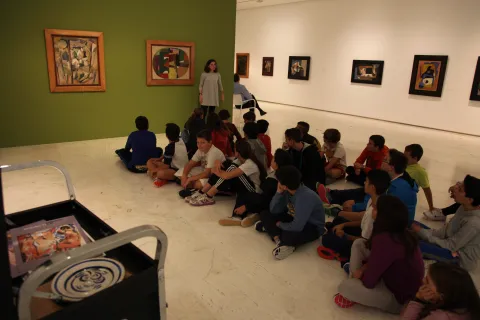
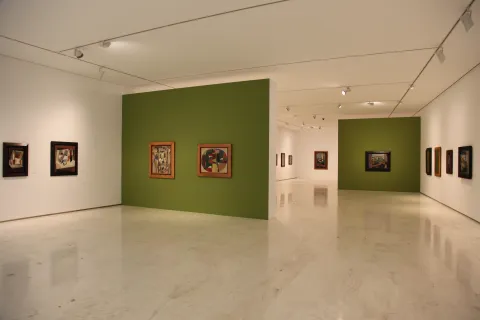
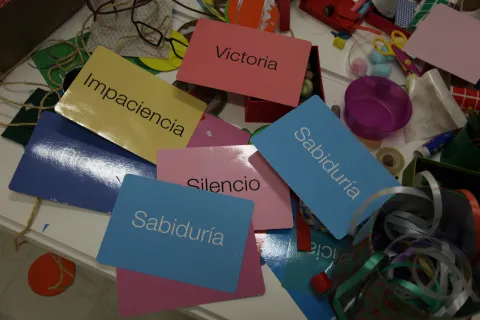
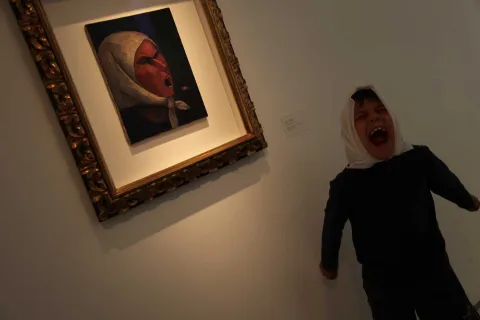
Workshop exhibition. Telefónica Cubist Collection
The exhibition that emerged around the contextualization of Juan Gris's work proposes a vision of Cubism alternative to that of traditional historiography.
Although the importance of this movement is vital for contemporary art, it is usually identified exclusively with Braque and Picasso, as well as limited to the artistic environment of Paris and World War I. However, there were other cubisms that gathered the different proposals of French, Latin American, and Spanish artists.
Juan Gris is one of the best representatives of these other cubisms. His work is not only important for the continuity it represents in the cubist movement after 1918, but it is also fundamental for connecting the development of modernity in Europe with Latin America.
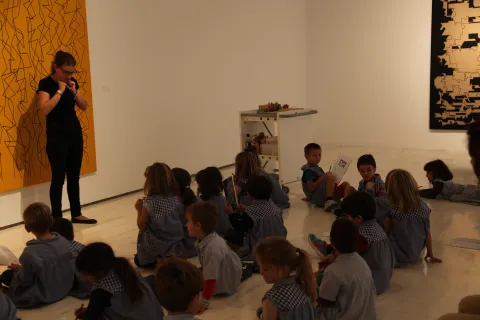
On this occasion, visits can be organized around two fundamental themes of this movement:
The portrait, where the aim is to understand the different types of portraits: close-up or bust, medium shot or torso, full shot or full-length figure, etc. The importance of clothing for the portrait. The physical and psychological representation of a character. The title of the work—what can be known about the subject through the title of the painting?
The relationship of cubism with the different artistic expressions of the era (music, literature, performing arts) and describing somewhat the panorama in which cubist painters moved.
The still life where light and objects are the protagonists; glasses, bottles, furniture, newspapers... The windows that can be interpreted as the serene and metaphorical counterposition between the two worlds that make up the artist's vision: interior and exterior—art and life—in the borderland of the open window.
In collaboration with the Explicarte Association.