Project Terra. Miguel Martínez
Miguel Martínez Perallón Terra Project. Plan for the recovery and enhancement of the Cultural Landscape of Camp d'Alacant.
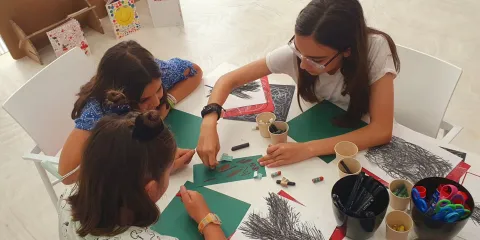
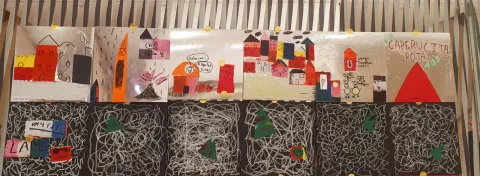
The Comarca of L'Alacantí has become a paradigm of territories with valuable patrimonial and landscape resources threatened by an unstoppable urban development pressure and the abandonment of a large part of these assets. The Huerta of Alicante constituted for centuries a true system of systems through which Alicante achieved worldwide fame and prestige. In a context in which most heritage preservation policies and citizen participation for urban planning models have failed, the Terra Project emerges, promoted by the NGO Arquitectura Sin Fronteras and the College of Architects. Terra is an education program for global citizenship that brings together around thirty citizen associations and interested individuals, along with key institutions in resolving this serious conflict.
In recent days, Alicante media outlets are echoing the Wines of Alicante DOP campaign, in which a new image is adopted based on the creation of the "Junta d´Inhibició del Ví foraster d'Alacant", a privilege granted by Ferdinand the Catholic in 1510 in Valladolid. The campaign has been made possible thanks to the work carried out by researchers from the MARQ and the University of Alicante, and they demonstrate that this organism would constitute one of the oldest Designations of Origin in the world.
The results of this study, well celebrated by Alicante society, contrast sharply with the state of ruin in which the cultural landscape that gave rise to the production of those colossal wines is found.
In a semi-arid environment such as that of the comarca of L'Alacantí, the miracle of the ancient huerta was possible thanks to the creation of a network of hydraulic infrastructure formed by weirs, such as those of Sant Joan and Mutxamel, irrigation channels, lateral channels and secondary channels, along with the Tibi Dam, which came into operation in 1594 under the reign of Philip II, for centuries considered the largest dam in the known world. Most of these elements still exist today, although they present a very poor state of conservation in many cases. In addition to these patrimonial resources, the territory of the Ancient Huerta has a high concentration of Assets of Cultural Interest, 28 towers; currently 25 refuge towers and 3 watchtowers are preserved, and it is known that around 40 towers existed throughout the huerta. All of them are merely the tip of the iceberg of a patrimonial network of more than 200 assets, including houses and villas of the Huerta, religious architecture, wineries, mills, historic centers and traditional paths that constitute a unique ensemble of great beauty and incalculable value. Unfortunately, this valuable system is on the brink of extinction as a result of high urban development pressure and the abandonment of a large part of these assets.
Faced with this situation, the NGO Arquitectura Sin Fronteras España, ASFE, the Official College of Architects of the Valencian Community, COACV, together with the Territorial College of Architects of Alicante, CTAA, through the education program for global citizenship "TERRA, THE CULTURAL LANDSCAPE OF CAMP D'ALACANT. Structuring a sustainable comarca". The initiative brings together around thirty Alicante associations that work for the recovery of a narrative that gives new meaning to the territory of the Ancient Huerta, with the objective of promoting the recovery of this important patrimonial and landscape ensemble. Furthermore, the Terra Project has the support of the City Councils of Alicante, Mutxamel, Sant Joan d' Alicante, El Campello, Tibi, the Provincial Council of Alicante and the Marc.