Heterotopias

Submitted by brandcode_deweloper on
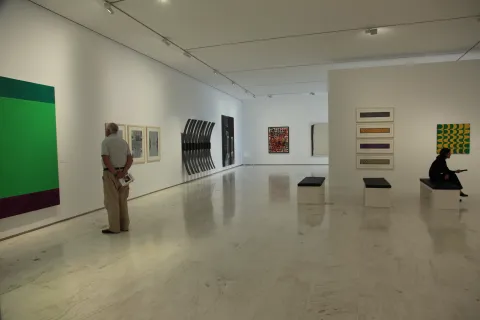
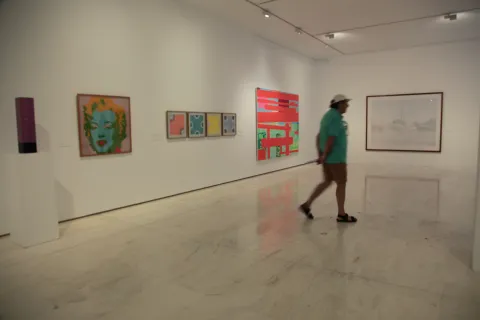
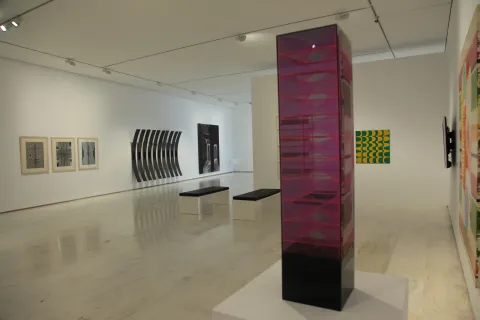
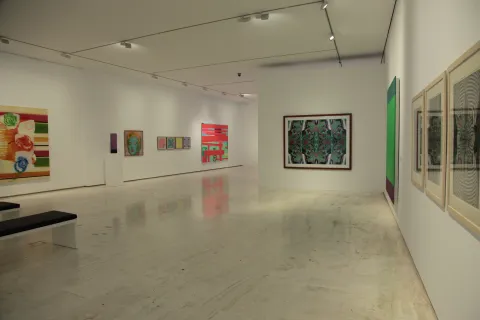
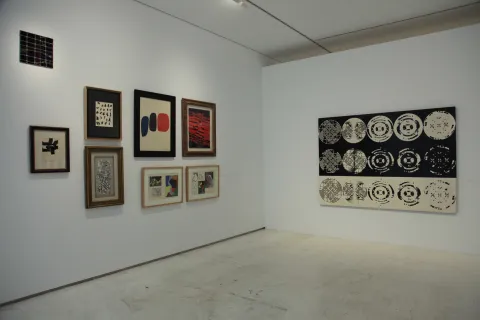
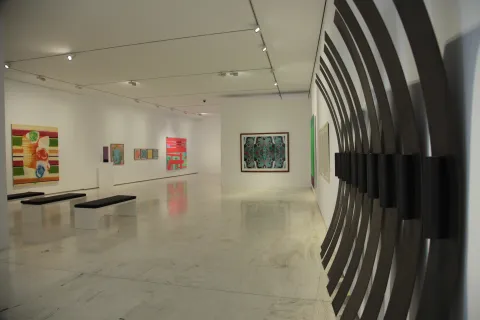
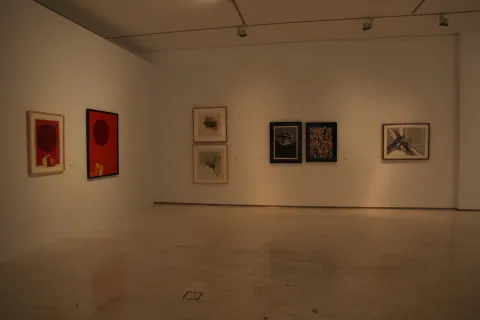
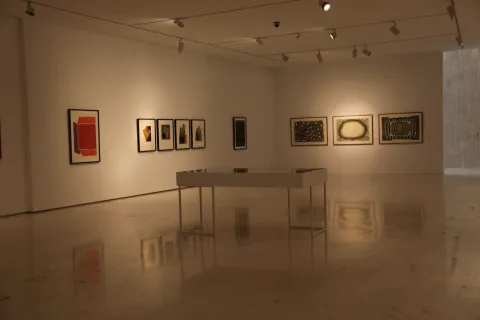
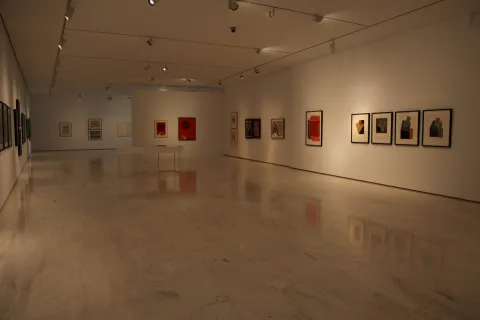
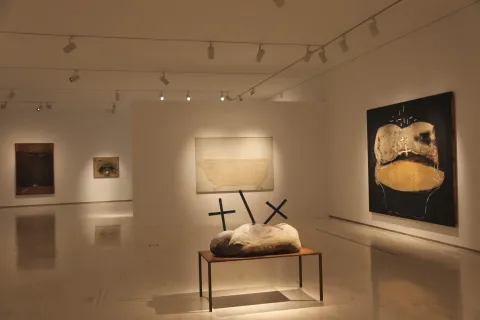
CIRCA XX Collection of the IAACC Pablo Serrano Museum in Zaragoza

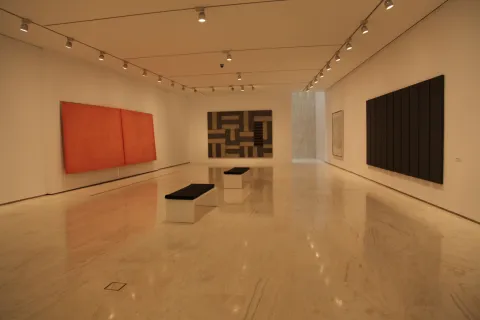
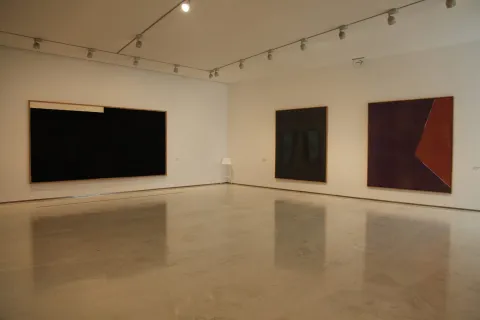
The set of works that make up the CIRCA XX Collection was acquired by the Government of Aragon from its owner Pilar Citoler at the end of 2013, through a mixed formula that included purchase and donation. Since then it has been assigned as part of the permanent collection fund of the IAACC Pablo Serrano in Zaragoza for its custody and exhibition. A set of 1200 works that includes paintings, drawings, graphic works, photography, sculpture, installations and video, which has become one of the reference collections in the national and international panorama. 

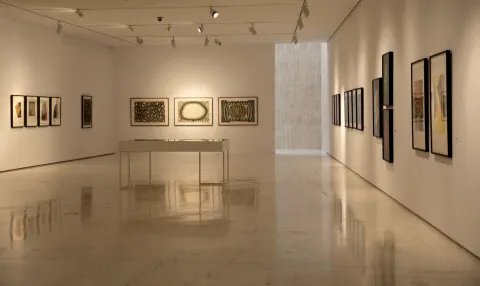
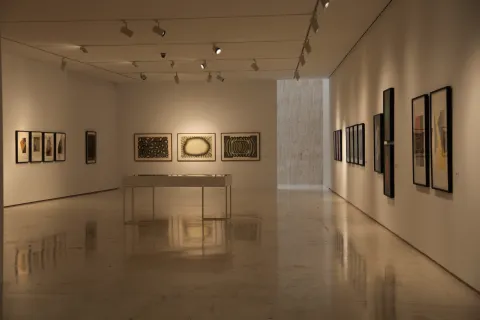
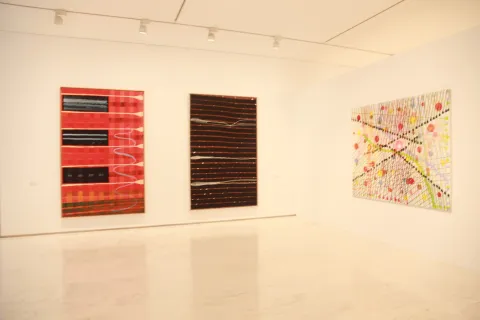
This selection of works is titled Heterotopias, a neologism coined in 1967 by French philosopher Michel Foucault, which he constructed from the Greek words "heteros" (different) and "topos" (place), as a denunciation of history's interest only in time. The concept of Heterotopia claims the contemporary world par excellence, an era where space is heterogeneous, simultaneous, juxtaposed where the near and the far coexist, one beside the other and the dispersed; where we find those "other places" in which elements distributed through time form a set of relationships, a map of networks and synergies, a fatal intertwining of time with space. 

Through transgenerational connections we propose a reading without chronology. Only to look. Early artists linked with artistic avant-gardes that seek the essence of forms by banishing the superfluous and retracing the path until reaching the origin, the foundation of forms to be witnesses of the conjugations of black and the dissipations of transparency. Other artists experiment with color and geometry: formal logic and constructive tradition are combined with computation and new technologies proposing visual games, concrete optical effects, dynamic, as virtual as perceptible subjected to a frenetic rhythm established by the repetition and interaction of colors. And transforming perception, placing emphasis both on what is seen and what is suggested, later artists announce cold and distant environments subjected to the very fact of seeing or not seeing, dazzled by color or by its absence, crossed by a blinding light close to invisibility that constructs a mental state in permanent blur, an artificial atmosphere that captures the abstraction of reality. The Heterotopias constructed in real time and space are the places where utopias are fulfilled. 

EXPO-0031
Imagen
IMG_4080.jpg
/sites/default/files/inline-images/resources/exposiciones/EXPO-0031/folleto-cast_8.pdf
Henri Michaux, Alexander Calder, Jean Dubuffet, Equipo 57, Eusebio Sempere, Eduardo Chillida, Pablo Palazuelo, Erwin Bechtold, Ellsworth Kelly, Cristina Iglesias, Elena Asins, Pilar Urbano, Atsuko Tanaka, Luis Gordillo, Sol Lewitt, David Nash, Tomás García Asensio, Don Kunkel, Francisco Sobrino, Alex Haas, Rosa Brun, Andy Warhol, Mitsuo Miura, Felicidad Moreno, José Ramón Amondarain, José Manuel Ballester, Paul Graham, Mayte Vieta, Chema Alvargonzález y Edward Ruscha.
Rosa María Castells

Eusebio Sempere/Abel Martín. The Music of Numbers That Do Not Exist

Submitted by brandcode_deweloper on
Sempere Collection of the MACA


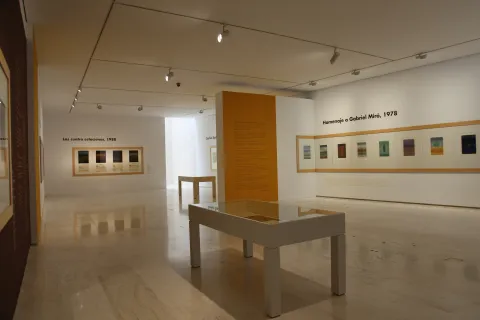
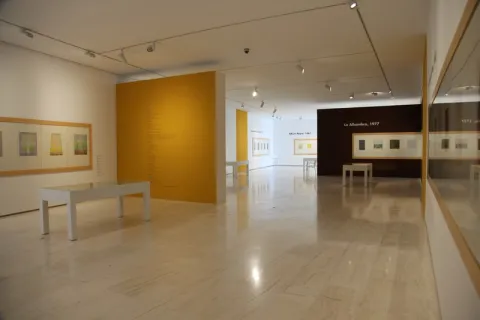
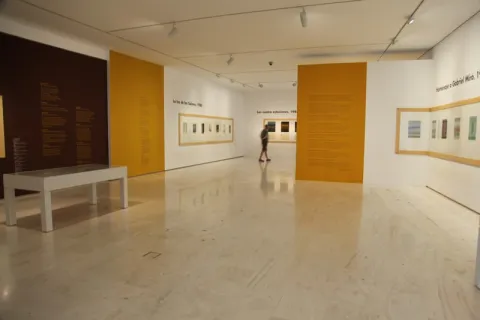
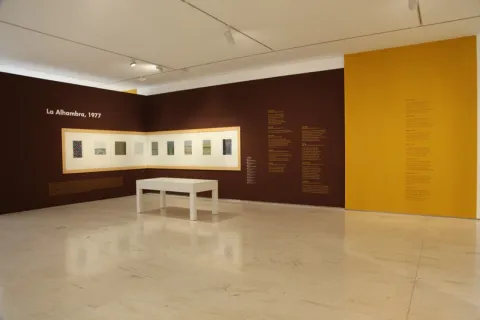
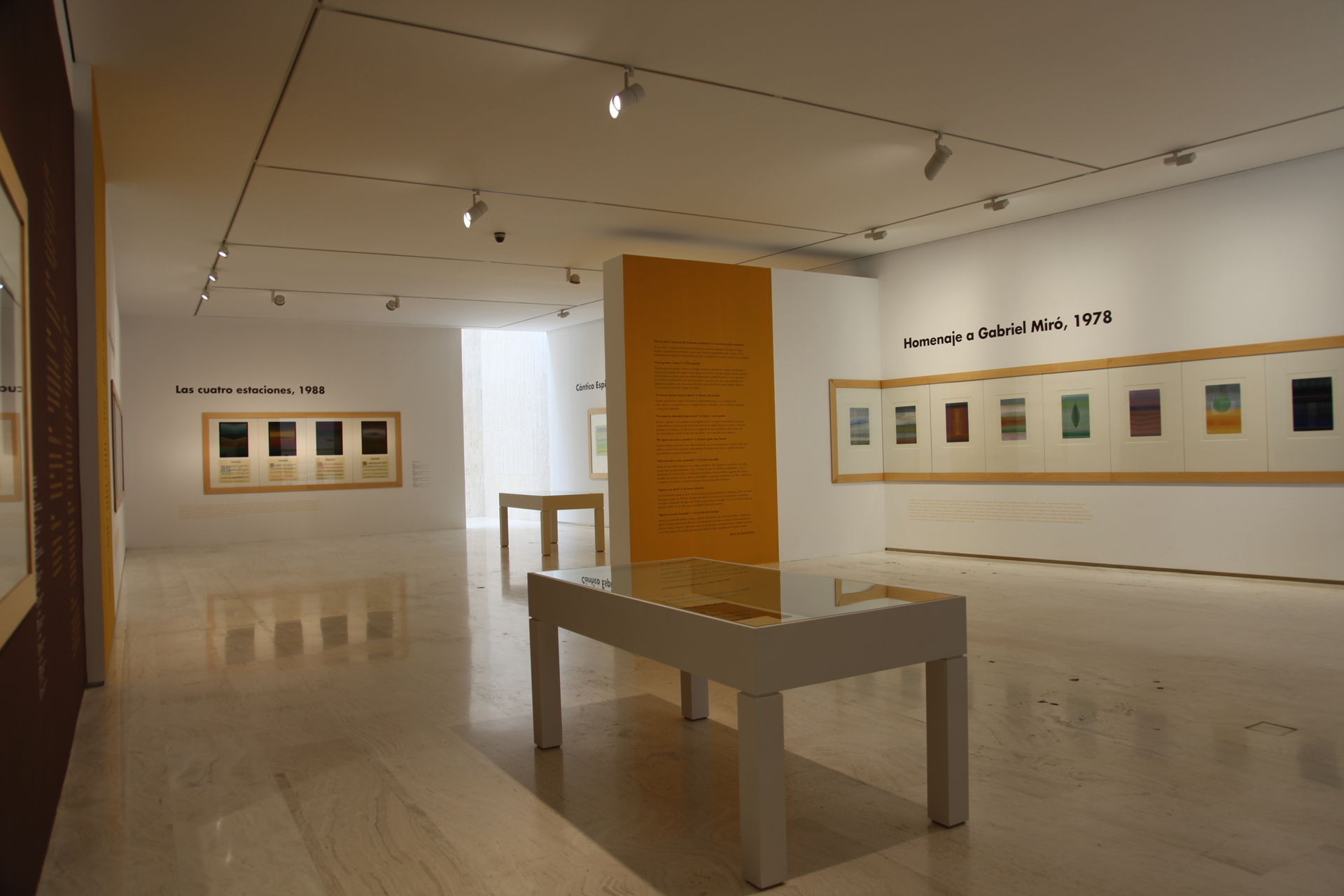
The Four Seasons of 1965 is the first portfolio of artistic silkscreens printed in Spain. It was 50 years ago and the presentation at the Juana Mordó Gallery became an unprecedented success with the public, critics, and sales. It was the beginning of one of the most important sets of graphic works created in twentieth-century Spain, that of artist Eusebio Sempere, exceptional both for its quality and its quantity. Approximately two hundred works among silkscreens, lithographs, and engravings, elaborated by hand in which the highest levels of meticulous perfection are achieved and sometimes, precious craftsmanship.

Nine portfolios of original silkscreens by Eusebio Sempere are presented, all printed by Abel Martín, as if it were a team effort, which trace the vital trajectory of both artists and demonstrate their joint artistic collaboration, the union and spiritual communication. Sempere would be the mind behind the forms and colors that Abel Martín, an excellent printer, then captured on paper through the superposition of silk screens, one for each of the colors used. Sometimes more than 40.
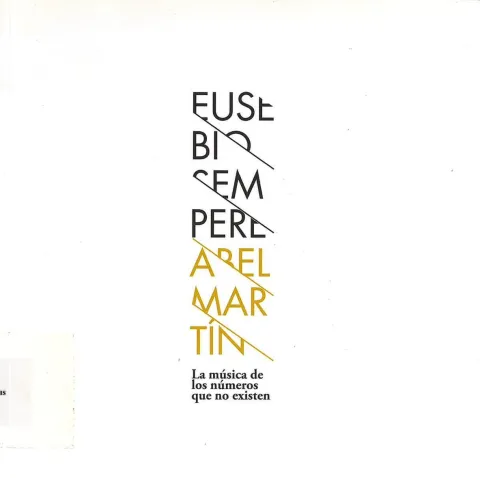
The Four Seasons of 1965, Nayar Album of 1967, Alarm Book, Transparency of Time or The Alhambra of 1977, Homage to Gabriel Miró of 1978, The Light of the Psalms of 1980, Spiritual Canticle of 1982 or the posthumous portfolio of The Four Seasons of 1988 that Abel Martín completed alone, combine the music of numbers that do not exist with the precise literature for each line.

All the portfolios are accompanied by literary texts, experimental, avant-garde, classical or mystical. Pedro Laín Entralgo, Julio Campal, José Miguel Ullán, Edmond Jabés, the Arab poets of Granada, Gabriel Miró, the biblical psalms or Saint John of the Cross presented in turn by Rafael Alberti, Gerardo Diego, Vicente Aleixandre, Juan Cantó or Vicente Aguilera Cerni, words kindled in the forms and colors that inspire souls with the desire to stay there and take a seat.


EXPO-0024
Imagen
Alt
Eusebio Sempere y Abel Martín.
Rosa María Castells
From February 2 to April 17, 2016. Valencia. Centro del Carmen. From April 5 to May 20, 2018 at the National Chalcography of the Royal Academy of Fine Arts of San Fernando. Madrid.
Metamorphosis. Bingyi
Submitted by brandcode_deweloper on

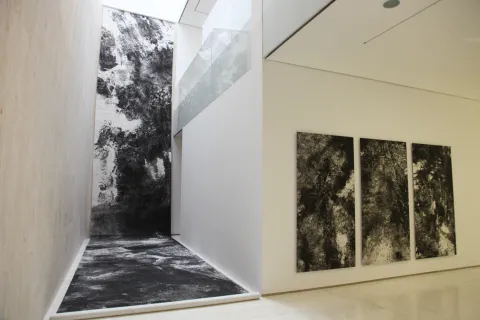
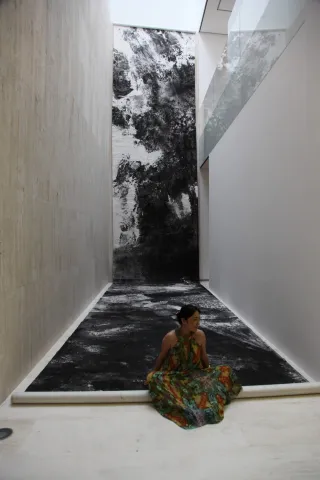
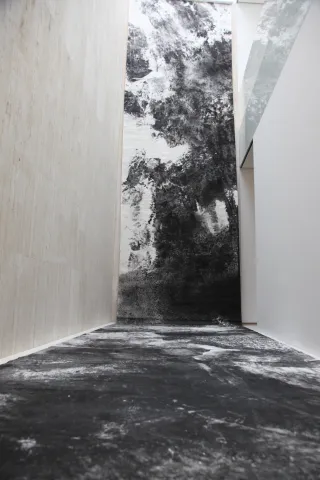
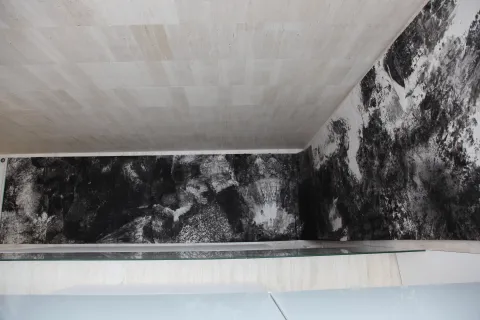
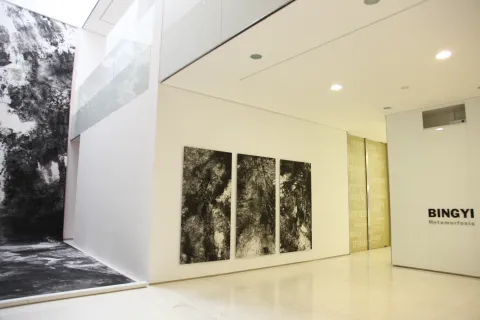
The exhibition composed of three panels and an endless roll of paper are part of the most recent creation by the Chinese artist where she evokes her travels through the sacred Chinese mountains; large-scale paper rolls and Chinese ink that unfold and extend like springs in the spaces where I intervened. In the "Metamorphosis" exhibition, Bingyi resorts to plays of light and shadow, soft and delicate stains, characteristic of haiku poetics, where the artist enjoys expressing herself, manifesting her amazement and rapture produced by the contemplation of nature.

EXPO-0017
Imagen
IMG_3652.jpg
/sites/default/files/inline-images/resources/exposiciones/EXPO-0017/hoja-de-sala-1_8.jpg
Bingy
Rosa María Castells

Out of series

Submitted by brandcode_deweloper on
Serigraphs of Ibero-Switzerland in the UPV Collection

From the late 1960s to the 1990s, the main Spanish authors worked with Íbero-Suiza. Eusebio Sempere was the first of them to learn this technique. The artists, with a clear anti-Franco commitment, used screen printing as a means to disseminate both their ideological concerns and their art.

For decades, the family of José Llopis has preserved part of the printed material, from prints dedicated to numbered and signed proofs, posters, workshop proofs, color proofs and incomplete prints that were left out of the edition. Material that today allows us to understand the creative process of the artists and the workshop technicians and that is of great interest to specialists and researchers in the field of contemporary graphic work.

The exhibition is composed of 46 pieces, two of them from the MACA. 44 screen prints and 1 original work. In addition to documentary material, letters, drawings, screens, photographs.... and a selection of posters also printed in screen printing.

EXPO-0013
Imagen
IMG_9281r.jpg
Joaquín Michavila, Carmen Calvo, José María Yturralde, Andrés Cillero, Fernando Zóbel, Equipo Crónica, Equipo Realidad, Luis Feito, Luis Gordillo, Manuel Hernández Mompó, Josep Renau, Manuel Rivera, Antonio Saura, Eusebio Sempere, Antoni Tàpies, Jordi Teixidor, Rosa Torres, Manolo Valdés, Salvador Victoria, Pablo Palazuelo, Miguel Ángel Campano, Valerio Adami, Andreu Alfaro, Marcelo Fuentes, Juan Genovés, Juan Antonio Toledo, Eduardo Arroyo, Gerardo Rueda, Ramírez Blanco y Miquel Navarro.
Antonio Alcaraz

Dual-es. Tàpies facing Tàpies

Submitted by brandcode_deweloper on

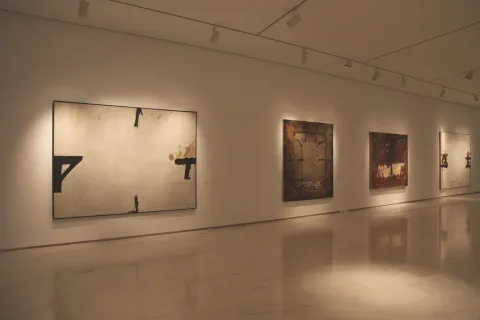
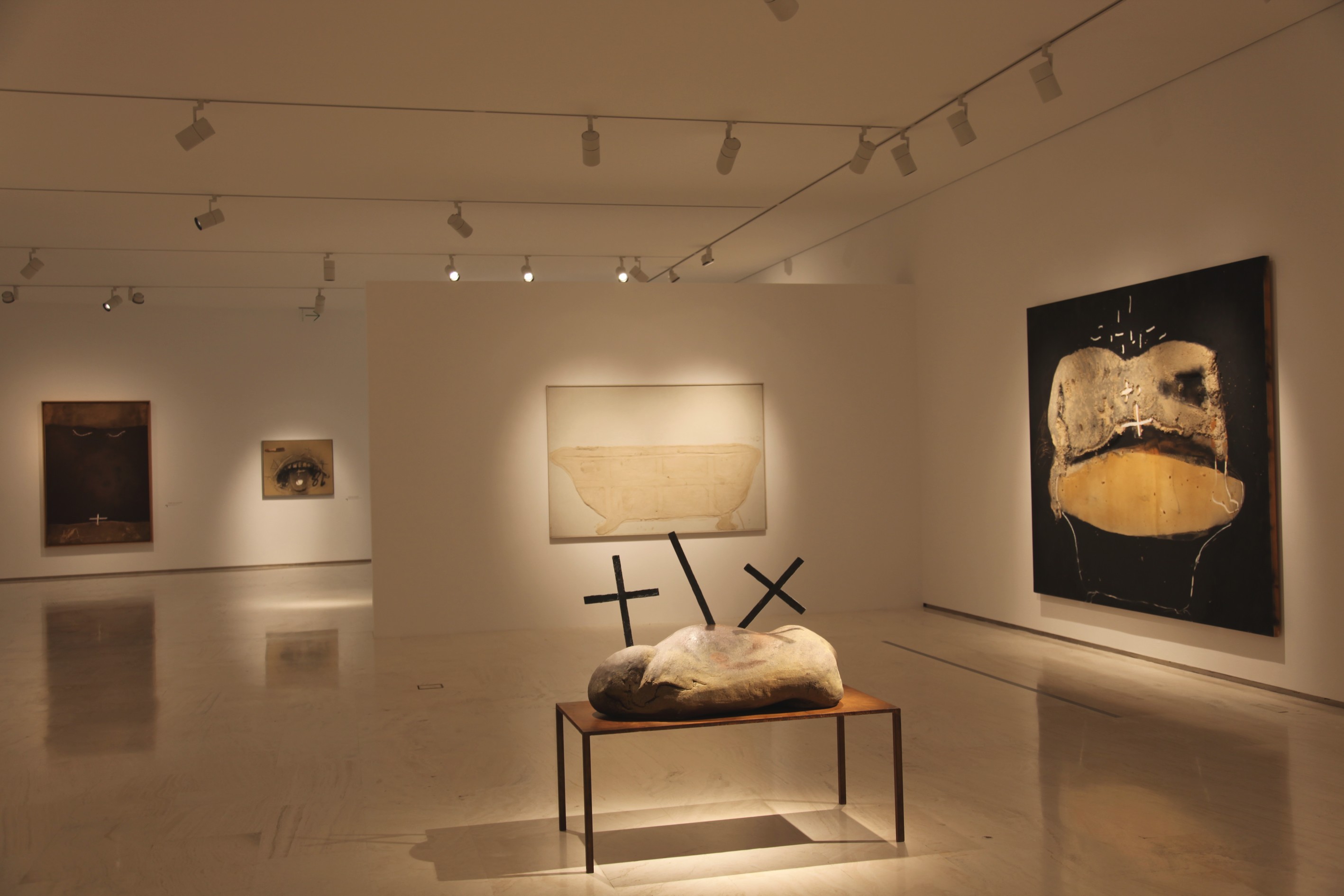
First exhibition of MACA's own production, carried out in collaboration with the Tomás y Valiente Art Center, CEART of Fuenlabrada. This exhibition invites us to establish a game of parallels by introducing the temporal factor and delving deeper into the theme that accentuates its aesthetic values. The same subject developed at different aesthetic moments of his artistic trajectory results in suggestive pairs of works in which Tàpies confronts himself, offering different visions between the artist of yesterday and almost of today, always with the common denominator of intensity and strength. With the passage of time, that energy, that vigor in gesturality, becomes more latent. His forceful stroke seems accompanied by an arm and a heart that are increasingly youthful. It is not necessary to make a retrospective to observe this reality, as any of his pieces contains it.

The selected pieces are of great technical diversity: from the characteristic mixed techniques based on matter on canvas or panel, collages of objects or textures, painting on canvas, assemblages or graphite on paper.

The exhibition also integrates an assemblage on chamotted earth, that is, one of the artist's famous ceramic pieces. The technical diversity is evident and, nevertheless, the unitary sensation of the whole is equally clearly perceptible. Our vision as spectators will act as parallel editing and will jump from one painting to another to find the coincidences and extract the new meanings that undoubtedly arise beyond the isolated contemplation of a particular work. As a whole, the exhibited work is striking, not only because of the character of its iconography (dual, complementary, contradictory) but also because of the authentic struggle that is established between darkness and light that does not obey exclusively the tenebrist heritage or Spanish Baroque painting. Capital themes such as love and pain or life and death are the most present in Tàpies' work.

EXPO-0005
Imagen
5.jpg
/sites/default/files/inline-images/resources/exposiciones/EXPO-0005/folleto1_9.pdf
Alicia Ventura, Rosa María Castells
Obras prestadas por: colecciones particulares, Museo Nacional Centro de Arte Reina Sofía de Madrid, Patio Herreriano de Valladolid, Artium de Vitoria, IVAM de Valencia, Fundación La Caixa, Colección caja Mediterráneo, Galería Lelong de París, Fundación Aena, etc.

Sensitive Plans

Submitted by brandcode_deweloper on
Abstract painting from the Contemporary Art Collection of the "La Caixa" Foundation

The works in this exhibition confront the viewer with the physical presence of painting. In its visible components—form, color, and line—lies all of its persuasive capacity. Its materiality is perceived as a visual event that emerges from the pictorial plane and acts as an energy that envelops the viewer and implicates them emotionally. In the twentieth century, painting freed itself from its imitative and representational function of the visible world and became a reality in itself. Abstraction led it to undertake a journey of exploration of the flat surface of the canvas and its physical properties, during which it stripped away everything that was not objective.

In that process, painting acquired its own life. The works in this exhibition confront the viewer with the physical presence of painting. In its visible components—form, color, and line—lies all of its persuasive capacity. Its materiality is perceived as a visual event that emerges from the pictorial plane and acts as an energy that envelops the viewer and implicates them emotionally. Abstract painting is part of this constantly changing world, and its visual language does not possess permanent meanings. It will always be sensitive to different perspectives and its relationship with the viewer.

EXPO-0004
Imagen
LA-CAIXA-PLANOS-SENSIBLES-014-1.jpg
/sites/default/files/inline-images/resources/exposiciones/EXPO-0004/Triptico-fondos-CAST-ok1_9.pdf
Sean Scully, Peter Halley, Agnes Martín, Alan Charlton, Ettore Spalleti, Ferran García Sevilla, Joan Fernández Pijuan, Juan Usle, Pablo Palazuelo, Richard Serra, Robert Ryman, Soledad Sevilla.
Nimfa Bisbe