1977. Portrait of a Character and an Era. Eusebio Sempere photographed by Luis Pérez Mínguez

Submitted by brandcode_deweloper on

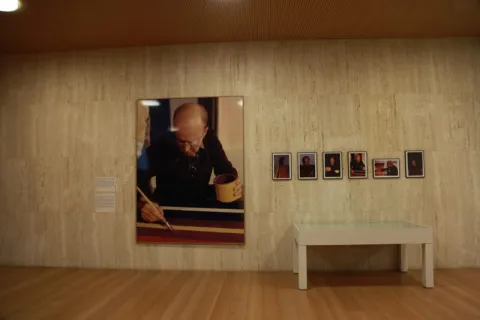
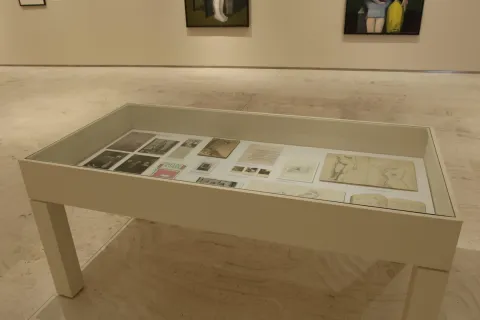
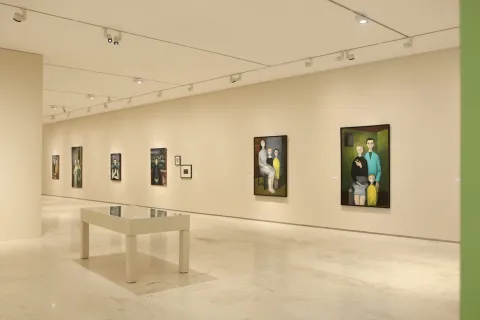
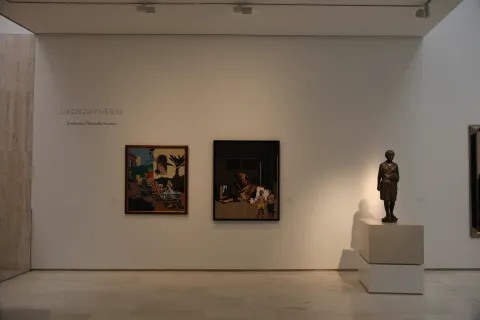
Luis Pérez Mínguez, photographer and friend of Eusebio Sempere who captured an era and with whom the museum has maintained a close relationship. As a result of this are these photographs of Sempere in the Trazos program in 1977, which reached us in a very personal envelope from Luis Pérez Mínguez.

Spanish Television began broadcasting in April 1977 the program Trazos where Paloma Chamorro served as deputy director with Ramón G. Redondo, to later take over the direction of it, until June 1978 when the program's broadcast ended. It was a program of artistic current events. Trazos began broadcasting in black and white because its directors considered that this way the color of the paintings would not be distorted. However, by mandate of the state and public network's management, the program began to be broadcast in color starting in November 1977, which required the creation of a set design. For this, and very ingeniously, Paloma Chamorro invited eleven painters, each of whom created a panel of approximately 250 x 180 centimeters. José Manuel Broto, Gerardo Delgado, Carlos Franco, Luis Gordillo, José Guerrero, Guillermo Pérez Villalta, Manolo Quejido, Gerardo Rueda, Eusebio Sempere, Gonzalo Tena and Jorge Teixidor painted live under the watchful camera of the photographer of an entire era.

EXPO-0085
Imagen
IMG_0168.jpg
Eusebio Sempere y Luis Pérez Mínguez.
Rosa Castells

Pablo Picasso. I say nothing more than what I do not say

Submitted by brandcode_deweloper on
Pablo Picasso and a Century of Artists

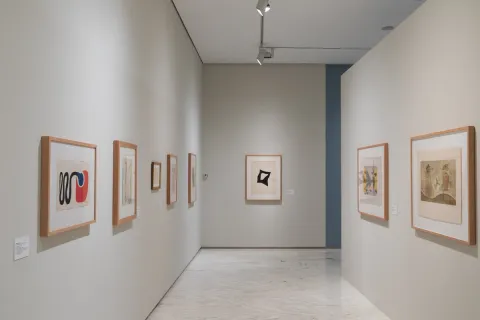
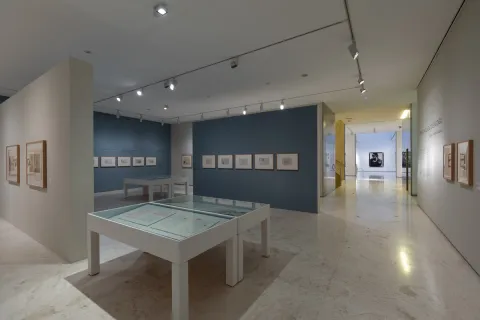
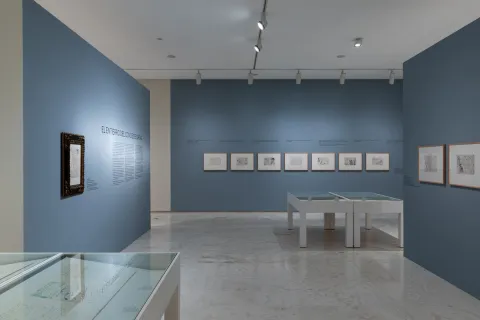
Pablo Picasso spans almost a century of art and alongside him, an essential series of artists radically transform the history of art while blurring the boundaries between figuration and abstraction. Many of them are represented here.

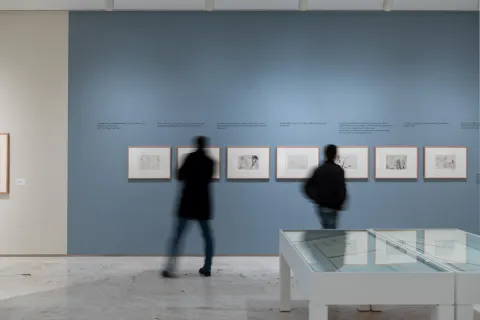
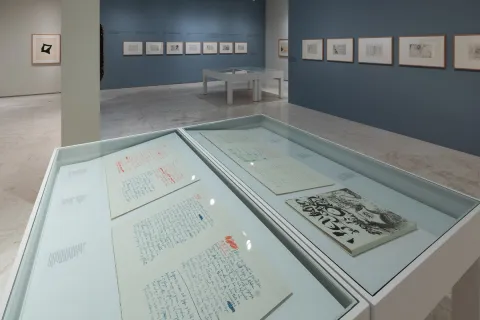
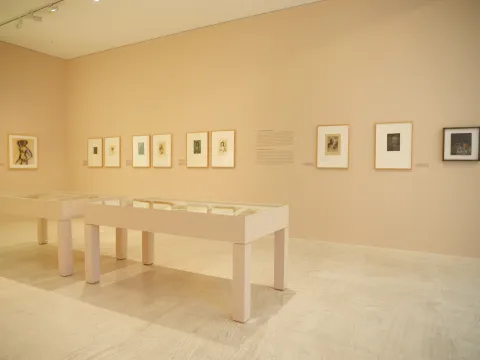
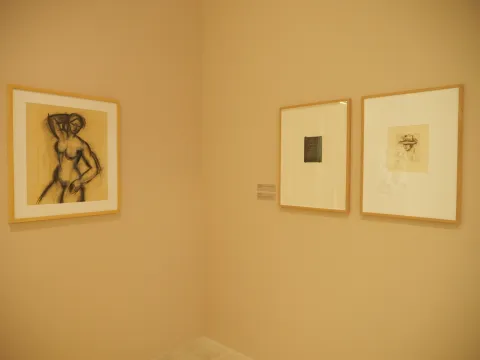
The 20th Century Art Collection holds among its holdings a large number of works on paper including drawings, engravings, lithographs and silkscreens that complete an extensive roster of essential artists, traversing the most suggestive territories of the artistic framework of the past century. 
And it is so because Eusebio Sempere and his companion Abel Martín, after experimenting in Paris with various printing techniques, introduced artistic silkscreen printing to Spain, creating beautiful prints of their own works and those of their artist friends. And they are deeply convinced that graphic work deserves the status of "original" and that it places contemporary art within reach of a majority of the public, democratizing it.

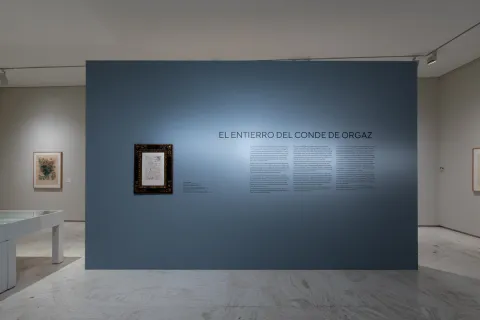
With that aesthetic and political conviction, Sempere always admired the figure of Pablo Picasso. He acquired Picasso's engraving belonging to the Vollard Suite, Fernando Zóbel gave him the Portrait of Rimbaud as a gift, and he bought The Burial of the Count of Orgaz, works that are shown here. In the same way that he participated in the Homage to Picasso that took place during the celebration of the artist's 90th birthday in November 1971, suffering as a result detention, imprisonment and a substantial economic fine. 

EXPO-0089
Imagen
042A9824bis.jpg
/sites/default/files/inline-images/resources/exposiciones/EXPO-0089/Folleto-Picasso-un-siglo-de-artistas-AF-para-imprenta-3.pdf
Rosa Castells

Eulalia Valldosera: Unprogramming the Drama

Submitted by brandcode_deweloper on
Mediterranean Foundation Collection

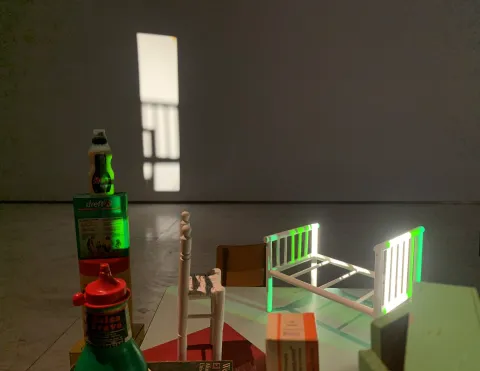
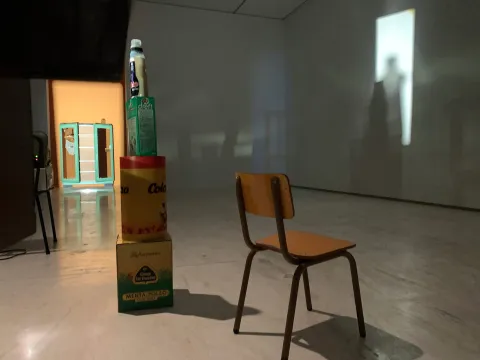
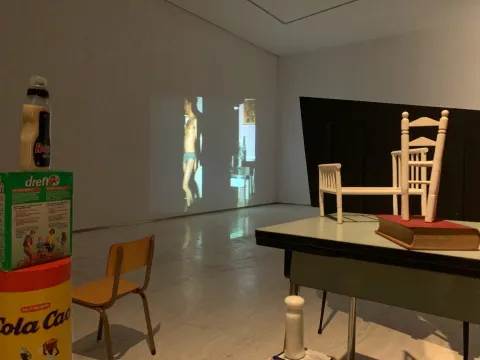
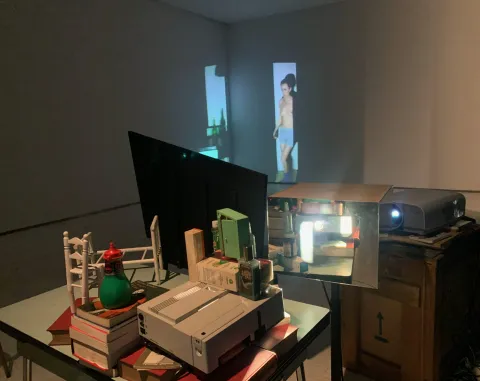
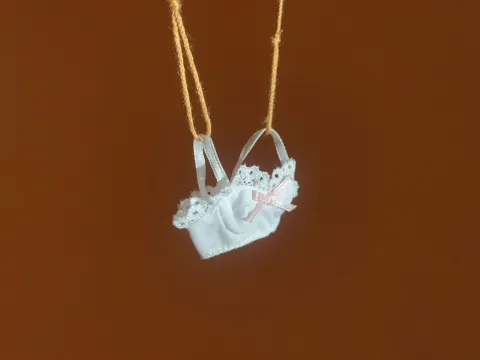
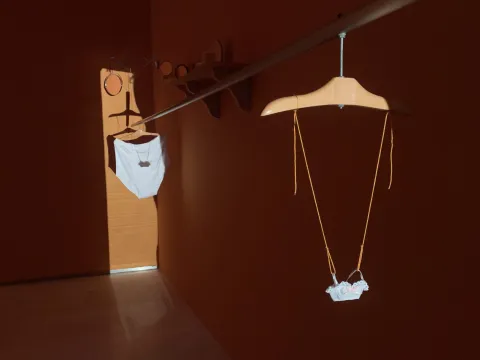
The Museum of Contemporary Art in Alicante presents in this exhibition two works by Eulàlia Valldosera: The Fall. Leaving the Flames to Fall into the Embers from 1996 and Family Ties from 2012. 

The Fall is a fundamental work in the artist's trajectory, a complex and enigmatic installation that speaks of an emotional accident, a descent into the underworld, the impossibility of escaping a situation even when attempting different behaviors. The very questioning of a couple in their domestic environment, a story devoid of narration that unfolds in the space where the spectator finds themselves trapped as both witness and architect of the problem. 

Family Ties is a series of photographs of intimacy and reveals the visible and hidden emotional relationships that family members experience, enjoy, or suffer. Complex and inevitable implications that redefine the very model of family in continuous transformation. Love, protection, or mutual care becomes tinged with hatred, absence, jealousy, or abuse in a highly fragmented emotional labyrinth.

In both works, the drama is in plain sight. Recovered. The facts are not narrated, but rather represented. Through reality and its shadow, through the projection of light and movement. With her own perspective, Valldosera recreates dramatized scenes that simultaneously reflect presence and absence, memory and desire, where the shadow evokes an inner search that refers to the world of the subconscious, not only as a specter of an unresolved past, but also as an authentic form of reality. 

EXPO-0084
Imagen
IMG_1442-scaled.jpg
/sites/default/files/inline-images/resources/exposiciones/EXPO-0084/Hoja-de-sala-Eulalia-ESP_0.pdf
Rosa Castells

Juana Francés. The Construction of a Modern Artist, 1945-1956

Submitted by brandcode_deweloper on

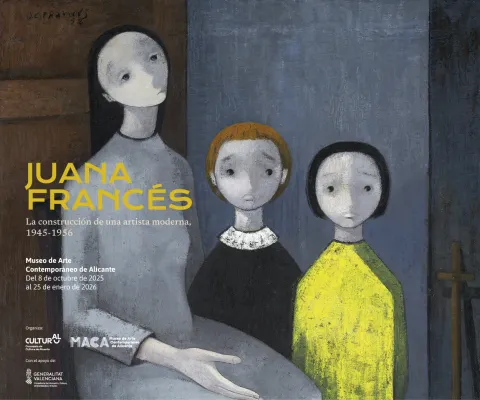
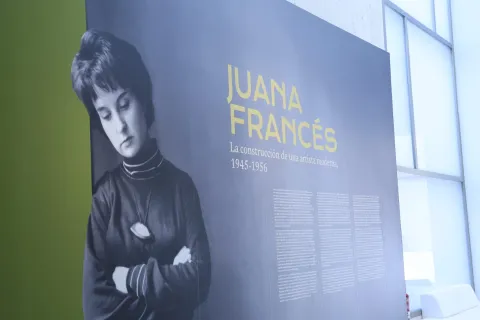
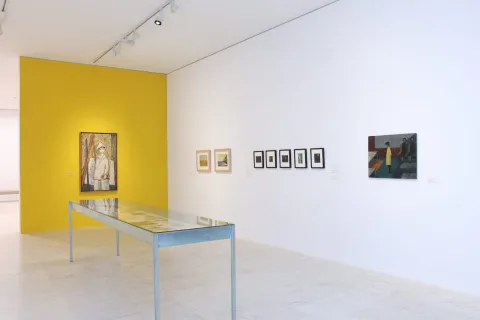
Juana Concepción Francés de la Campa (Alicante, 1924 - Madrid, 1990) is one of the most forceful artists in the Spanish artistic panorama of the second half of the twentieth century, a pioneer of abstract informalism and the only woman in the emblematic El Paso Group. She exhibited in important international artistic events such as three Hispano-American Biennials, the Venice Biennale, in as many as five editions, and the São Paulo Biennale. She exhibited in group shows alongside her generation's peers at the Guggenheim Museum in New York and at the Tate Gallery in London, and in notable solo exhibitions at institutions in Spain, France, and Portugal, among other places. She was recognized by critics from her early figurative period through the end of her career, but has been forgotten by art historiography. In recent years, her figure has been strongly reclaimed, affirming her quality and relevance, and at the MACA we have delved deeper into separate exhibitions on her abstract paintings. 
 

Now we propose to review the origins of her painting: the years of training, her more symbolist figurative period, and her personal transition before embarking on the generational adventure of abstract art. It is the least known period: paintings where figurative work of Italianate influence moves between restrained symbolism and surrealism with metaphysical roots, featuring rounded and voluminous figures of geometric character. Among the themes presented are maternities, portraits of children and women, families, and enigmatic still lifes as well as allegorical scenes that present an air of intriguing mysticism and that contain a spirituality that we will see emerge in later periods. On a technical level, Francés works innovatively to achieve certain textures and impastos using the encaustic technique, where she mixes wax, resin, and solvent on a rigid support, superimposing different layers of paint to "wound" them afterward with a nail. An experimental will that remains intact throughout her entire career, marking her strong plastic personality. 
 

Juana Francés is the most prominent of a group of women artists who began exhibiting in the 1950s and whose professional determination defied the society of her time: an exclusionary system that relegated women to the domestic sphere or to decorative roles in culture. Facing a hostile, normative, and rigid environment created by the social ideology of Francoism, Juana Francés managed to remain attentive to plastic concerns and to be an active part of a generation of artists who revolutionized the art of their time. Her trajectory allows us today to rethink the role of women in art history, as well as the complex relationship between aesthetic modernity and social commitment.
 

EXPO-0083
Imagen
Juana Francés. La construcción de una artista moderna, 1945-1956
/sites/default/files/inline-images/resources/exposiciones/EXPO-0083/JUANA-FRANCES_folleto_ES_VAL_rev9_0.pdf
Rosa Castells y Natalia Molinos

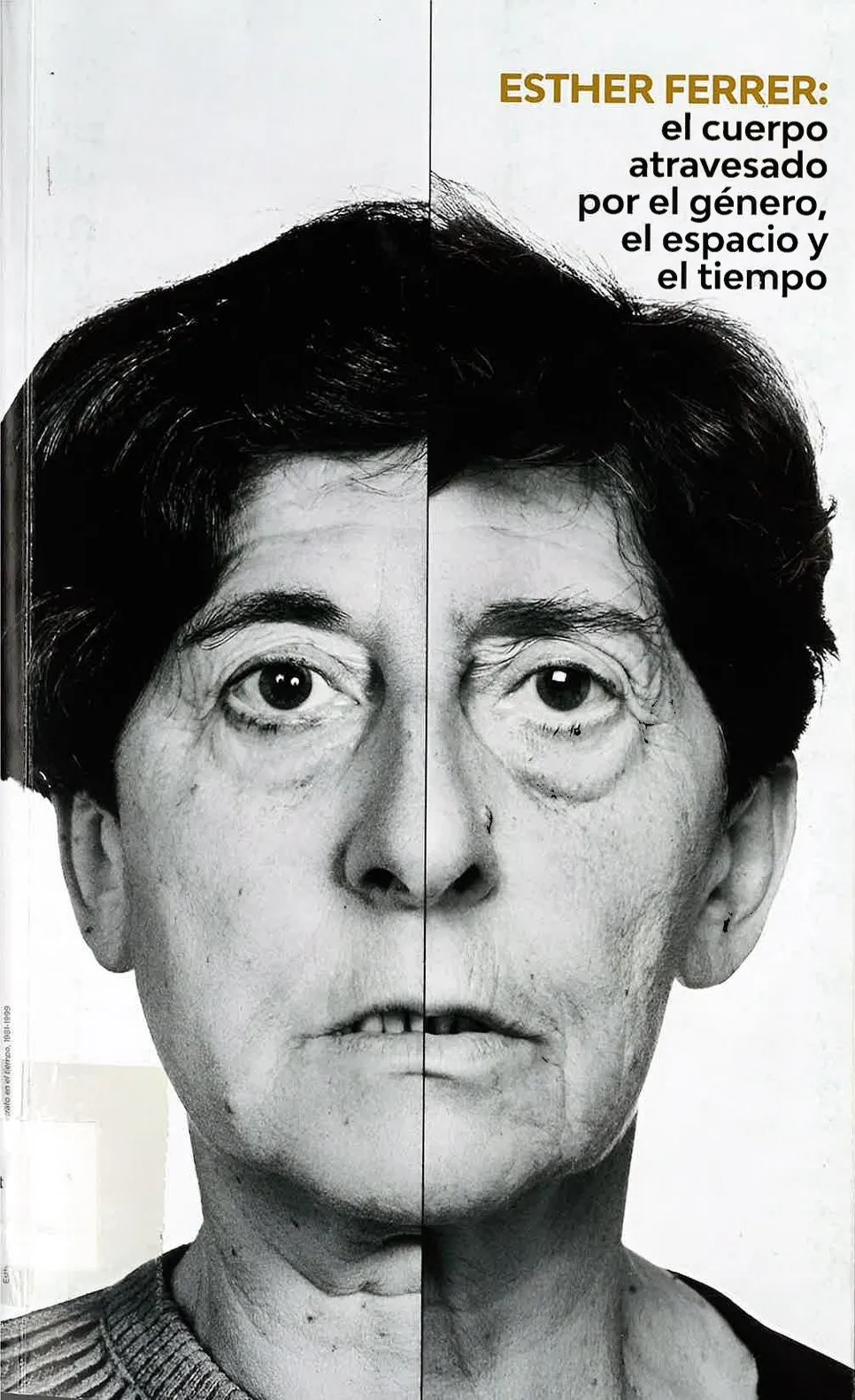
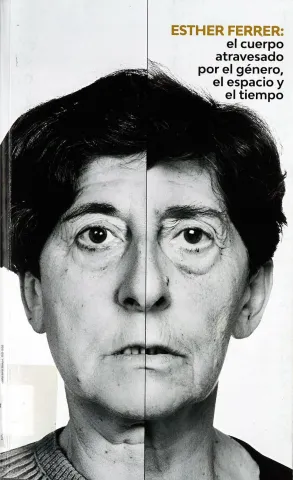
Esther Ferrer: the body traversed by gender, space and time

Submitted by brandcode_deweloper on

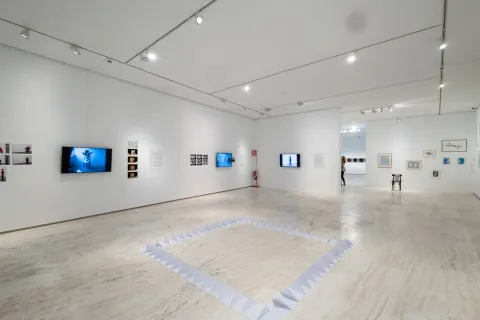
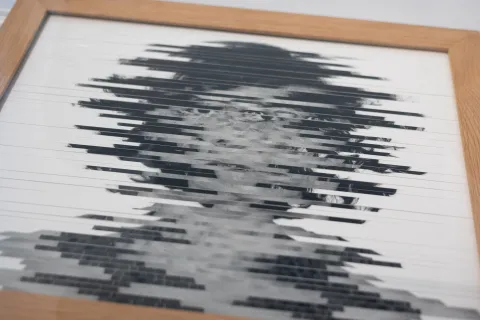
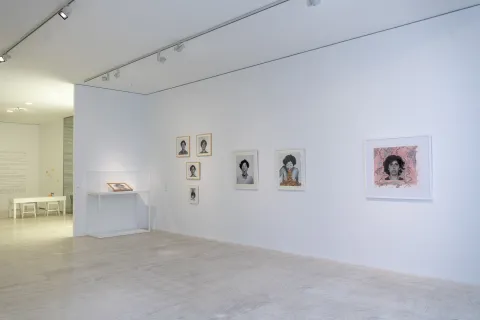
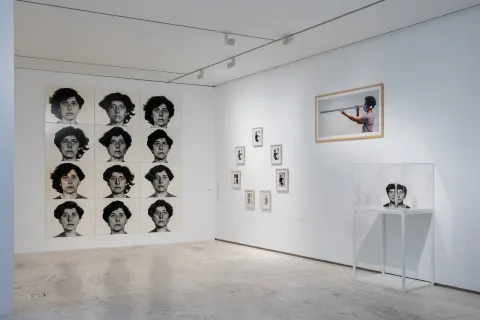
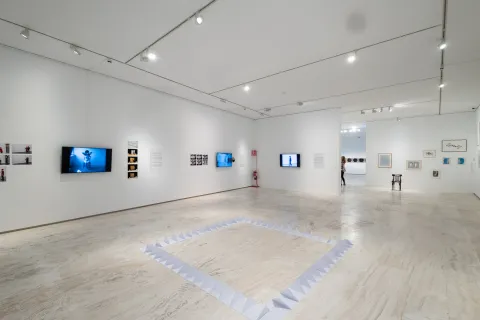
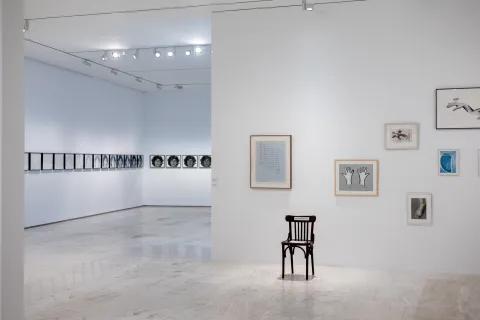
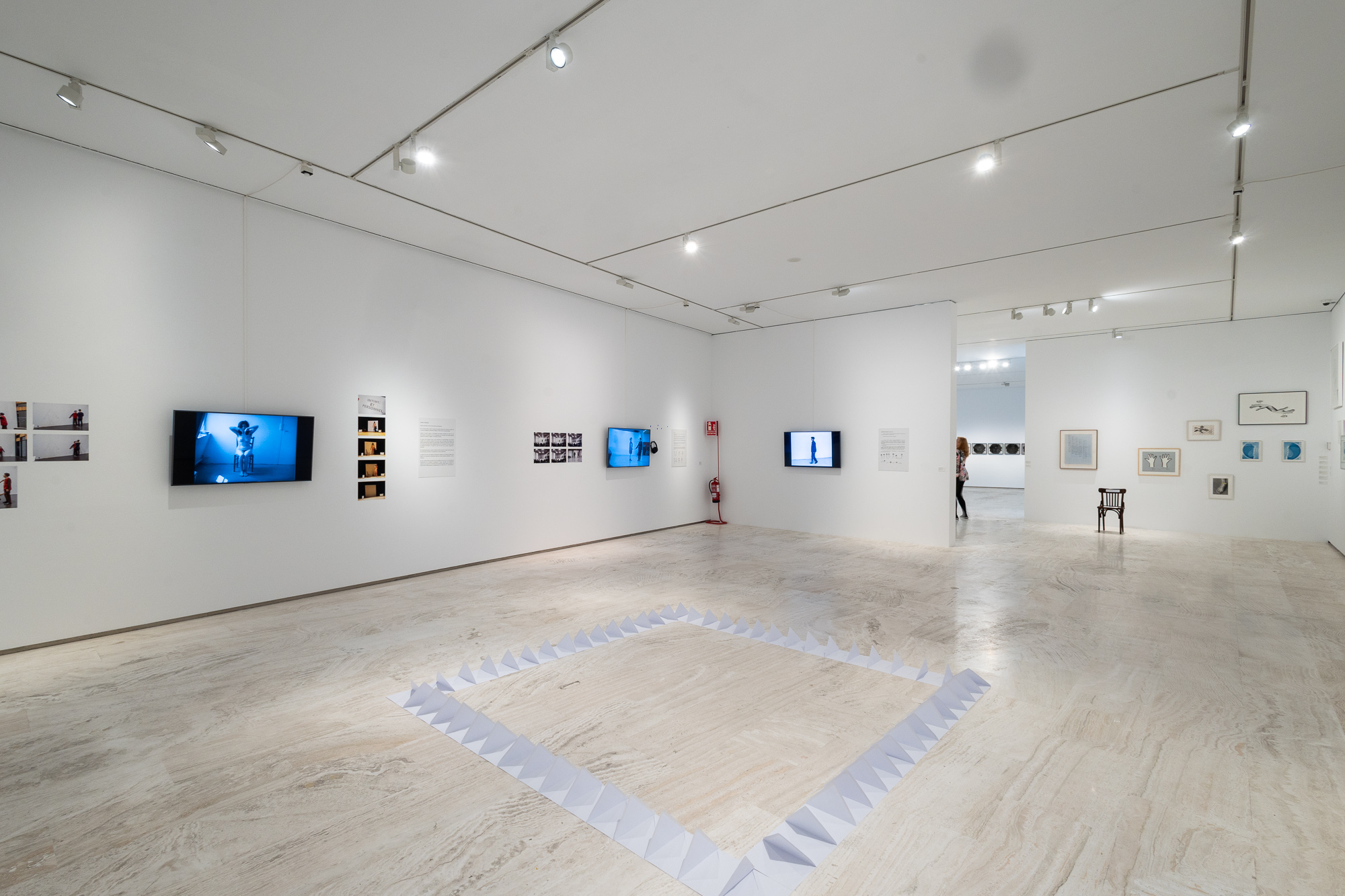
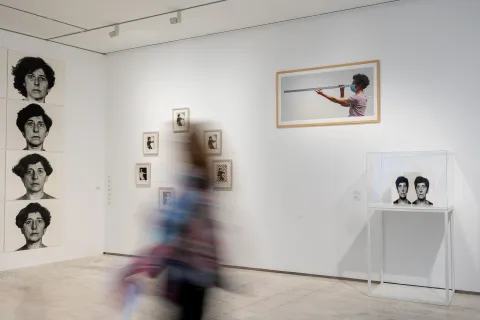
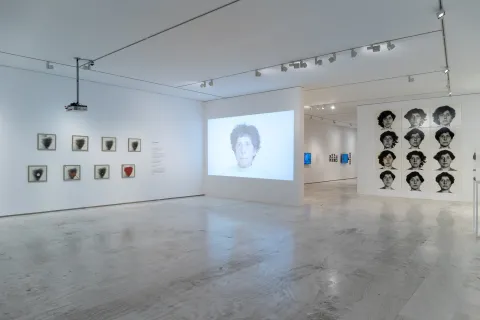
The exhibition focuses on the idea of woman and her body in interrelation with time and space. A body, that of the artist herself, from which she produces actions and creative works. And, from which, she traverses and measures space and, in turn, is crossed by time, even showing the aging of a woman, confronted with the idea and promotion of eternal feminine youth fostered by the patriarchal system.
 

And that body is also transferred to photography, installations, drawings and even video, through self-portraits of her face and body fragments, in performative attitudes. Furthermore, a bodily action, shown through a series of images and audiovisuals that, as documentation of a selection of performances, are offered as visual and sound narrative media, alongside "the scores" or scripts that she constructs to continue in the execution of her performances.
 

In short, an entire multi and interdisciplinary performative exhibition route expanded from action to plastic works and vice versa, its incitement to the realization of actions by the public or its mere evocation, or else the visual pieces as traces or remains of performances. While showing us her own body set in motion in time and space, seen and read as a meaning of symbolic layers and deconstructive representations of the patriarchal gaze on the female body. And, all of this, bathed in a certain sense of acerbic humor, the conjugation of the absurd and chance encounters with objects, words and signs.
 

EXPO-0066
Imagen
3F1A9868.jpg
/sites/default/files/inline-images/resources/exposiciones/EXPO-0066/esther-ferre-folleto-desplegable-72x34-cm-Alicante-1_5.pdf
Margarita de Aizpuru

The Invited Piece. Equipo Crónica: Meninas in the Chalet

Submitted by brandcode_deweloper on
Chirivella Soriano Foundation

The MACA - Museum of Contemporary Art of Alicante has invited on this occasion the work of Equipo Crónica titled Las Meninas in the Chalet from 1969 belonging to the Chirivella Soriano Foundation of Valencia, which can be enjoyed from February 1st to April 28th, 2013. This splendid work from the Chirivella Soriano Foundation Las Meninas in the Chalet from 1969 fits perfectly alongside the work of Equipo Crónica belonging to the 20th Century Art Collection titled Self-portrait in Palace painted just one year later, in 1970.

A reflection on the theme of classical painting that serves to place Velázquez's characters—in the case of Las Meninas in the Chalet—the Infanta Margarita of Austria, the lady-in-waiting of the Infanta Isabel de Velasco, the dwarf Mari Bárbola, the royal chamberlain José Nieto and the dog, in a chalet from the 50s-60s, a time when the tourist phenomenon emerged and the chalet became fashionable for summer vacations. The exterior space of this representation corresponds to an advertisement from the Valencian store "Hogar completo"—specialized in armchairs, rocking chairs and folding summer loungers.

Self-portrait in Palace places the scene in the original space of the Las Meninas painting, preserving the characters of the royal chamberlain José Nieto and the Dog decorated with the Cross of Santiago, but in this case distorted, to occupy a gigantic volume. The two artists Manolo Valdés and Rafael Solbes, portray themselves in the foreground as in the original work the main characters of Las Meninas are placed. The painting is not finished, as there appears a blank area, empty and thousands of paint drips, and they appear characterized as two house painters who, during a break from their work, stop to look at us because we have placed ourselves in the scene and they invite us to reflect on the work they are carrying out.

The collaboration between institutions such as the MACA and the Chirivella Soriano Foundation, in this case coordinated through the Consortium of Museums of the Valencian Regional Government and the Culture Department of the Alicante City Council, has made possible the arrival of this work by Equipo Crónica. An exhibition program that will continue throughout the year.

Equipo Crónica. (1964-1981)

Formed by the artists Manolo Valdés, Rafael Solbes and Juan Antonio Toledo (although the latter soon distanced himself from the group), the group reacted against the dominant informalist current in the Spanish artistic panorama of the time. Their collective work developed during the last ten years of Francoism and the democratic transition, until 1981.

Equipo Crónica creates decidedly figurative work very close to the pop art aesthetic. Taking advantage of resources from journalistic chronicles, the language of mass media, comics, advertising or art history itself, their painting critically analyzes the social and political situation of Spain and casts an ironic look at myths by placing well-known situations and characters in different contexts, thus contributing to the demystification of images and questioning the very function of art.

The MACA - Museum of Contemporary Art of Alicante has invited on this occasion the work of Equipo Crónica titled Las Meninas in the Chalet from 1969 belonging to the Chirivella Soriano Foundation of Valencia, which can be enjoyed from February 1st to April 28th, 2013.

The collaboration between institutions such as the MACA and the Chirivella Soriano Foundation, in this case coordinated through the Consortium of Museums of the Valencian Regional Government and the Culture Department of the Alicante City Council, has made possible the arrival of this work by Equipo Crónica. An exhibition program that will continue throughout the year.

EXPO-0062
Imagen
PIEZA-INVITADA-008.jpg
/sites/default/files/inline-images/resources/exposiciones/EXPO-0062/HOJA-MANO-EQUIP-CRONICA-ALTA-ilovepdf-compressed_5.pdf
Rosa María Castells
Fundación Chirivella Soriano

Avant-garde Context 4. Luis Fernández

Submitted by brandcode_deweloper on
IVAM Collection of Valencia

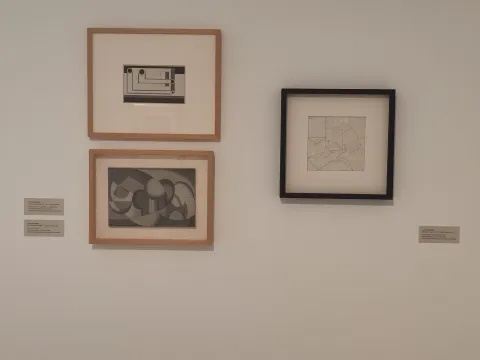
This is the fourth exhibition within "Contexto Vanguardia" that seeks to maintain a permanent dialogue between the works of the IVAM collection belonging to the avant-gardes of the first decades of the twentieth century and the works of the MACA's Twentieth Century Art Collection, so that complementary readings are established, support and context for some pieces that, in communication with others, strengthen their language, thus allowing the visitor to enjoy artists not represented in the MACA while completing the vision of the avant-gardes. The objective is to create content and share knowledge. «Abstraction or Still Life», «Abstraction» (1933) and «Abstraction in longitude» (1926-1928) are the three oil paintings on canvas by artist Luis Fernández that are shown alongside works by Julio González, Pablo Gargallo and Juan Gris, among others. Luis Fernández (Oviedo, Spain, 1900- Paris, France, 1973) was one of the Spanish artists of the so-called School of Paris. He arrived there in 1924 and struck up friendships with Picasso and Julio González, as well as with geometric abstraction that would lead him to join the Abstraction-Création movement. A painter concerned with craftsmanship and the artisanal concept of the work, he formulated his thinking in various texts written in the 1930s, his most analytical and experimental period. He reflected on color and its function in painting, on composition, format and the profound meaning of abstraction which for him possessed metaphysical and symbolic resonances. His painting—he said—was an "unconscious representation of the order that man observes in the universe".

EXPO-0061
Imagen
WhatsApp-Image-2024-10-16-at-11.35.00.jpeg
Luis Fernández
Rosa María Castells
Obras del Instituto Valenciano de Arte Moderno (IVAM)

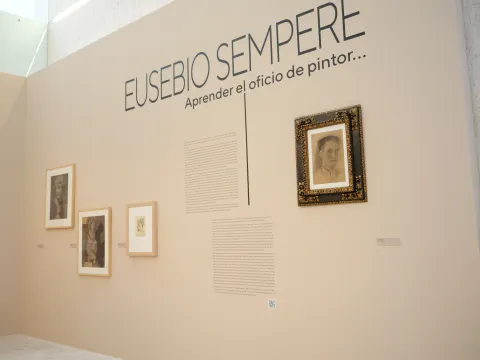
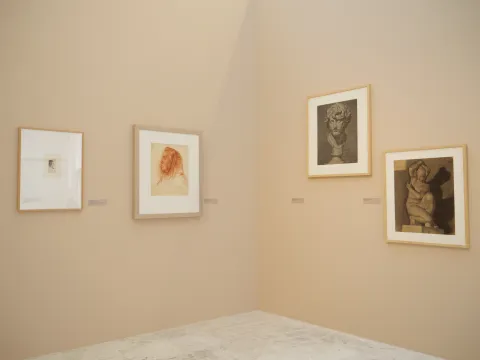
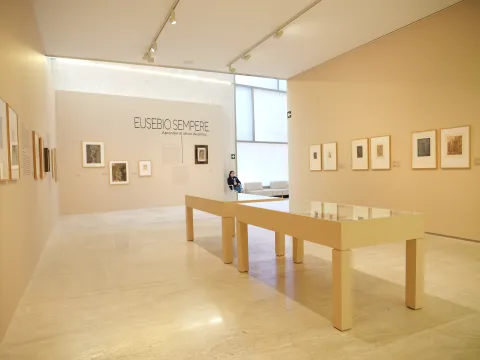
Eusebio Sempere. Learning the Painter's Trade

Submitted by brandcode_deweloper on

Thanks to an early vocation for painting, Sempere began in 1941 his training period at the School of Fine Arts of San Carlos in Valencia, the city where his family moved after the civil war, after having lost his toy factory in Onil. 
 

Sempere had finished his high school studies a few months earlier and attended evening classes at the School of Arts and Crafts, which had given him some knowledge and practice in drawing. His six years of academic training were tedious and frustrating. Artistic education in Spain during those postwar years was depressing; to the poor teachers, mediocre as artists, authoritarian and despotic in their classes, was added an extreme conservatism in the content and continuous "Sorolla-like" references as the only valid example to follow, just as the artist recalls time and again. 
 

At the School he met Father Alfons Roig, professor of the subject Liturgy and Christian Culture, who spoke to the San Carlos students about Kandinsky and was perhaps the only person knowledgeable about and an enthusiastic defender of modernity and avant-garde movements. Eusebio finished his studies in 1946 but remained at San Carlos until 1948 in order to study the specialty of intaglio engraving with professor Ernesto Furió, one of the few teachers who managed to earn the respect of his students. Sempere learned the technique of etching and dry point, and his engravings show an exceptional mastery of graphic art, working texture and volume and skillfully balancing light and darkness. 
 

Sempere studied modeling, drawing, anatomy, perspective and painting procedures, acquiring solid training in the artistic craft that is demonstrated in the preserved works from those training years. At the end of 1948, the SEU (University Students' Union) grants him a scholarship to pursue further studies in Paris. There he will become an artist-

EXPO-0060
Imagen
P1060957
/sites/default/files/inline-images/resources/exposiciones/EXPO-0060/TEXTO-EXPO-SEMPERE-LECTURA-FACIL_5.pdf
Rosa María Castells

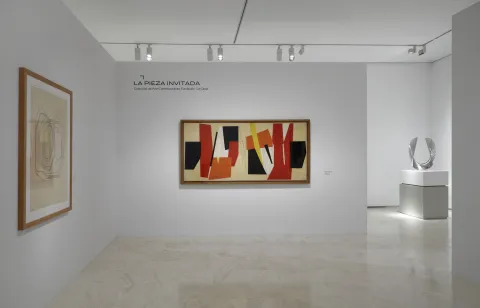
The Invited Piece. Pablo Palazuelo: Alborada

Submitted by brandcode_deweloper on
Contemporary Art Collection of the "La Caixa" Foundation

Alborada by Pablo Palazuelo came to share the space alongside the constructivists from the 20th Century Art Collection and established a dialogue with Palazuelo's work held in the Collection, Sub-rosa XII.

In Palazuelo's painting, one observes an attempt, sometimes unattainable, to represent the logic of chance. This—this structural, architectural, scientific will, falsely impersonal—makes his paintings appear as authentic manifestos about how abstract language materializes. Thus, the alborada to which the title refers, a musical composition that celebrates the dawn, unites two significant aspects in the artist's work: light, understood as a succession of chromatic planes, an optical variation, and the idea of serialization, represented through forms that configure a kind of rhythmic sequence, a movement that vibrates and shifts horizontally across the surface of the painting.

EXPO-0059
Imagen
303011.jpg
Rosa María Castells

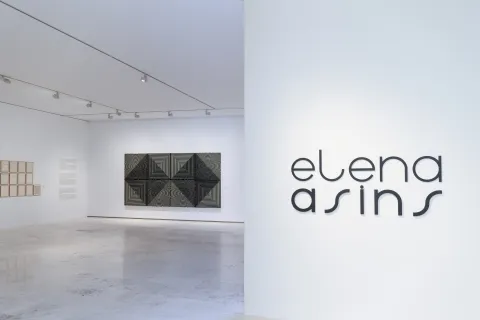
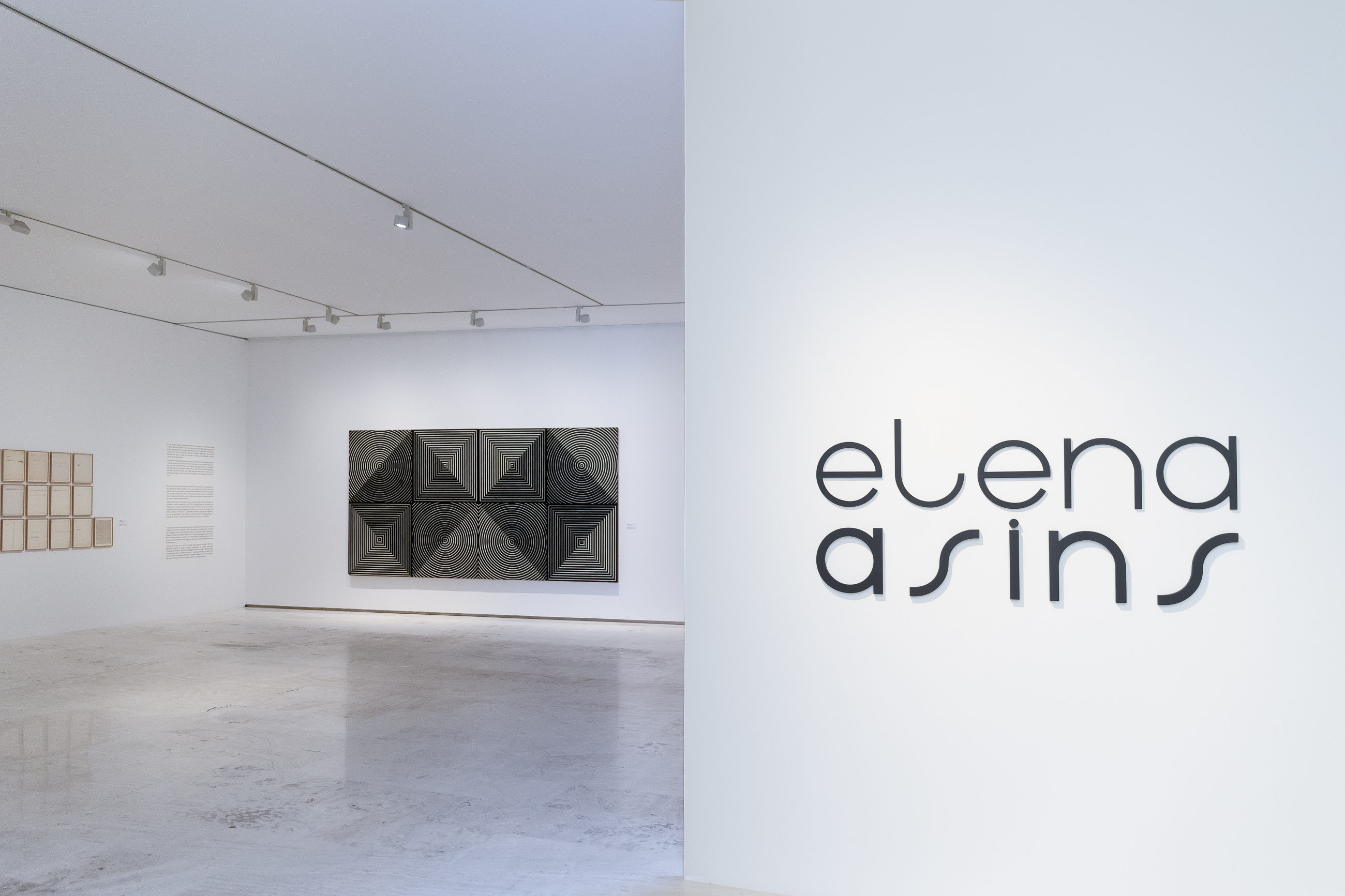
Elena Asins. The murmur of the wind is an tireless whistle

Submitted by brandcode_deweloper on

Elena Asins (Madrid, 1940 - Azpíroz, Navarra, 2015) is one of the most radical and rigorous artists in the Spanish art scene. A renovator of plastic language, Asins combines the constructive tradition of twentieth-century avant-garde with computation and information theory, being considered one of the pioneers of computer-assisted art in Spain. A brilliant artist, provocative in silence, who builds from structure, from mathematical norm and logic, a work that generates itself to become, at times, almost invisible.

Through, fundamentally, the works bequeathed by the artist to the Museo Nacional Centro de Arte Reina Sofía, this exhibition proposes a journey through the persistent investigations carried out by the artist and their plastic results: a final work of apparent simplicity in its calculations, but linguistically hermetic. True to herself and the result of her renunciation of color, Elena Asins's works are read first through the word and then through structure and line. Never forgetting the tempo: an internal music that runs through all her artistic production, sequencing it. Asins has resorted in her works to a wide range of formats and media from concrete poetry to video, passing through drawing, sculpture or installation, always characterized by compositional rigor and formal refinement.

Linked to some of the most innovative projects in the recent history of Spanish art, such as the Cooperative of Artistic and Craft Production or the Computing Center of the Complutense University of Madrid, we highlight the encounter there with Eusebio Sempere and Abel Martín, their friendship and the coincidence of their investigations. And we will show for the first time a fundamental work by Elena Asins: the Songs of Orpheus, a series of visual poems dated 1970 and preserved by Eusebio Sempere that have become one of the most important pieces in the history of Spanish experimental poetry.

EXPO-0057
Imagen
3F1A9604-Editar.jpg
/sites/default/files/inline-images/resources/exposiciones/EXPO-0057/poliptico-definitivo_7.pdf
Rosa María Castells
Obras han sido prestadas por el Museo Nacional Centro de Arte Reina Sofía, el MACVAC de Villafamés, el Museo de la Universidad de Alicante, la Fundación Mediterráneo y la Colección espíritu-materia. Obras a las que se unen las piezas de Elena Asins pertenecientes a las colecciones del MACA así como las que se encuentran depositadas en el museo como las de Robledo-Palop Collection de Nueva York o la Colección Ars Citerior.