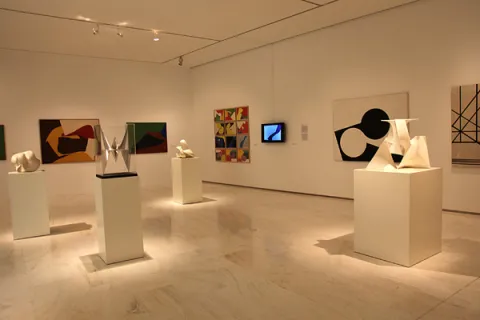
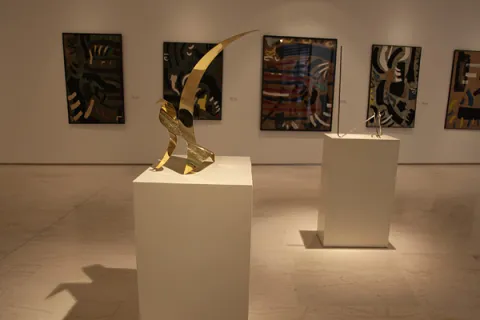
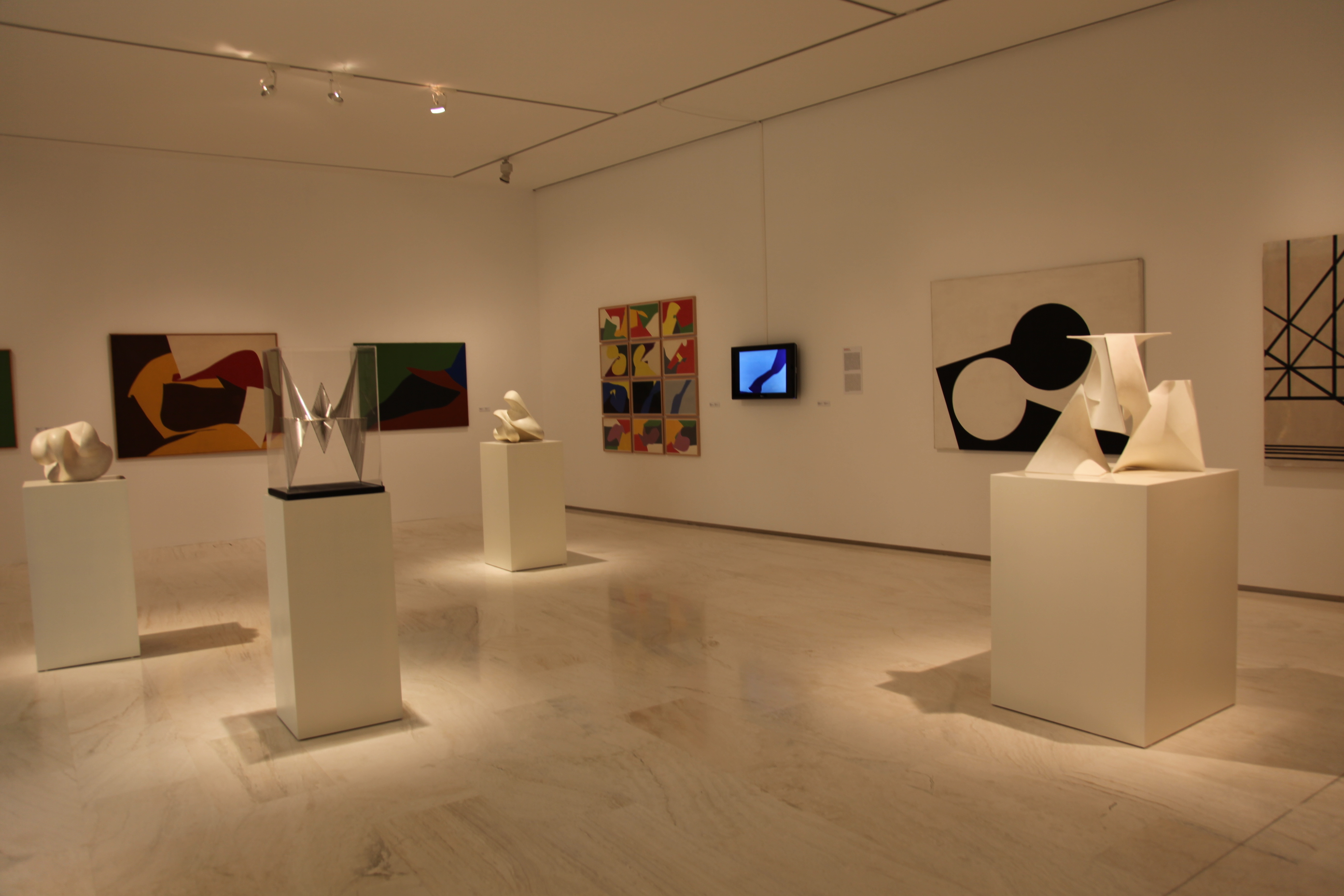
Esther Ferrer: the body traversed by gender, space and time

Submitted by brandcode_deweloper on

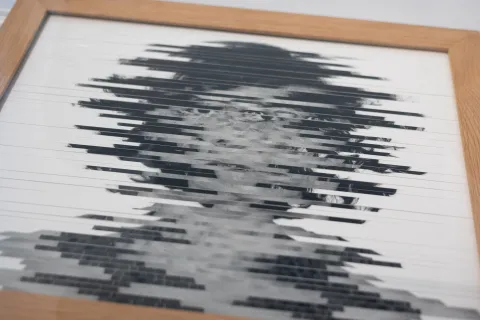
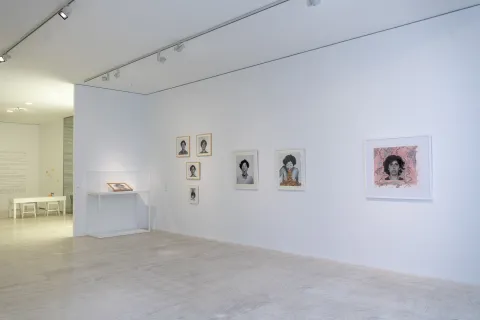
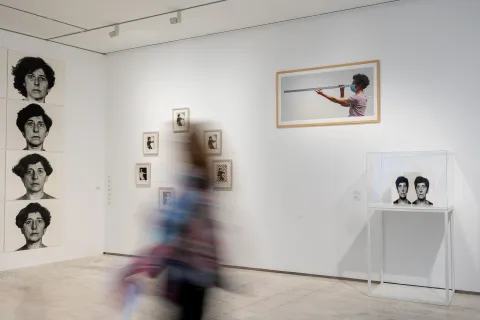
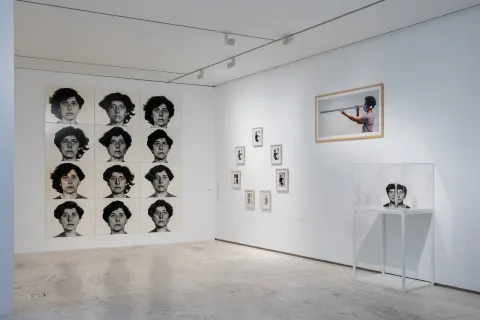
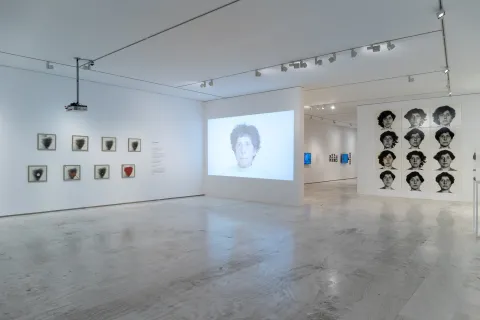
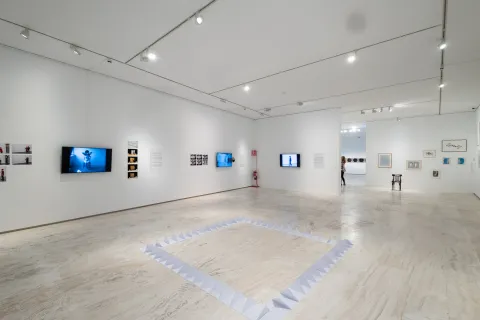
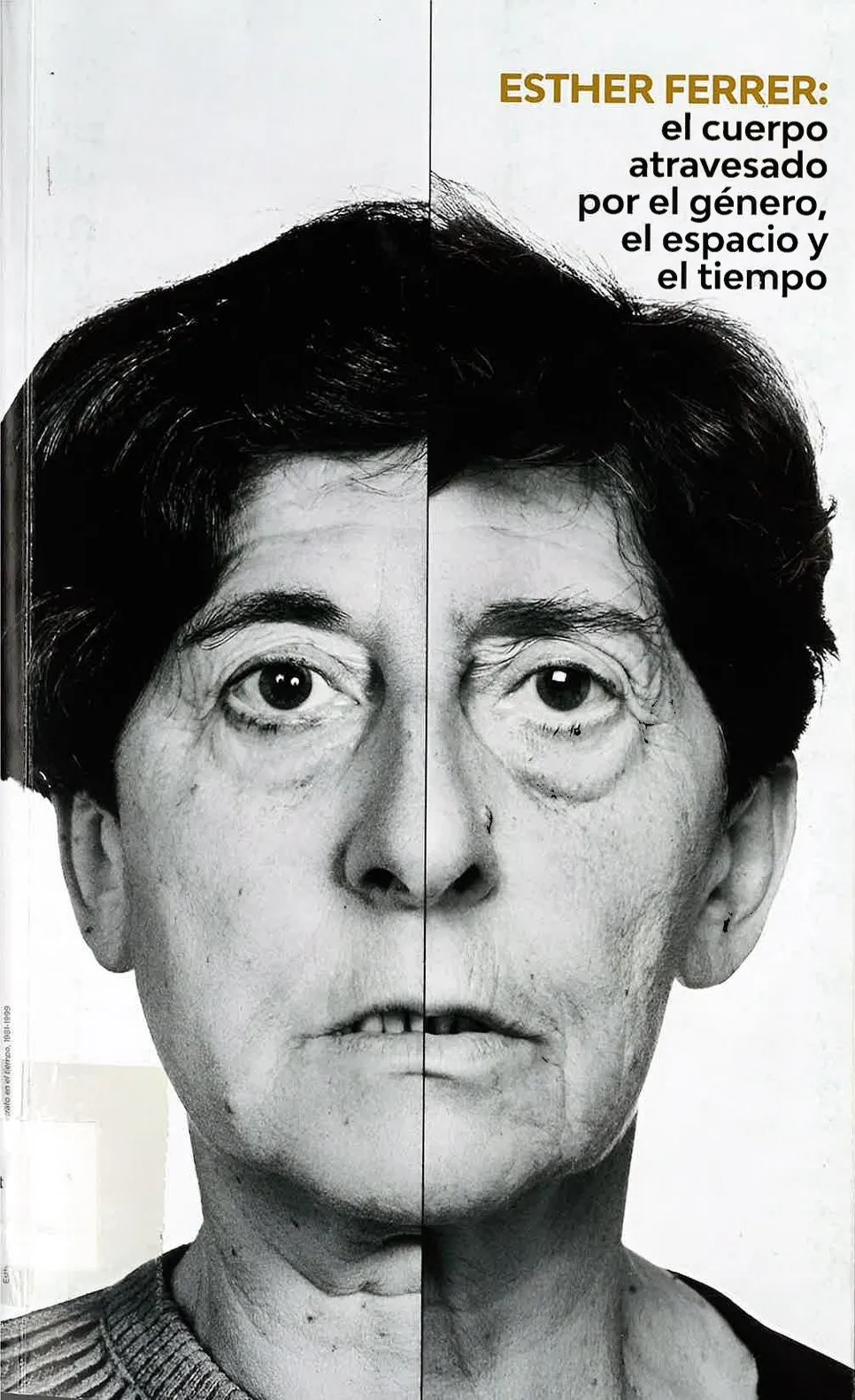
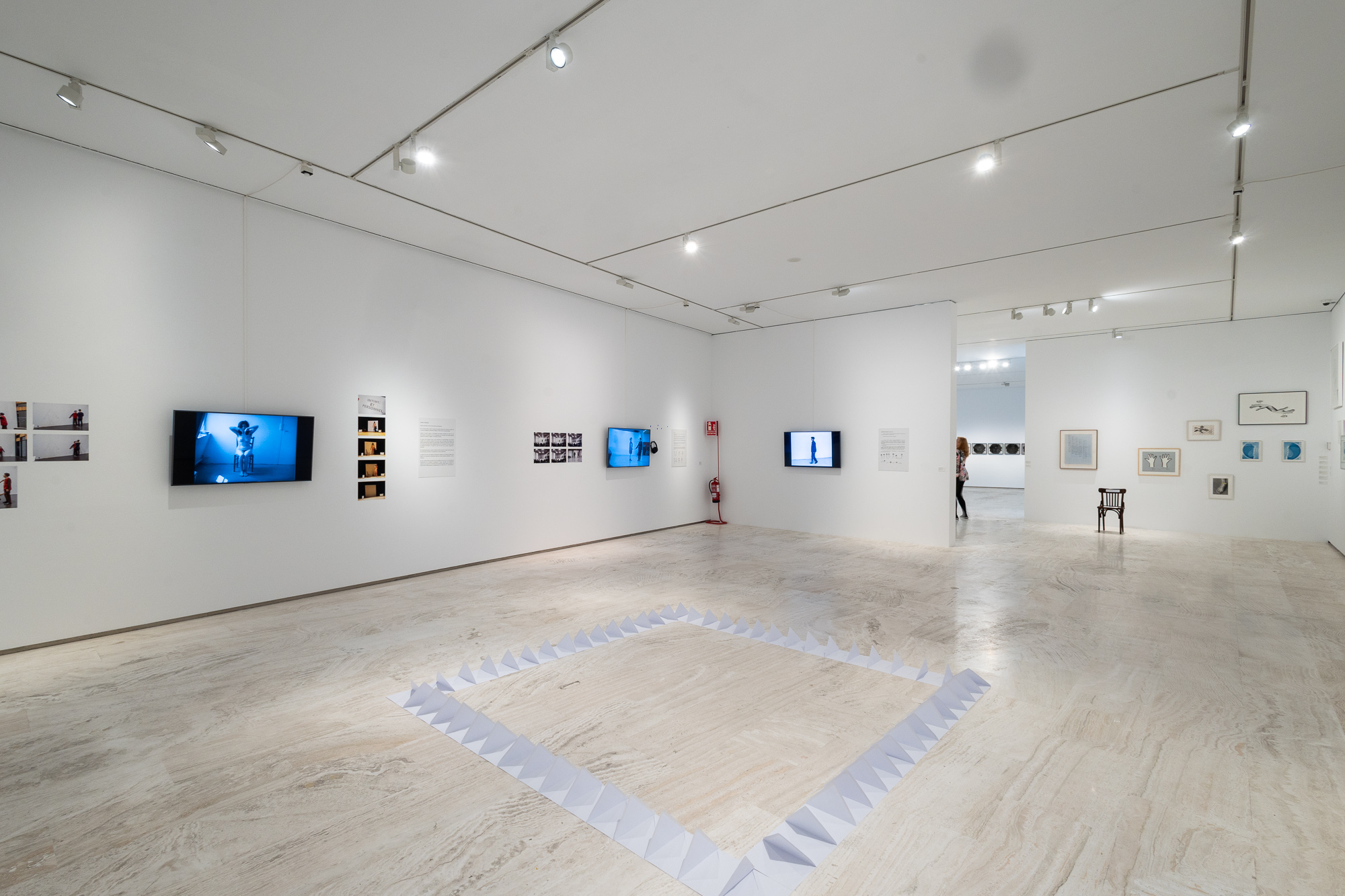
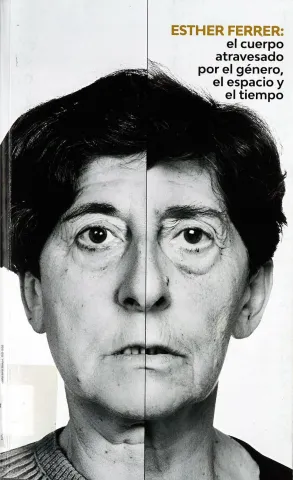
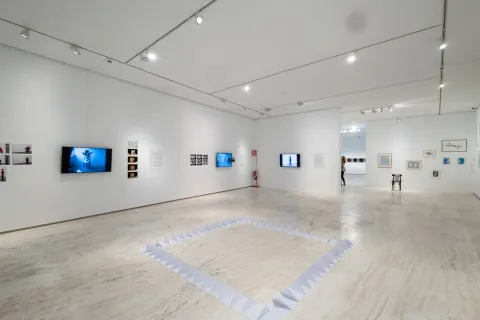
The exhibition focuses on the idea of woman and her body in interrelation with time and space. A body, that of the artist herself, from which she produces actions and creative works. And, from which, she traverses and measures space and, in turn, is crossed by time, even showing the aging of a woman, confronted with the idea and promotion of eternal feminine youth fostered by the patriarchal system.
 

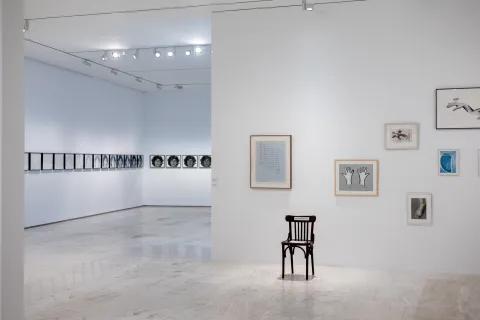
And that body is also transferred to photography, installations, drawings and even video, through self-portraits of her face and body fragments, in performative attitudes. Furthermore, a bodily action, shown through a series of images and audiovisuals that, as documentation of a selection of performances, are offered as visual and sound narrative media, alongside "the scores" or scripts that she constructs to continue in the execution of her performances.
 

In short, an entire multi and interdisciplinary performative exhibition route expanded from action to plastic works and vice versa, its incitement to the realization of actions by the public or its mere evocation, or else the visual pieces as traces or remains of performances. While showing us her own body set in motion in time and space, seen and read as a meaning of symbolic layers and deconstructive representations of the patriarchal gaze on the female body. And, all of this, bathed in a certain sense of acerbic humor, the conjugation of the absurd and chance encounters with objects, words and signs.
 

EXPO-0066
Imagen
3F1A9868.jpg
/sites/default/files/inline-images/resources/exposiciones/EXPO-0066/esther-ferre-folleto-desplegable-72x34-cm-Alicante-1_5.pdf
Margarita de Aizpuru

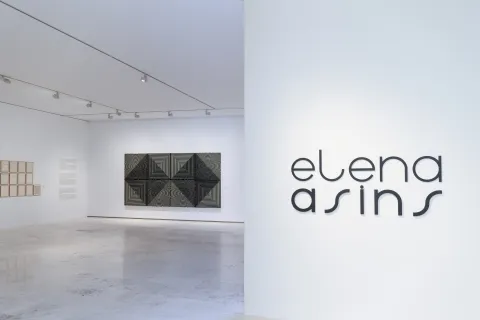
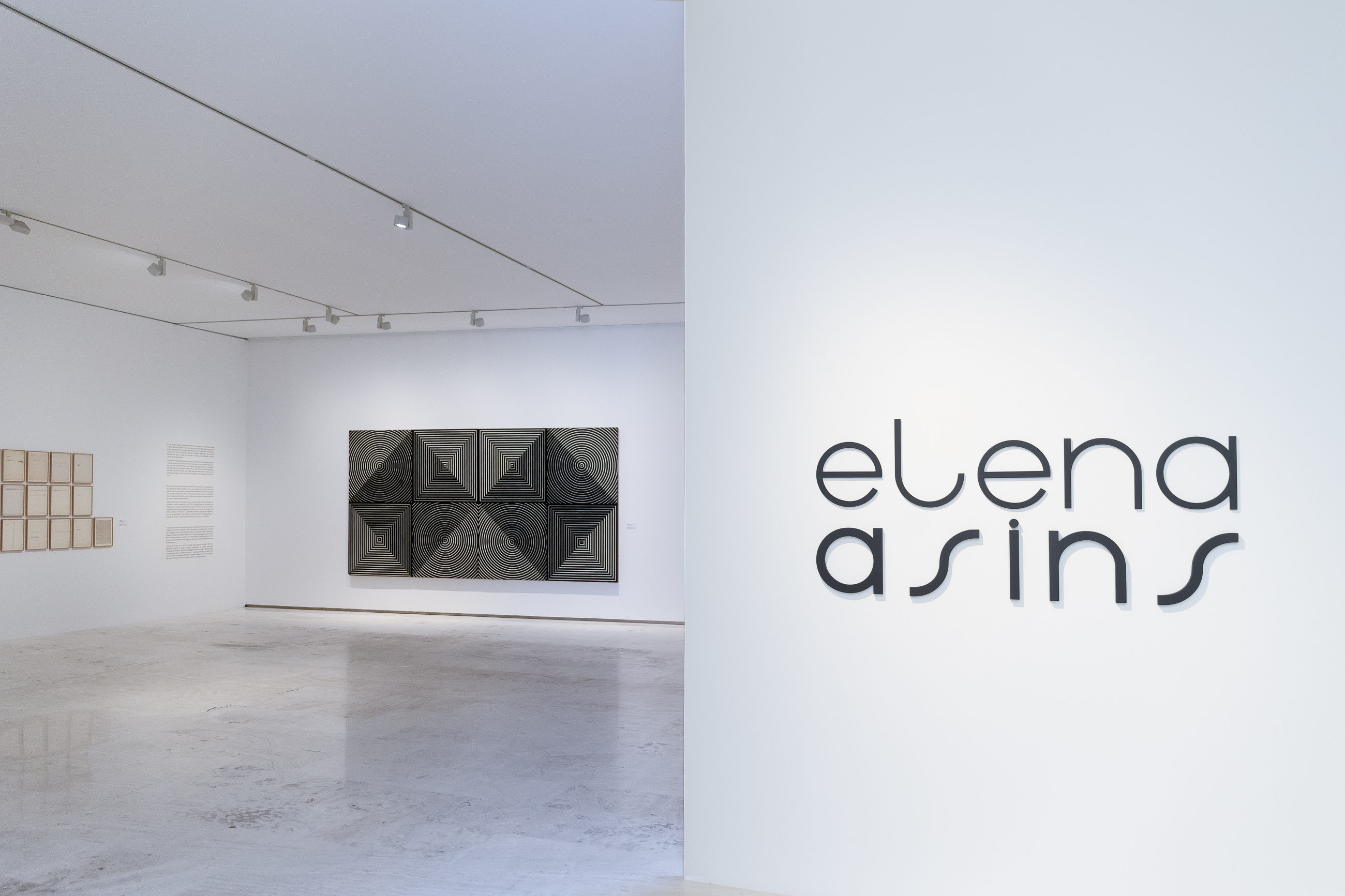
Elena Asins. The murmur of the wind is an tireless whistle

Submitted by brandcode_deweloper on

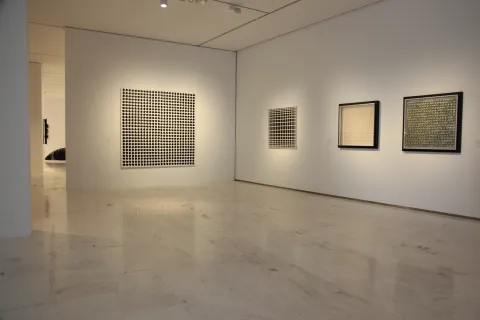
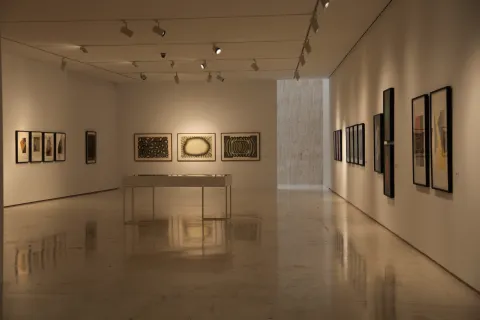
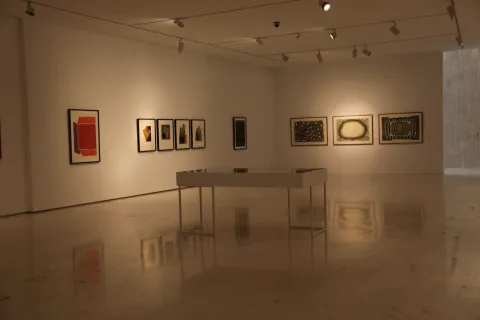
Elena Asins (Madrid, 1940 - Azpíroz, Navarra, 2015) is one of the most radical and rigorous artists in the Spanish art scene. A renovator of plastic language, Asins combines the constructive tradition of twentieth-century avant-garde with computation and information theory, being considered one of the pioneers of computer-assisted art in Spain. A brilliant artist, provocative in silence, who builds from structure, from mathematical norm and logic, a work that generates itself to become, at times, almost invisible.

Through, fundamentally, the works bequeathed by the artist to the Museo Nacional Centro de Arte Reina Sofía, this exhibition proposes a journey through the persistent investigations carried out by the artist and their plastic results: a final work of apparent simplicity in its calculations, but linguistically hermetic. True to herself and the result of her renunciation of color, Elena Asins's works are read first through the word and then through structure and line. Never forgetting the tempo: an internal music that runs through all her artistic production, sequencing it. Asins has resorted in her works to a wide range of formats and media from concrete poetry to video, passing through drawing, sculpture or installation, always characterized by compositional rigor and formal refinement.

Linked to some of the most innovative projects in the recent history of Spanish art, such as the Cooperative of Artistic and Craft Production or the Computing Center of the Complutense University of Madrid, we highlight the encounter there with Eusebio Sempere and Abel Martín, their friendship and the coincidence of their investigations. And we will show for the first time a fundamental work by Elena Asins: the Songs of Orpheus, a series of visual poems dated 1970 and preserved by Eusebio Sempere that have become one of the most important pieces in the history of Spanish experimental poetry.

EXPO-0057
Imagen
3F1A9604-Editar.jpg
/sites/default/files/inline-images/resources/exposiciones/EXPO-0057/poliptico-definitivo_7.pdf
Rosa María Castells
Obras han sido prestadas por el Museo Nacional Centro de Arte Reina Sofía, el MACVAC de Villafamés, el Museo de la Universidad de Alicante, la Fundación Mediterráneo y la Colección espíritu-materia. Obras a las que se unen las piezas de Elena Asins pertenecientes a las colecciones del MACA así como las que se encuentran depositadas en el museo como las de Robledo-Palop Collection de Nueva York o la Colección Ars Citerior.

Automatic Garden. Olga Diego

Submitted by brandcode_deweloper on

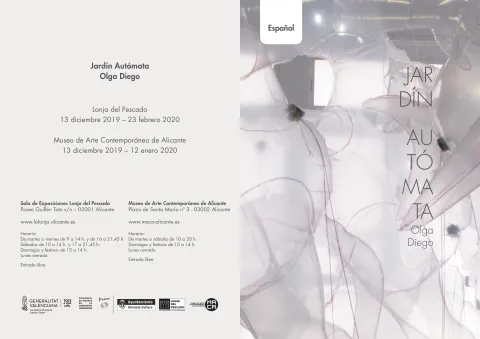
Automated Garden is a gigantic installation made up of almost a hundred inflatable and electronic sculptures inspired by the beautiful, extravagant and suggestive characters from Bosch's Garden of Earthly Delights, which is exhibited mostly in the Exhibition Hall of the Lonja, and which has a small representation in the MACA.

Attracted by the Procession of Desire painted on the central panel of the triptych, Olga Diego discovers naked human beings who enjoy, together with animals of all species, a world of unlimited pleasure. Lust represented in multiple and unimaginable forms. A suggestive world where we also find beautiful birds, fish and exotic fruits. Olga Diego builds that imaginary world in Automated Garden, a visual and creative orgy, a labyrinth of large translucent and transparent bodies that suggest a magical existence. The characters, in continuous movement and endowed with heart, mark with their rhythms an indecipherable electric symphony. Humanoids of all genders, simple and mixed quadrupeds, hybrid beings, women with large breast-antennas, globe-headed animals, the mutant giraffe, bird-boy with tortilla-wings, eggs and fish with legs, flying hermaphrodites, fruits with tentacles, two-headed dogs, strange birds with adapted wings, and a long etcetera.

Automated Garden has been a constructive challenge, but also an insinuating paradise in terms of the forms to be created. A lust converted into sin, religious in its time and profane now, due to the terrible consequences that continuous waste, unlimited consumerism and excessive use of plastic already have for humanity.

EXPO-0047
Imagen
Olga-Diego_Alicante-ESP_page-0001.jpg
/sites/default/files/inline-images/resources/exposiciones/EXPO-0047/Olga-Diego_Alicante-ESP_7.pdf

Only two voices. Isidro Blasco

Submitted by brandcode_deweloper on
Contemporary Art Collection of the Valencian Generalitat

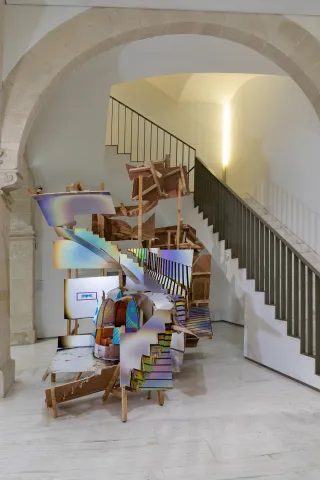
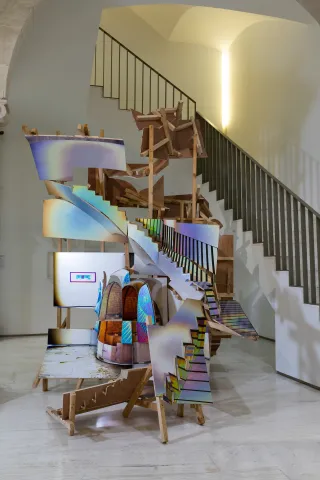
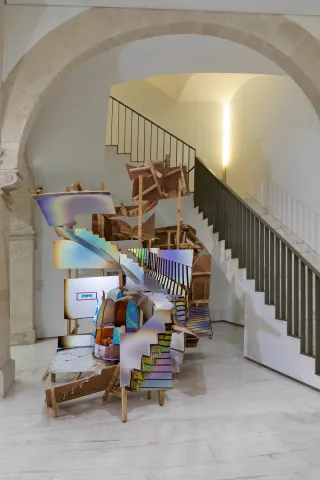
Isidro Blasco visits the MACA whenever he comes to Alicante and always finds his father's work at the foot of the staircase, framed between the arches of the old Casa de la Asegurada. The exceptional piece by Arcadio Blasco, Enclosure for a Legal Murder from 1971 is an emblematic work of the 20th Century Art Collection. It is a sculpture in iron and ceramic that envelops a space of ideological repression and political resonances.

Trapped by that space and by the dialogue that Arcadio's work establishes with the museum's architecture, Isidro needs to return to it and rethink it, in a kind of nostalgic but obsessive journey. During one of these visits the project takes shape: the artist analyzes and measures the void, draws and photographs, goes up and down the staircase, peers in and measures sections. Isidro Blasco has decided to destroy the place and construct a new space to prevent it from falling into oblivion. And thus this site-specific installation emerges.

Only Two Voices, it is a complex work between architecture, photography and sculpture. An installation in unstable equilibrium that deploys in three-dimensional form the same space it occupies in the museum. A space within the same space. The photography architecturally cohesifies the elements although the structure has been fragmented and the 90-degree angles have been destroyed. With great economy of means: some sheets of plywood, some screws and carpenter's jacks and some photographs, the artist has constructed an irrational artifice that reflects on the problem of representation and offers a legacy of fragments, a perfect analogy for attending to the affects on-over-inside the Blascos that functions in turn as a revealer of the image of the contemporary world.

EXPO-0045
Imagen
042A0161.jpg
Isidro Blasco

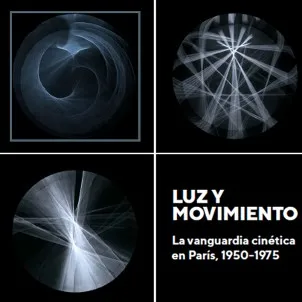
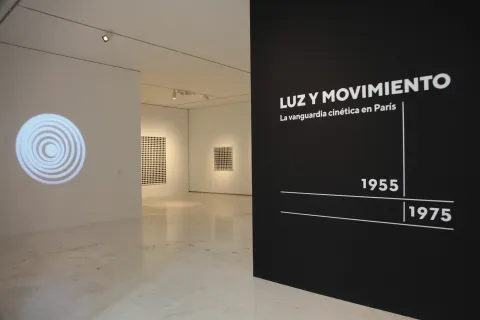
Light and Movement. The Kinetic Avant-Garde in Paris 1950-1975

Submitted by brandcode_deweloper on

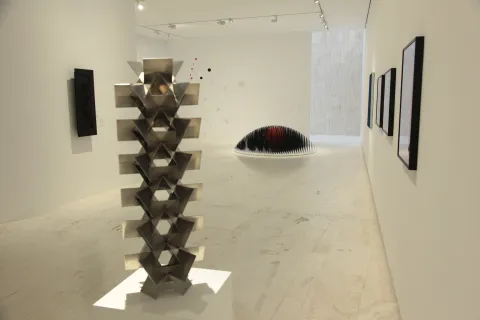
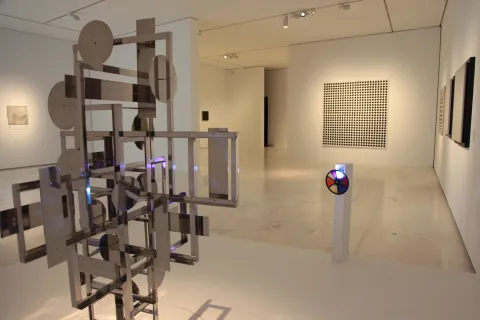
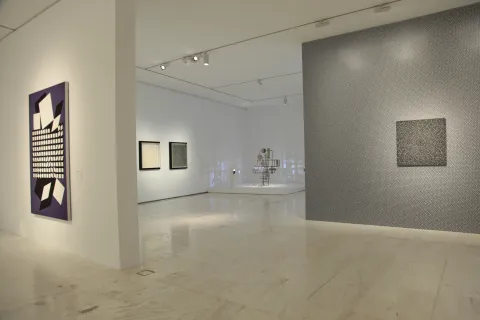
The question of movement, light and their representation runs through the history of art. From the 1950s onwards, following in the footsteps of pioneers such as Naum Gabo, Antoine Pevsner and László Moholy-Nagy, Marcel Duchamp and Alexander Calder, artists began to integrate these forces into their creations, shaping a new vision of reality in which nothing is fixed and definitive but rather unstable and indeterminate, in constant movement: the works live in the present, change, are never exhausted. Kinetic movement develops in Europe as an international constellation formed by a new generation of artists who want to radically transform art by opposing the myth of the work, a unique, defined and totemic object destined for an elite, personal expression of the artist, creative genius secluded in their ivory tower. These new breed of artists want to modernize the artistic object, open it to reality by integrating new materials and industrial techniques; from a social perspective, to produce art for a wider audience, participatory art, to propose an active role for both the artist and the spectator. 

Movement embodies the new mutual relationship, physical and emotional, that is established between spectator and work, it is a mouvement émouvant [moving movement], as Vasarely describes it in 1955: the works are living bodies that are reflected in the moving body of the spectator and enter into relationship with him, involving him in an exercise of conscious freedom. 

Light and Movement opens a perspective on the rich vitality of this international tendency in the active Parisian context, whose influence will also nourish Spanish artistic debate, focusing on the period of its fascinating creative development and maximum recognition between 1955, the year of the historic exhibition Le Mouvement at the Denise René gallery in Paris, and 1975. The works of the protagonists of this avant-garde, coming from private collections, galleries and Parisian institutions, will resonate and be enriched in dialogue with the exceptional collection of kinetic works at the MACA, a donation by Eusebio Sempere.
 

EXPO-0043
Imagen
Sin-título-6.jpg
/sites/default/files/inline-images/resources/exposiciones/EXPO-0043/MACA%E2%80%93VALN%E2%80%93CAST2_5.pdf
Takis (Panagiotis Vassilakis), Marina Apolonio, Pol Bury, Alexander Calder, Carlos Cruz-Diez, Ángel Duarte, Marcel Duchamp, Julio Le Parc, François Morellet, Jordi Pericot, Nicolas Schöffer, Francisco Sobrino, Jesús Rafael Soto, Víctor Vasarely, Eusebio Sempere, François Morellet, Horacio García, Joël Stein, Robert Breer y Brian de Palma.
Jordi Ballart, Marianna Gelussi
En colaboración con Fundación Catalunya La Pedrera

Eusebio Sempere/Abel Martín. The Music of Numbers That Do Not Exist

Submitted by brandcode_deweloper on
Sempere Collection of the MACA


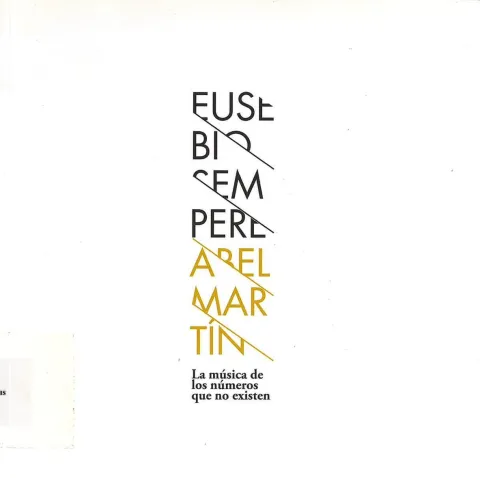
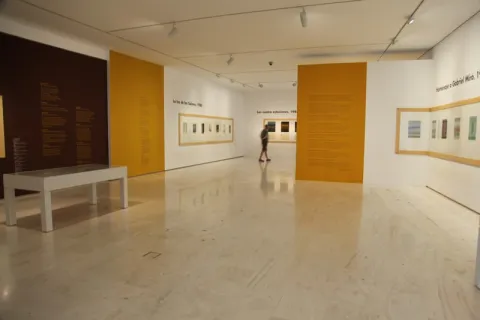
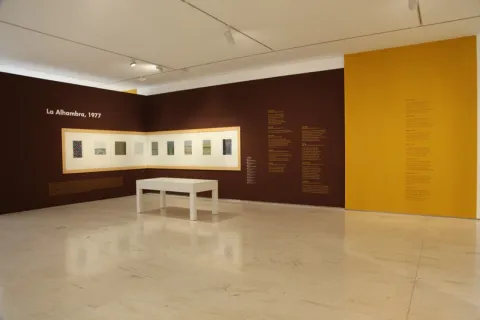
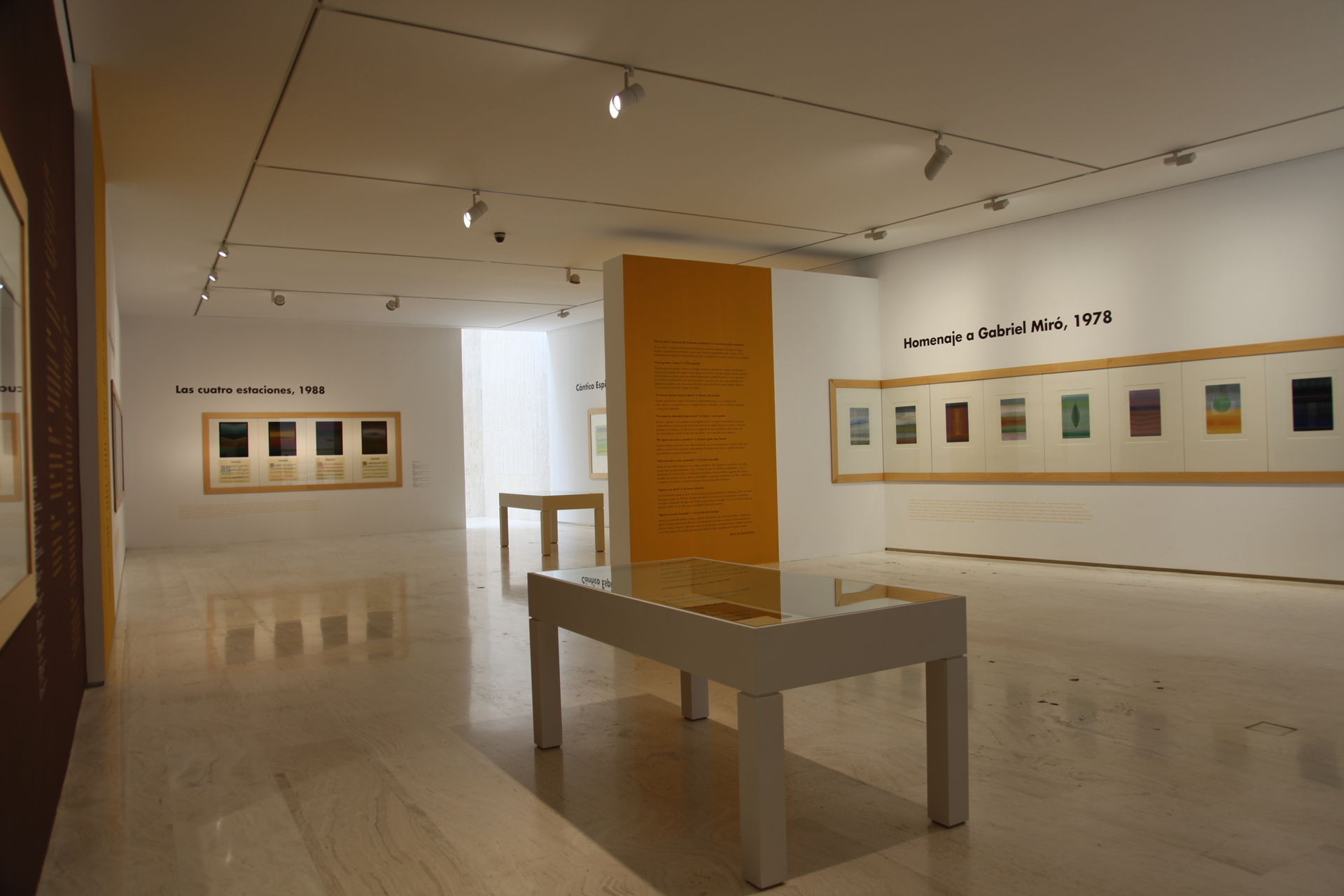
The Four Seasons of 1965 is the first portfolio of artistic silkscreens printed in Spain. It was 50 years ago and the presentation at the Juana Mordó Gallery became an unprecedented success with the public, critics, and sales. It was the beginning of one of the most important sets of graphic works created in twentieth-century Spain, that of artist Eusebio Sempere, exceptional both for its quality and its quantity. Approximately two hundred works among silkscreens, lithographs, and engravings, elaborated by hand in which the highest levels of meticulous perfection are achieved and sometimes, precious craftsmanship.

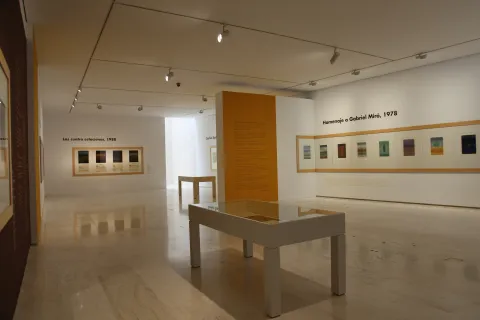
Nine portfolios of original silkscreens by Eusebio Sempere are presented, all printed by Abel Martín, as if it were a team effort, which trace the vital trajectory of both artists and demonstrate their joint artistic collaboration, the union and spiritual communication. Sempere would be the mind behind the forms and colors that Abel Martín, an excellent printer, then captured on paper through the superposition of silk screens, one for each of the colors used. Sometimes more than 40.

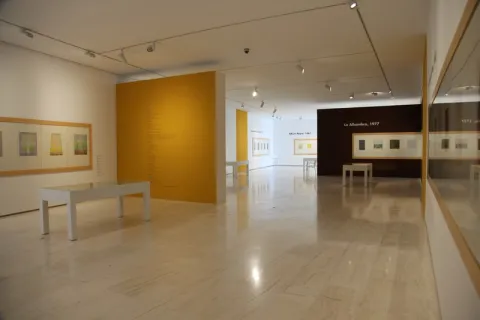
The Four Seasons of 1965, Nayar Album of 1967, Alarm Book, Transparency of Time or The Alhambra of 1977, Homage to Gabriel Miró of 1978, The Light of the Psalms of 1980, Spiritual Canticle of 1982 or the posthumous portfolio of The Four Seasons of 1988 that Abel Martín completed alone, combine the music of numbers that do not exist with the precise literature for each line.

All the portfolios are accompanied by literary texts, experimental, avant-garde, classical or mystical. Pedro Laín Entralgo, Julio Campal, José Miguel Ullán, Edmond Jabés, the Arab poets of Granada, Gabriel Miró, the biblical psalms or Saint John of the Cross presented in turn by Rafael Alberti, Gerardo Diego, Vicente Aleixandre, Juan Cantó or Vicente Aguilera Cerni, words kindled in the forms and colors that inspire souls with the desire to stay there and take a seat.


EXPO-0024
Imagen
Alt
Eusebio Sempere y Abel Martín.
Rosa María Castells
From February 2 to April 17, 2016. Valencia. Centro del Carmen. From April 5 to May 20, 2018 at the National Chalcography of the Royal Academy of Fine Arts of San Fernando. Madrid.

Sempere and his circle in the Mariano Yera collection

Submitted by brandcode_deweloper on

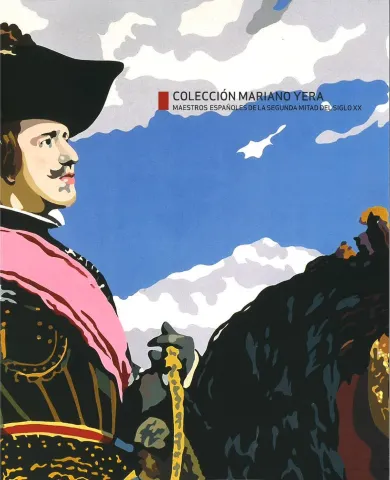
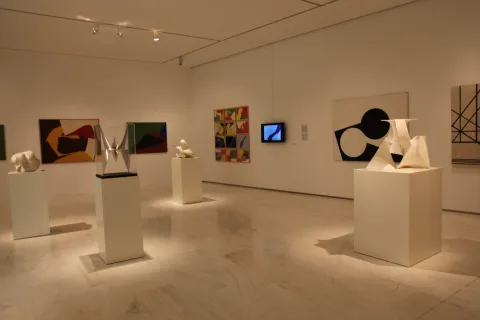
The Mariano Yera Collection follows the evolution of art history in Spain, as the main pictorial currents and their most outstanding authors are represented. It consists of more than one hundred and forty works of great quality, all of them expressive of the particular perspective of each of the sixty-three artists that make up this singular testimony of Spanish pictorial creation from the 1950s of the last century until the end of the twentieth century, a period rich in artistic proposals of enormous relevance. A selection closer to the Sempere generation is the one shown at the MACA.

EXPO-0019
Imagen
IMG_4103.jpg
/sites/default/files/inline-images/resources/exposiciones/EXPO-0019/DIPTICO_8.pdf
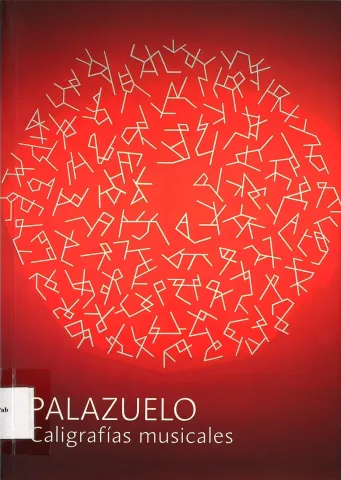
Miquel Barceló, Miguel Ángel Campano, Equipo 57, Equipo Crónica, Luis Feito, Luis Gordillo, José Guerrero, Josep Guinovart, Manuel Millares, Lucio Muñoz, Pablo Palazuelo, Manuel Rivera, Eusebio Sempere, Antoni Tàpies, Antonio Saura y Jose María Yturralde.
Felipe Garín Tarancón
Obras prestadas por la Colección Yera

Overflow. Claudia Martínez

Submitted by brandcode_deweloper on

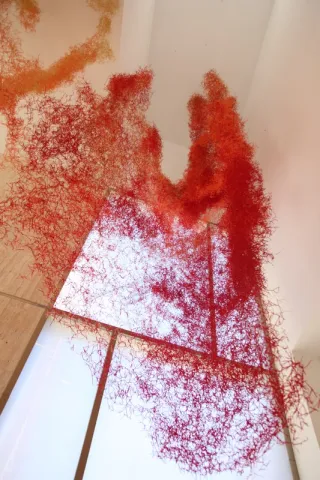
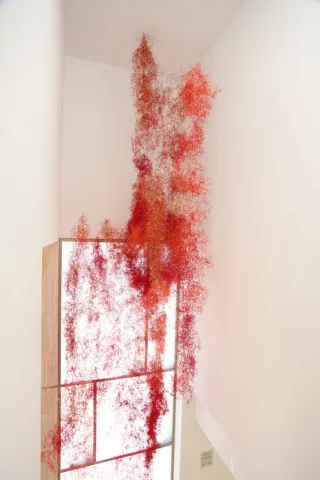
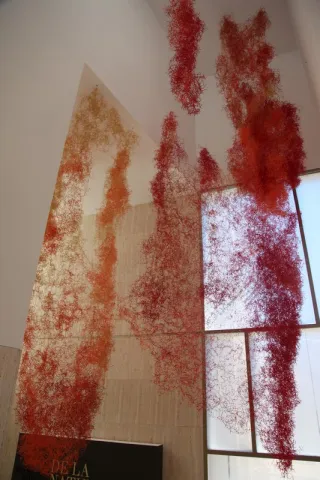
Overflow consists of a large-scale textile whose raw material is red, orange, and gold plastic thread with a wire core. The structure is formed by 100,000 meters of wire and 3 million knots, which stems from the concept of a fractal, a knot that repeats and connects the different parts of the mesh with great possibilities for permutations.

EXPO-0016
Imagen
IMG_2606.jpg
Claudia Martínez
Isabel Tejeda

Out of series

Submitted by brandcode_deweloper on
Serigraphs of Ibero-Switzerland in the UPV Collection

From the late 1960s to the 1990s, the main Spanish authors worked with Íbero-Suiza. Eusebio Sempere was the first of them to learn this technique. The artists, with a clear anti-Franco commitment, used screen printing as a means to disseminate both their ideological concerns and their art.

For decades, the family of José Llopis has preserved part of the printed material, from prints dedicated to numbered and signed proofs, posters, workshop proofs, color proofs and incomplete prints that were left out of the edition. Material that today allows us to understand the creative process of the artists and the workshop technicians and that is of great interest to specialists and researchers in the field of contemporary graphic work.

The exhibition is composed of 46 pieces, two of them from the MACA. 44 screen prints and 1 original work. In addition to documentary material, letters, drawings, screens, photographs.... and a selection of posters also printed in screen printing.

EXPO-0013
Imagen
IMG_9281r.jpg
Joaquín Michavila, Carmen Calvo, José María Yturralde, Andrés Cillero, Fernando Zóbel, Equipo Crónica, Equipo Realidad, Luis Feito, Luis Gordillo, Manuel Hernández Mompó, Josep Renau, Manuel Rivera, Antonio Saura, Eusebio Sempere, Antoni Tàpies, Jordi Teixidor, Rosa Torres, Manolo Valdés, Salvador Victoria, Pablo Palazuelo, Miguel Ángel Campano, Valerio Adami, Andreu Alfaro, Marcelo Fuentes, Juan Genovés, Juan Antonio Toledo, Eduardo Arroyo, Gerardo Rueda, Ramírez Blanco y Miquel Navarro.
Antonio Alcaraz

Normative Art

Submitted by brandcode_deweloper on
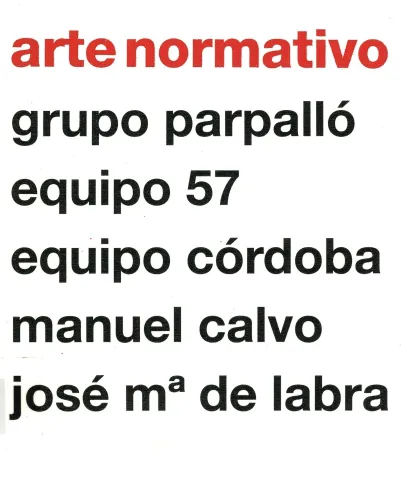
50th Anniversary of the First Exhibition of Spanish Normative Art

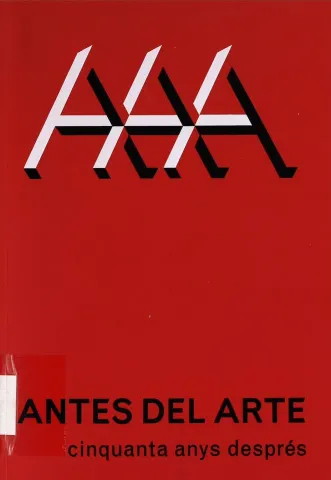
On March 12, 1960, the First joint exhibition of Spanish normative art was inaugurated at the Ateneo Mercantil in Valencia. This exhibition was organized by the Parpalló Group and coordinated by Valencian critics Vicente Aguilera Cerni and Antonio Giménez Pericás, and featured the participation of Equipo 57, Equipo Córdoba, José Mª Labra and Manuel Calvo. The exhibition displayed works by all of them together with members of the Valencian group: Andreu Alfaro, Eusebio Sempere, Isidro Balaguer, Monjalés and decorator José Martínez Peris. 

The exhibition constituted the culmination of an intense prior process of dialogue and debate among the various art critics, artistic groups and artists who had taken a stand for geometric abstraction in open opposition to informalism. Normative art or normativism was the indigenous label proposed in Spain in the late 1950s, with the intention of creating a broad representative movement, unprecedented in our country, of geometric abstract art heir to neoplasticism, constructivism and the Bauhaus. 

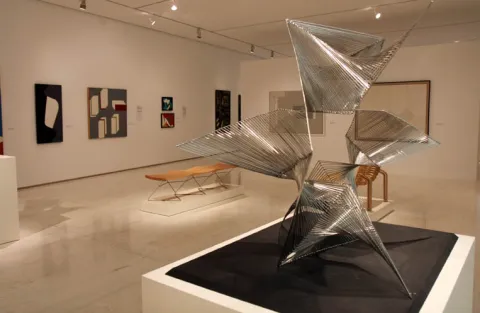
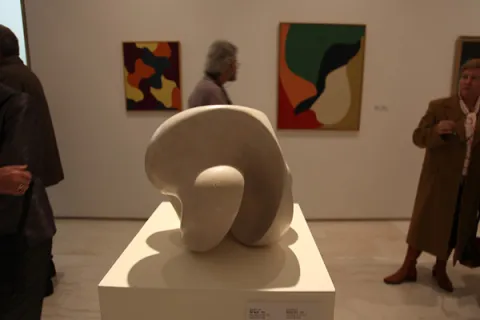
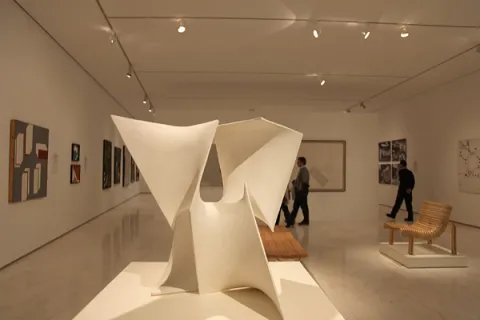
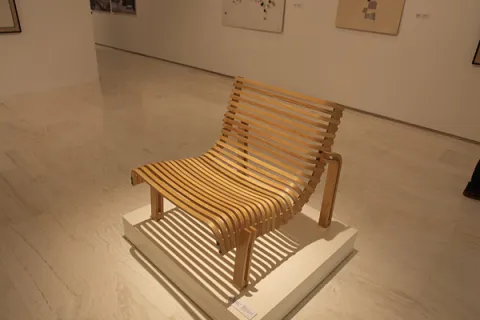
The exhibition on Normative Art is composed of more than 50 works including sculptures, paintings and photographs and commemorates the 50th anniversary of the first exhibition of Spanish Normative Art that took place in Valencia on March 12, 1960. The exhibition displays 12 sculptures, 5 photographs, 5 luminous reliefs, 2 panels, as well as other exhibition elements such as the poster from the 1960 exhibition and a film by Equipo 57.

EXPO-0001
Imagen
expo1-14.jpg
/sites/default/files/inline-images/resources/exposiciones/EXPO-0001/Folleto_10.pdf
Equipo 57 , Grupo Parpalló, Equipo Córdoba, Isidoro Balaguer, Monjalés, José Martínez Peris, Manolo Calvo, José María de Labra
Pablo Ramírez, Ángel Llorente
Obras prestadas por: colecciones particulares, IVAM, Bancaja, Museu Victor Balaguer, Diputación de Valencia.