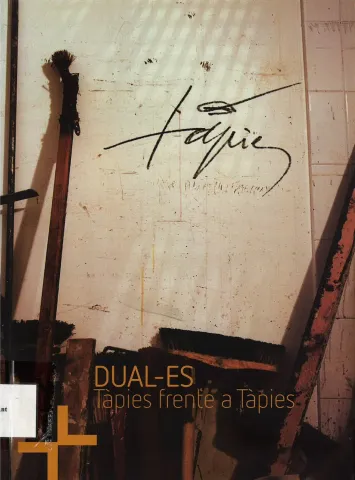
Dual-es. Tàpies facing Tàpies

Submitted by brandcode_deweloper on

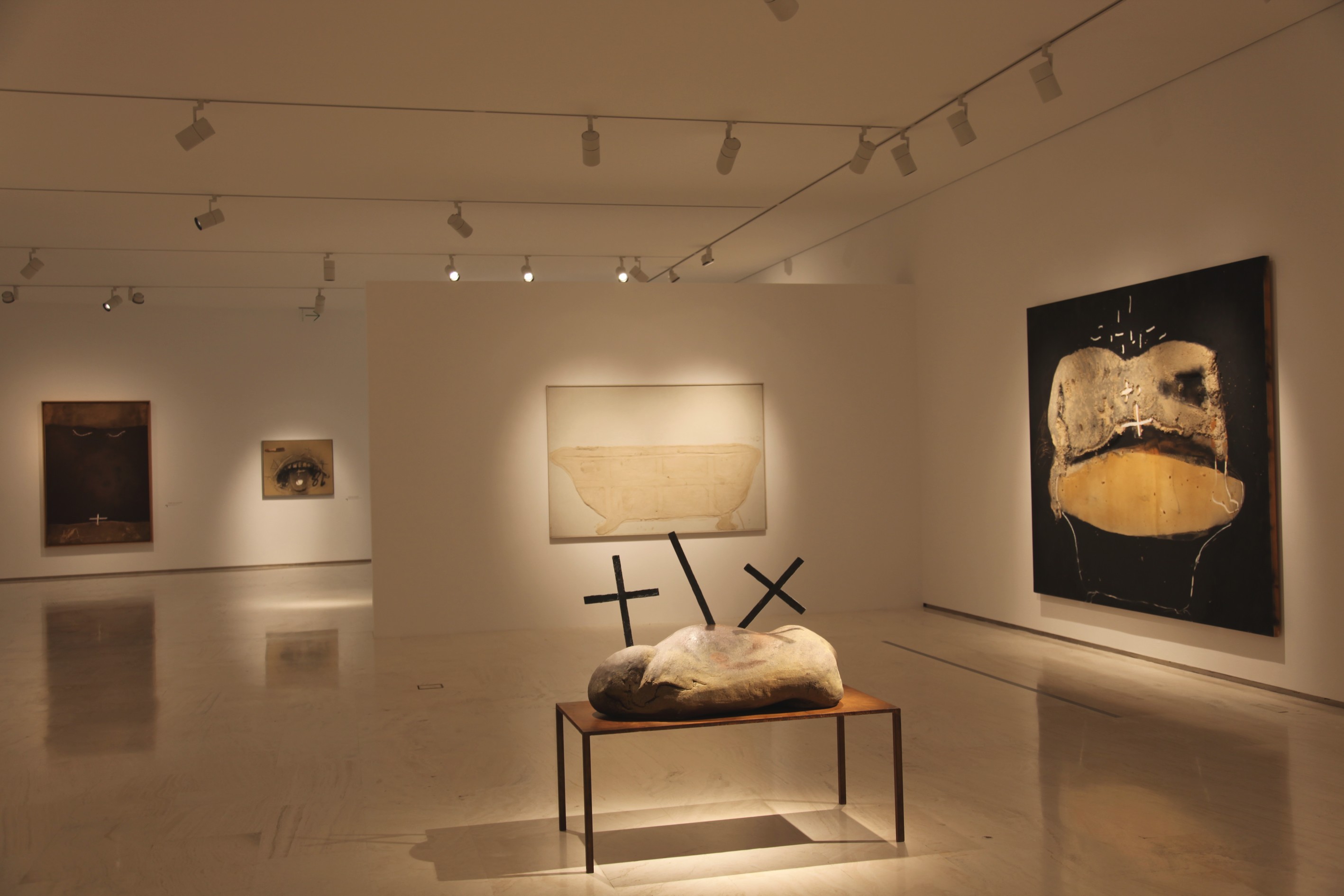
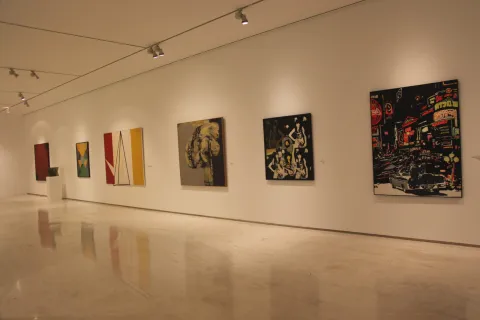
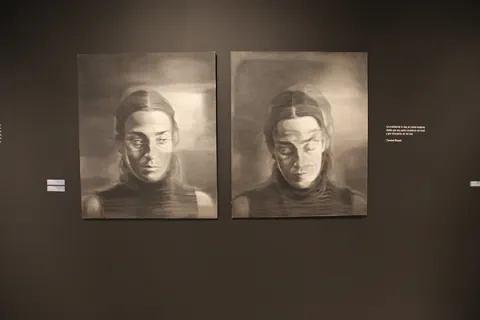
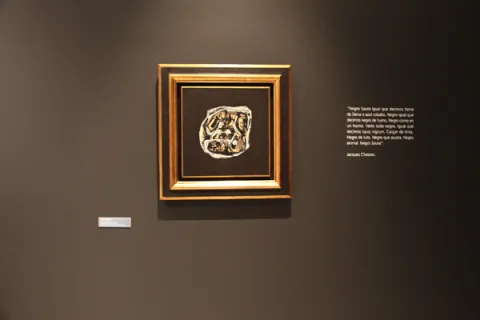
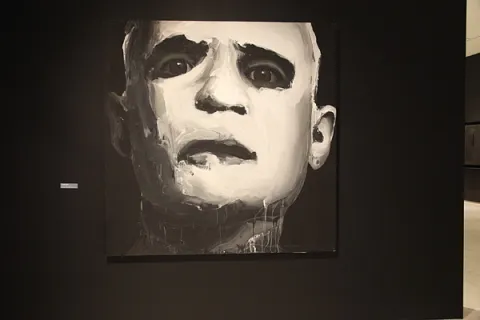
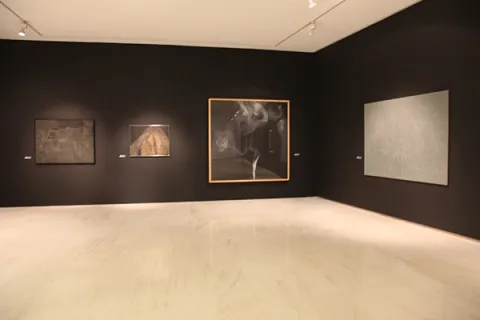
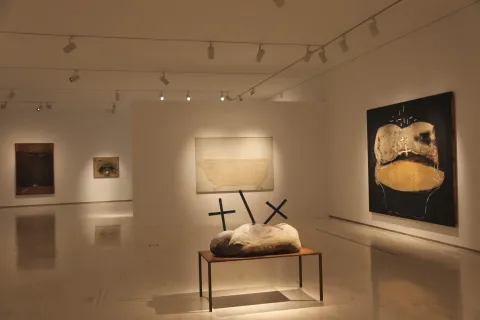
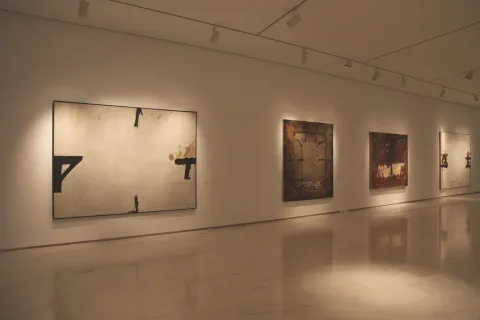
First exhibition of MACA's own production, carried out in collaboration with the Tomás y Valiente Art Center, CEART of Fuenlabrada. This exhibition invites us to establish a game of parallels by introducing the temporal factor and delving deeper into the theme that accentuates its aesthetic values. The same subject developed at different aesthetic moments of his artistic trajectory results in suggestive pairs of works in which Tàpies confronts himself, offering different visions between the artist of yesterday and almost of today, always with the common denominator of intensity and strength. With the passage of time, that energy, that vigor in gesturality, becomes more latent. His forceful stroke seems accompanied by an arm and a heart that are increasingly youthful. It is not necessary to make a retrospective to observe this reality, as any of his pieces contains it.

The selected pieces are of great technical diversity: from the characteristic mixed techniques based on matter on canvas or panel, collages of objects or textures, painting on canvas, assemblages or graphite on paper.

The exhibition also integrates an assemblage on chamotted earth, that is, one of the artist's famous ceramic pieces. The technical diversity is evident and, nevertheless, the unitary sensation of the whole is equally clearly perceptible. Our vision as spectators will act as parallel editing and will jump from one painting to another to find the coincidences and extract the new meanings that undoubtedly arise beyond the isolated contemplation of a particular work. As a whole, the exhibited work is striking, not only because of the character of its iconography (dual, complementary, contradictory) but also because of the authentic struggle that is established between darkness and light that does not obey exclusively the tenebrist heritage or Spanish Baroque painting. Capital themes such as love and pain or life and death are the most present in Tàpies' work.
EXPO-0005
Imagen
5.jpg
/sites/default/files/inline-images/resources/exposiciones/EXPO-0005/folleto1_9.pdf
Alicia Ventura, Rosa María Castells
Obras prestadas por: colecciones particulares, Museo Nacional Centro de Arte Reina Sofía de Madrid, Patio Herreriano de Valladolid, Artium de Vitoria, IVAM de Valencia, Fundación La Caixa, Colección caja Mediterráneo, Galería Lelong de París, Fundación Aena, etc.

Sensitive Plans

Submitted by brandcode_deweloper on
Abstract painting from the Contemporary Art Collection of the "La Caixa" Foundation

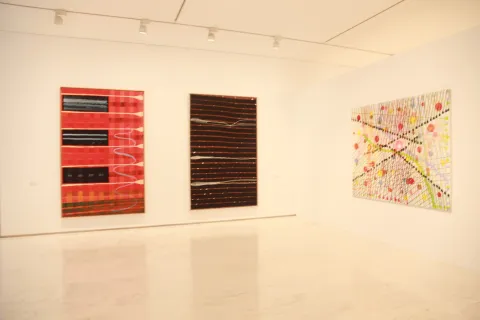
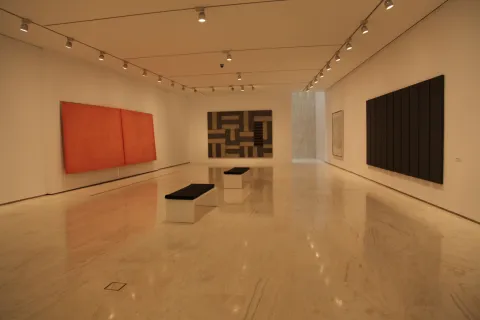
The works in this exhibition confront the viewer with the physical presence of painting. In its visible components—form, color, and line—lies all of its persuasive capacity. Its materiality is perceived as a visual event that emerges from the pictorial plane and acts as an energy that envelops the viewer and implicates them emotionally. In the twentieth century, painting freed itself from its imitative and representational function of the visible world and became a reality in itself. Abstraction led it to undertake a journey of exploration of the flat surface of the canvas and its physical properties, during which it stripped away everything that was not objective.

In that process, painting acquired its own life. The works in this exhibition confront the viewer with the physical presence of painting. In its visible components—form, color, and line—lies all of its persuasive capacity. Its materiality is perceived as a visual event that emerges from the pictorial plane and acts as an energy that envelops the viewer and implicates them emotionally. Abstract painting is part of this constantly changing world, and its visual language does not possess permanent meanings. It will always be sensitive to different perspectives and its relationship with the viewer.

EXPO-0004
Imagen
LA-CAIXA-PLANOS-SENSIBLES-014-1.jpg
/sites/default/files/inline-images/resources/exposiciones/EXPO-0004/Triptico-fondos-CAST-ok1_9.pdf
Sean Scully, Peter Halley, Agnes Martín, Alan Charlton, Ettore Spalleti, Ferran García Sevilla, Joan Fernández Pijuan, Juan Usle, Pablo Palazuelo, Richard Serra, Robert Ryman, Soledad Sevilla.
Nimfa Bisbe

Behind the wall there is sun

Submitted by brandcode_deweloper on
Contemporary Art Collection of the Valencia Museum of Fine Arts

Contrary to what one might think, the contemporary art collection of the Museum of Fine Arts in Valencia—or at least its initial nucleus—was not a disorderly accumulation of donations or bequests, but rather a rigorous and well-thought-out proposal by the museum's management starting in 1967, which was able to be carried out due to a series of fortunate circumstances that allowed, in a time of absolute lack in Valencia of stable centers that exhibited work by the most significant artists, to structure in a room of the museum itself more than a juxtaposition of individualities, an objective approach to the trends in which the most representative Valencian artists were moving in those years.

This was done fundamentally so as not to leave truncated the rich historical development of the museum's collections, which had been interrupted in the second half of the twentieth century for very diverse reasons, both conceptual and historical, political or aesthetic, attributable not so much to the museum as to the very situation of Valencian society.

EXPO-0003
Imagen
DETRAS_DEL_MURO_HAY_SOL-010.jpg
/sites/default/files/inline-images/resources/exposiciones/EXPO-0003/Triptico-fondos-CAST-ok1_9.pdf
Sixto Marco, Eusebio Sempere, Manolo Gil, Rafael Armengol, ANZO, Andrés Cillero, Equipo Crónica, Equipo Realidad, Juan Genovés, José Renau, Manuel Hernández Mompó, Salvador Victoria, José Vento, Salvador Soria, Manuel Boix, Moisés Villelia, Josep Guinovart, Antoni Tàpies, Joaquín Michavila, José María López Iturralde, Javier Calvo, Jordi Teixidor, Ramón de Soto, Pedro García Ramos.
Felipe Garín Tarancón

Black and white: subject, space and perception

Submitted by brandcode_deweloper on
Chirivella Soriano Foundation Collection

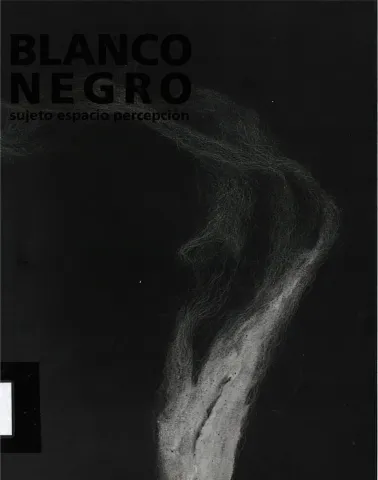
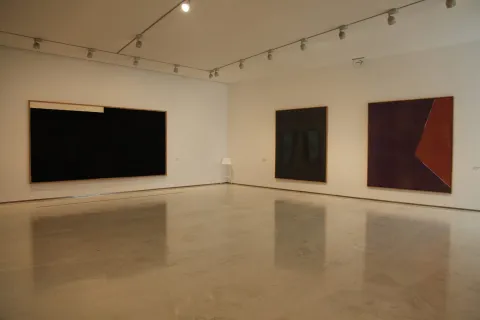
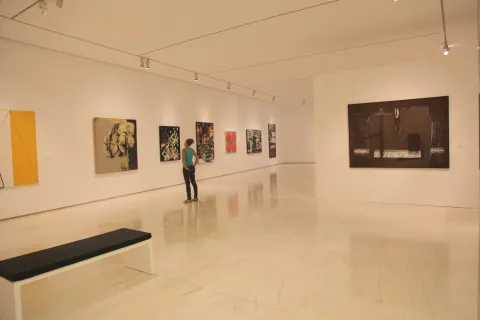
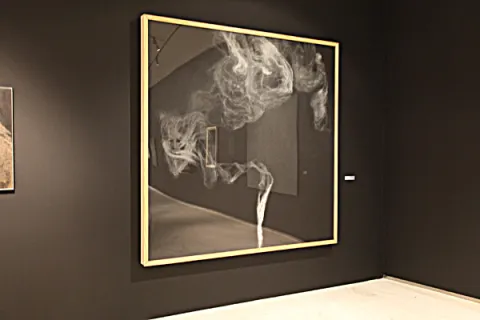
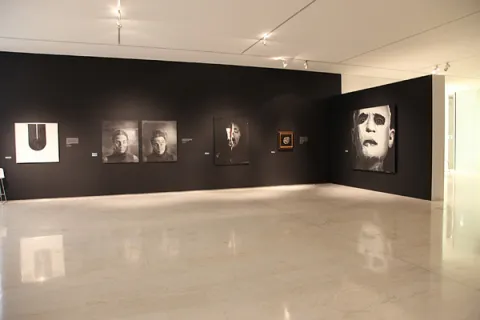
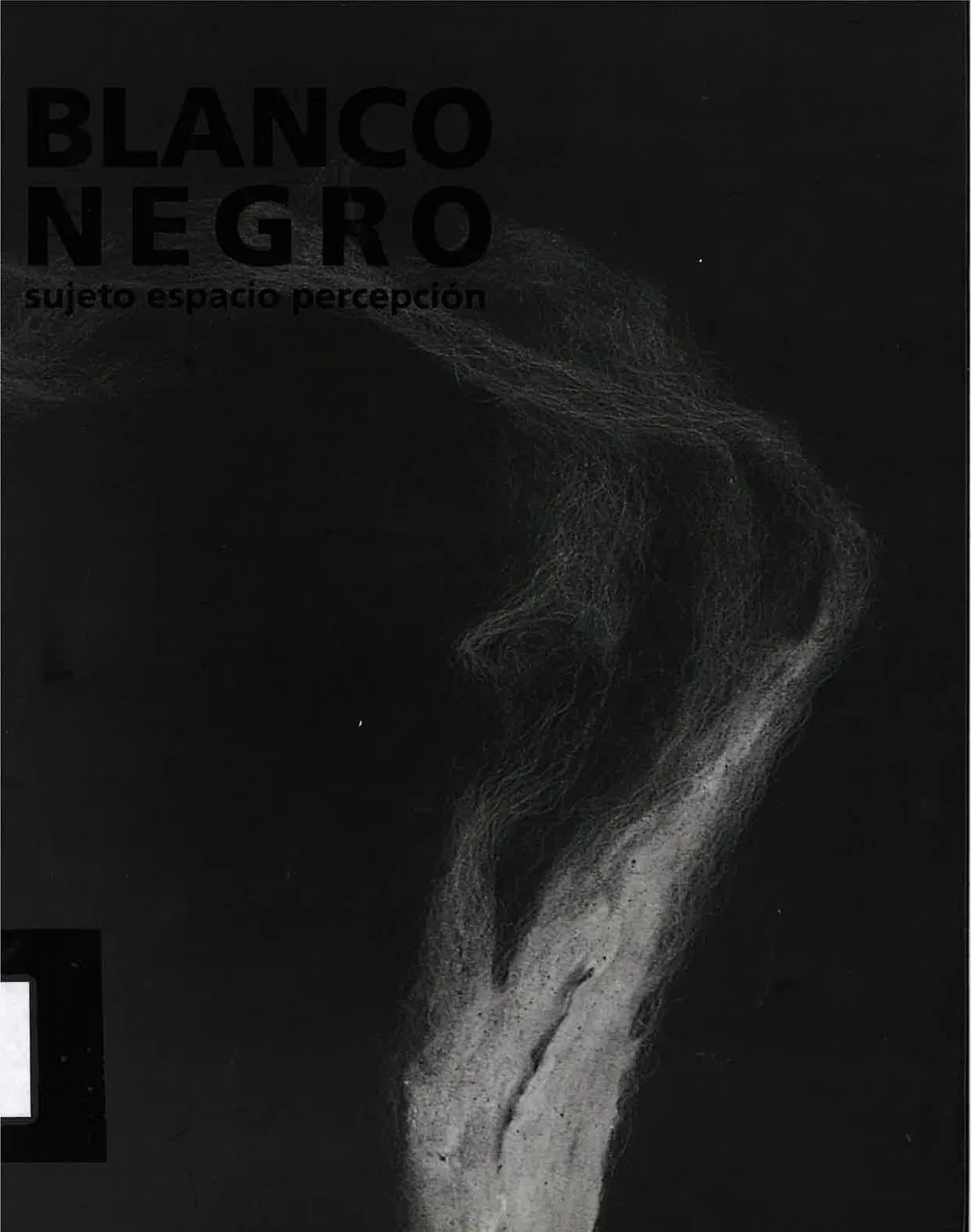
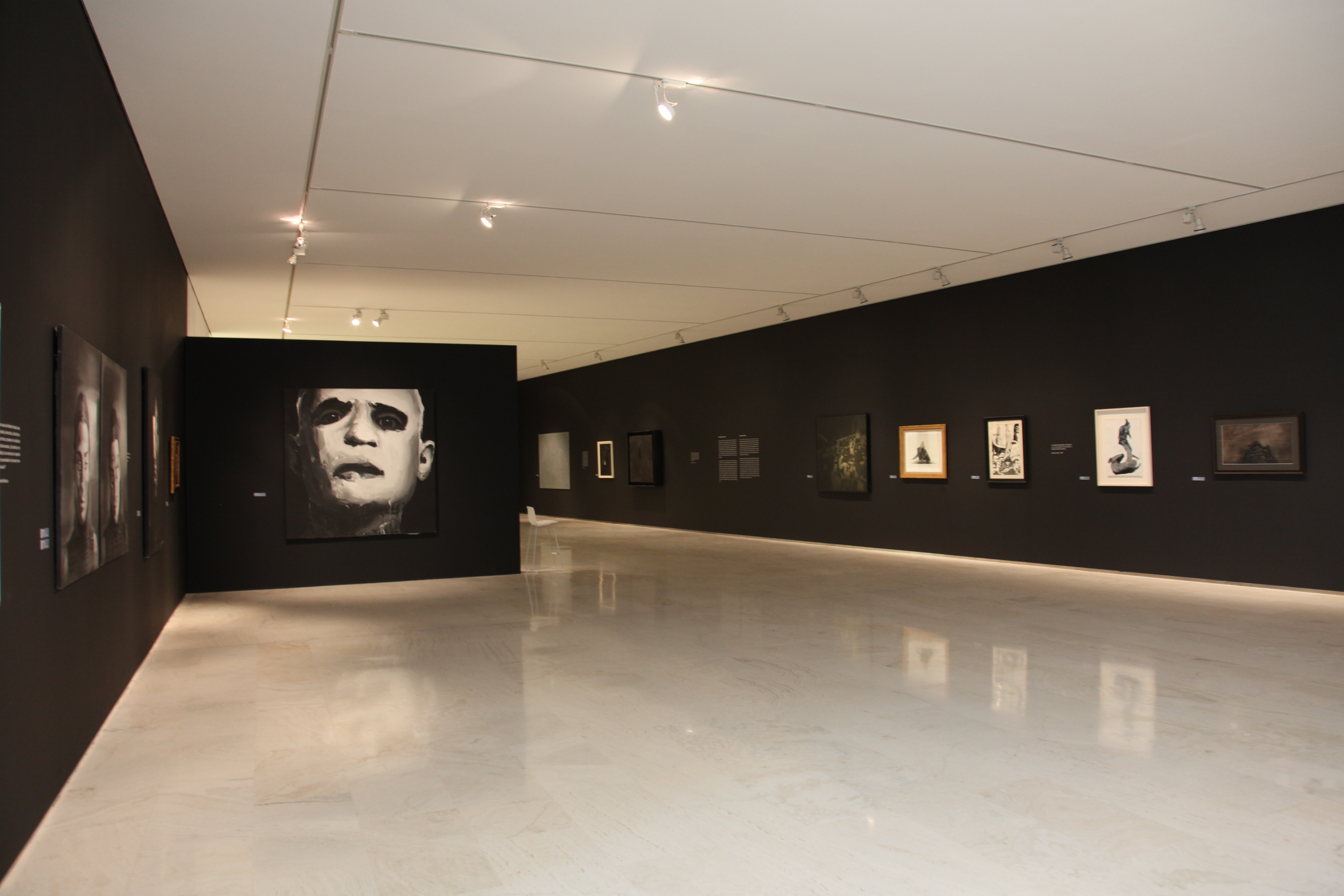
The exhibition "Black and White: Subject, Space and Perception" is an approach to the work of various artists who, in the Spanish sphere from the end of the post-war period to the present day, have approached plastic creation from monochromatic works in white or black to the construction of a space that is articulated around opposite or complementary dualities. Consequently, proposing an exhibition about color is to reflect on one of the central themes for contemporary creation. Among the successive vicissitudes that color underwent during the twentieth century, we observe how, from the Second World War to the present day, color underwent a continuous process that transformed it into a common and banal material within everyday life, which came to be mass-produced and standardized by commerce. In the artistic sphere its repercussions were no less significant, therefore, a certain number of artists formed a color palette far removed from any spiritual, intentional or significant will that, until then, the tradition of art had demanded.

This new presentation of the exhibition at the Museum of Contemporary Art in Alicante, which is based on the Collection of the Chirivella Soriano Foundation, is structured in four areas: Prelude on White; Individual Isolation, Society; Destruction and Love; and finally, Harmony of Opposites.

EXPO-0002
Imagen
BLANCO_NEGRO-004.jpg
/sites/default/files/inline-images/resources/exposiciones/EXPO-0002/Folleto_10.pdf
Juan Carlos Lázaro, José Luis Fajardo, Fernando Zóbel, Darío Villalba, Antonio Saura, Chema López, Santiago Ydñáez, José Iranzo, Elena Asins, Equipo Realidad, Rafael Canogar, Juan Genovés, Rafael Armengol, Francisco Farreras, Assad Kassab, Andrés Cillero, Fernando Lorite, Xisco Mensua, Equipo 57, Manuel Barbadillo, José María Yturralde, Eduard Arbés, Lucio Muñoz.
Joan Robledo
Obras prestadas por la Fundación Chirivella Soriano, Valencia.

Normative Art

Submitted by brandcode_deweloper on
50th Anniversary of the First Exhibition of Spanish Normative Art

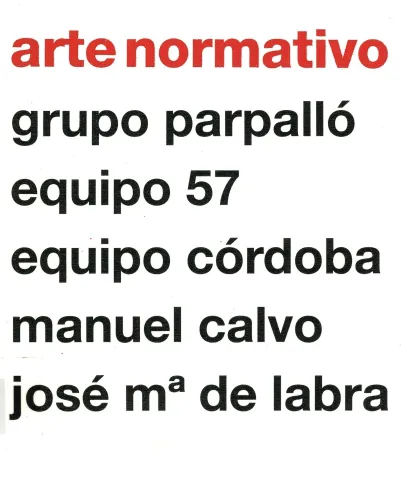
On March 12, 1960, the First joint exhibition of Spanish normative art was inaugurated at the Ateneo Mercantil in Valencia. This exhibition was organized by the Parpalló Group and coordinated by Valencian critics Vicente Aguilera Cerni and Antonio Giménez Pericás, and featured the participation of Equipo 57, Equipo Córdoba, José Mª Labra and Manuel Calvo. The exhibition displayed works by all of them together with members of the Valencian group: Andreu Alfaro, Eusebio Sempere, Isidro Balaguer, Monjalés and decorator José Martínez Peris. 

The exhibition constituted the culmination of an intense prior process of dialogue and debate among the various art critics, artistic groups and artists who had taken a stand for geometric abstraction in open opposition to informalism. Normative art or normativism was the indigenous label proposed in Spain in the late 1950s, with the intention of creating a broad representative movement, unprecedented in our country, of geometric abstract art heir to neoplasticism, constructivism and the Bauhaus. 

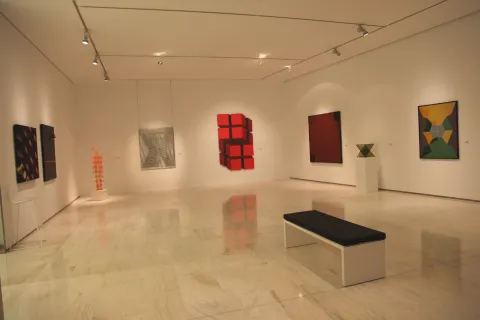
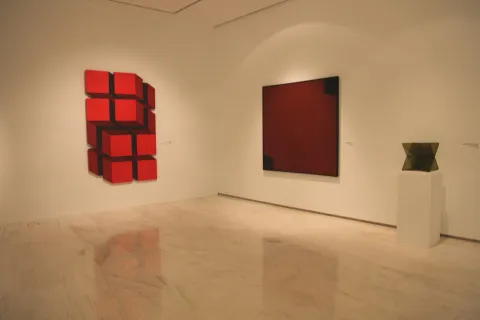
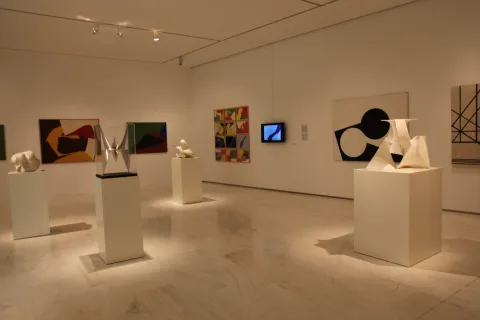
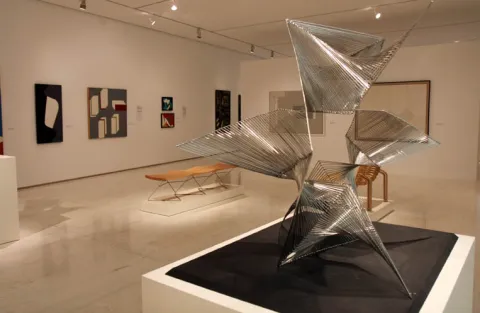
The exhibition on Normative Art is composed of more than 50 works including sculptures, paintings and photographs and commemorates the 50th anniversary of the first exhibition of Spanish Normative Art that took place in Valencia on March 12, 1960. The exhibition displays 12 sculptures, 5 photographs, 5 luminous reliefs, 2 panels, as well as other exhibition elements such as the poster from the 1960 exhibition and a film by Equipo 57.

EXPO-0001
Imagen
expo1-14.jpg
/sites/default/files/inline-images/resources/exposiciones/EXPO-0001/Folleto_10.pdf
Equipo 57 , Grupo Parpalló, Equipo Córdoba, Isidoro Balaguer, Monjalés, José Martínez Peris, Manolo Calvo, José María de Labra
Pablo Ramírez, Ángel Llorente
Obras prestadas por: colecciones particulares, IVAM, Bancaja, Museu Victor Balaguer, Diputación de Valencia.

Performance by Esther Ferrer. Contemporary Music Festival

Submitted by brandcode_deweloper on
Performance
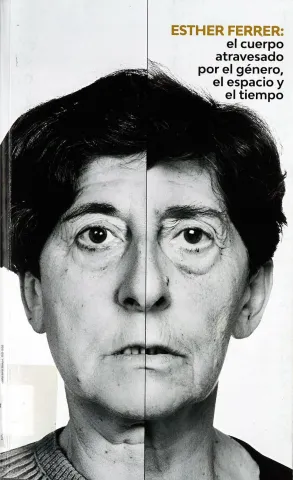
During the 28th Alicante Music Festival, Esther Ferrer performed two performances at the MACA. This veteran artist from San Sebastián, a pioneer in Spain of "action art" and National Prize for Plastic Arts in 2009, gives us her vision on the current situation in the art world.
MULTI-0241

Silent Genealogies. Mediterranean Foundation Collection

Submitted by brandcode_deweloper on
Audiovisual tour of the exhibition
From September 13, 2012 to January 6, 2013

Curator: Rosa Mª Castells.

Coordination: Museum of Contemporary Art, MACA.

Production: Social Work Fundación Mediterráneo and Culture Department of the Alicante City Council

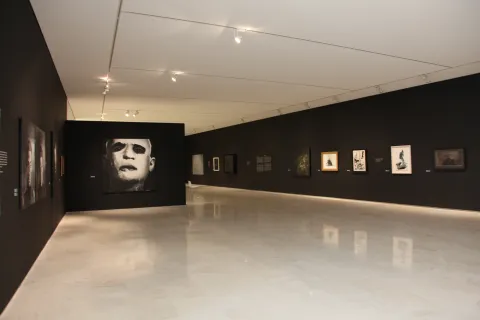
This exhibition brings together a selection of works that are part of this Fundación Mediterráneo Collection deposited at the MACA. The exhibition brings together a series of works by different artists that share a common creative process. A fragmented process, made in pieces, often asymmetrical and that reveals the structure of the work, always with an uncomfortable sensation of nakedness or defenselessness.
MULTI-0240