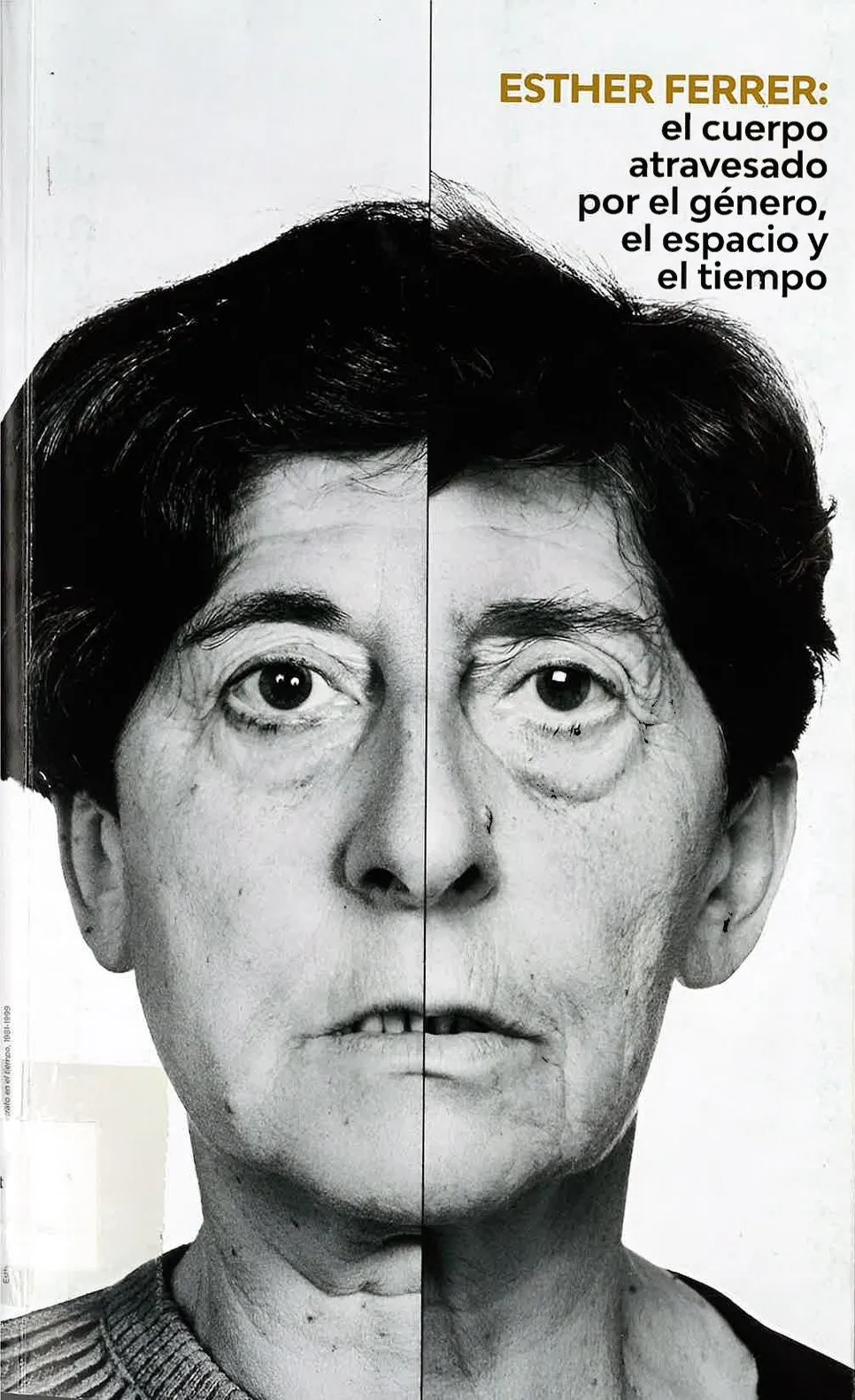
Esther Ferrer: the body traversed by gender, space and time

Submitted by brandcode_deweloper on

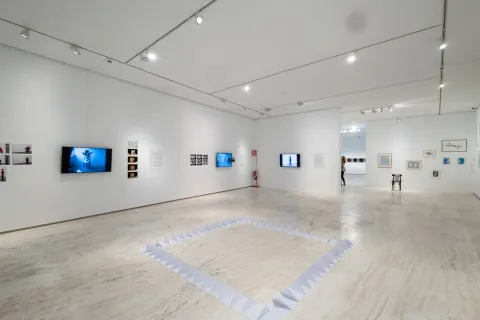
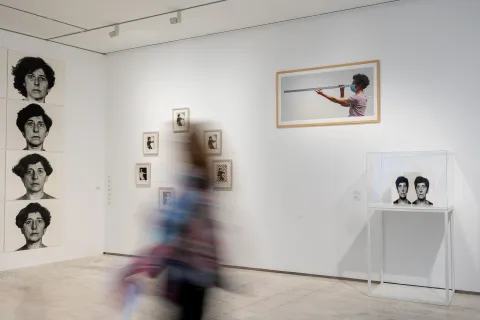
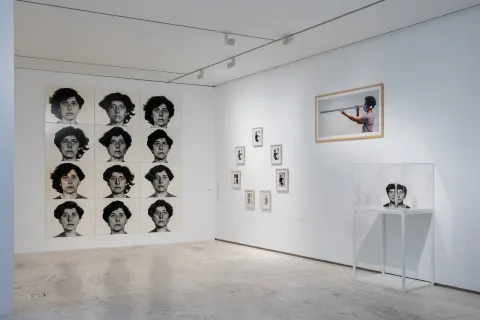
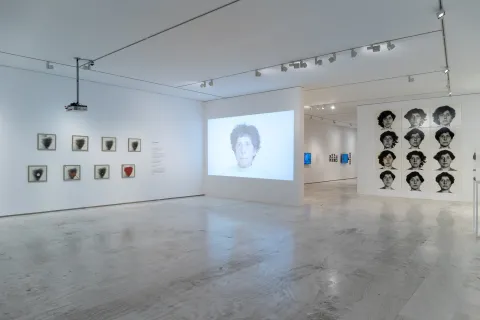
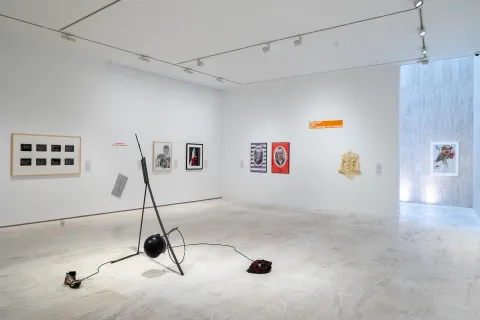
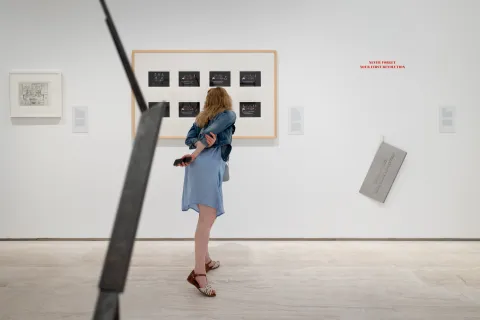
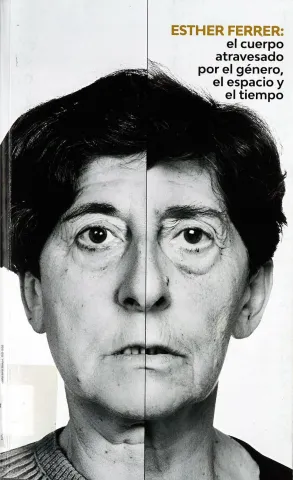
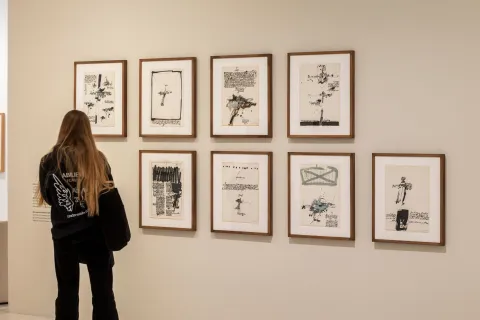
The exhibition focuses on the idea of woman and her body in interrelation with time and space. A body, that of the artist herself, from which she produces actions and creative works. And, from which, she traverses and measures space and, in turn, is crossed by time, even showing the aging of a woman, confronted with the idea and promotion of eternal feminine youth fostered by the patriarchal system.
 

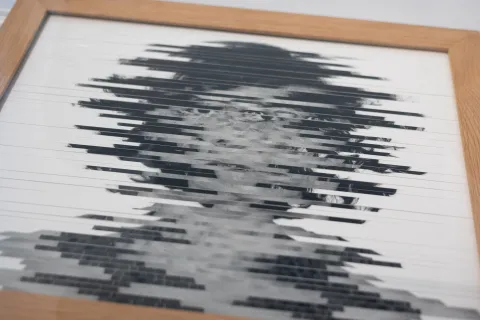
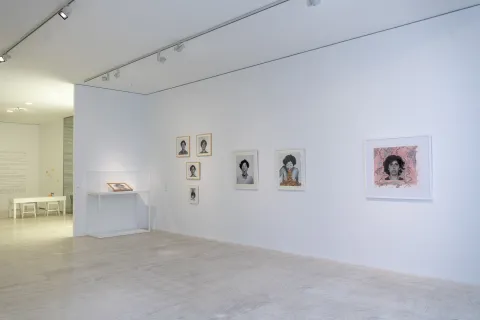
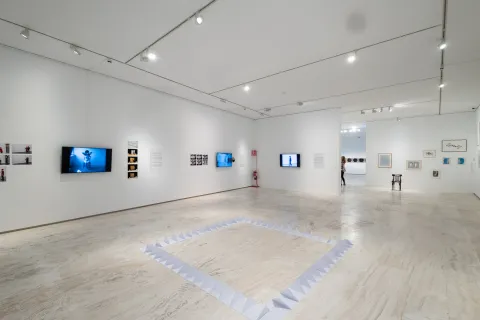
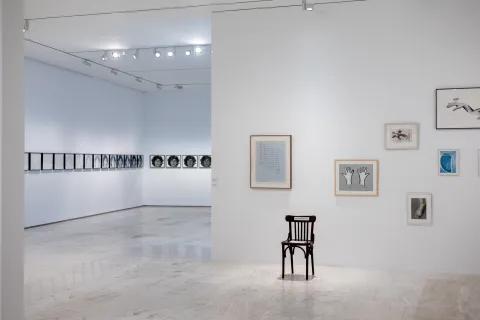
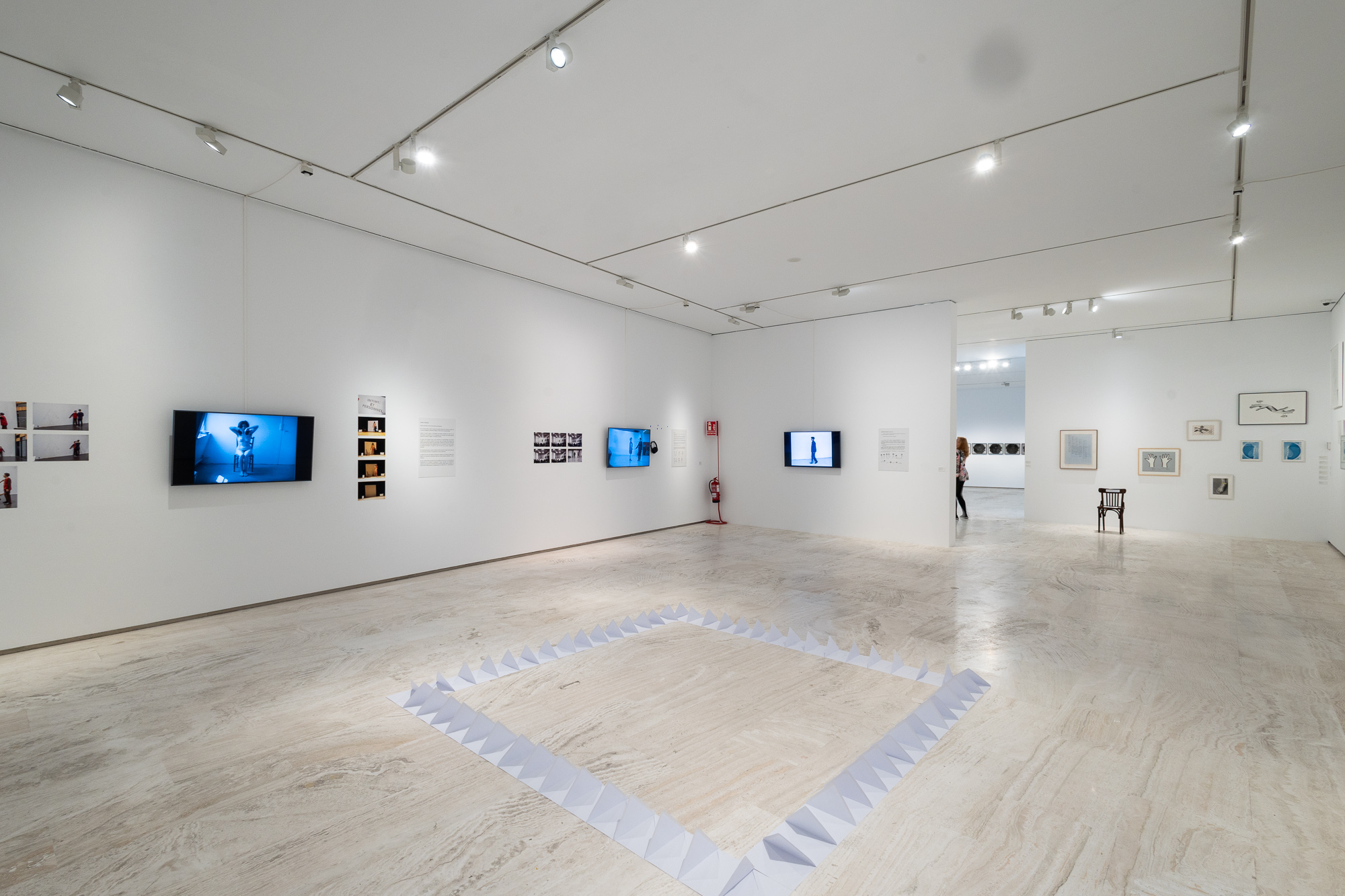
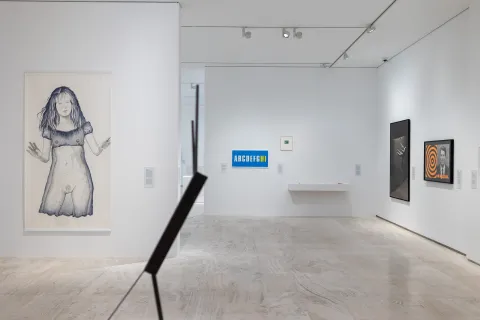
And that body is also transferred to photography, installations, drawings and even video, through self-portraits of her face and body fragments, in performative attitudes. Furthermore, a bodily action, shown through a series of images and audiovisuals that, as documentation of a selection of performances, are offered as visual and sound narrative media, alongside "the scores" or scripts that she constructs to continue in the execution of her performances.
 

In short, an entire multi and interdisciplinary performative exhibition route expanded from action to plastic works and vice versa, its incitement to the realization of actions by the public or its mere evocation, or else the visual pieces as traces or remains of performances. While showing us her own body set in motion in time and space, seen and read as a meaning of symbolic layers and deconstructive representations of the patriarchal gaze on the female body. And, all of this, bathed in a certain sense of acerbic humor, the conjugation of the absurd and chance encounters with objects, words and signs.
 

EXPO-0066
Imagen
3F1A9868.jpg
/sites/default/files/inline-images/resources/exposiciones/EXPO-0066/esther-ferre-folleto-desplegable-72x34-cm-Alicante-1_5.pdf
Margarita de Aizpuru

The Invited Piece. Antoni Tàpies: White with Four Black Signs

Submitted by brandcode_deweloper on
Mediterranean Foundation Collection

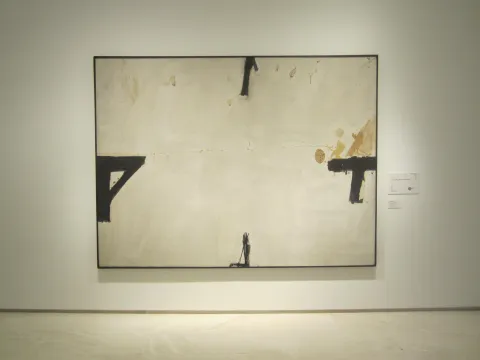
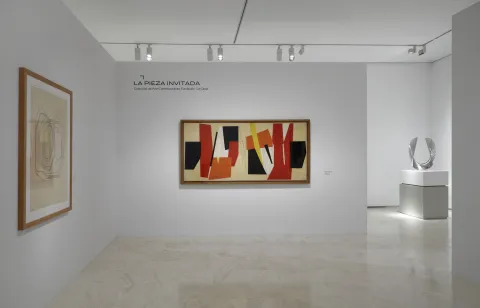
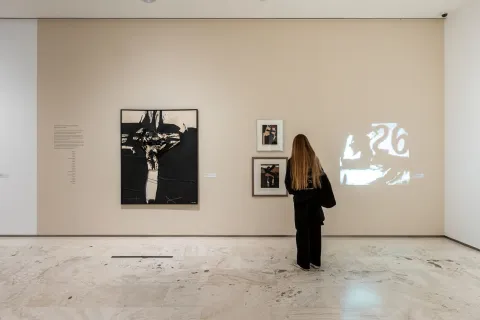
The MACA - Museum of Contemporary Art of Alicante has invited on this occasion the work by Antoni Tàpies titled "White with Four Black Signs" from 1964-1965, belonging to the Caja Mediterráneo Collection of the Social Work of Caja Mediterráneo deposited at the MACA and which can be enjoyed from October 2013 to February 2014.

The invited piece is, on this occasion, a major work by artist Antoni Tàpies. It is the canvas White with 4 Black Signs, 1964-65, mixed media on canvas, 195 x 260 cm, belonging to the Caja Mediterráneo Collection deposited at the MACA. A great work by the Catalan artist that establishes dialogue with the group of works from the 20th Century Art Collection that addresses the Spanish generation of the 60s, including in the same room a small Tàpies titled Two Eyelids. The piece was installed for a specific temporary period between the months of September 2013 and January 2014 on the First Floor of the MACA, alongside works by Millares, Chillida, Torner, Rivera, Zóbel and Tàpies himself. White with 4 Black Signs is an impactful work not only because of the character of its iconography, but also because of the authentic struggle that is established between darkness and light, a peculiar characteristic of Tàpies' work. If the black color connects in one way or another with the idea of death, the white color suggests the hope of light. A large-scale work where black elements stand out against the uniform whitish background of the canvas. Those positioned in the central part in vertical arrangement are simply black lines, while those found at the extremes of the horizontal central axis can be read as two letters, the "A" and the "T". The truth is that these letters appear with great frequency in Tàpies' work, as they are the initials of the artist's name and surname. They are therefore a clear allusion to the presence of the artist in the work; they could even be understood as a signature. At the same time, it is necessary to say that especially the "T" appears in many works by Tàpies: that letter is also the cross, an essential characteristic of Christian iconography. Of course, Antoni Tàpies would not only have inherited that iconographic tradition from Spanish Baroque, but from religious art of all periods. Generally, the titles of Antoni Tàpies' works offer little information to the viewer, in that they are sparse and only make reference to some specific aspect of the work or not even that, since they are synthetic. The artist, by offering so little information about his work, White with 4 Black Signs enhances the need of those who observe it to investigate what happens in it, what it is about. That is precisely the essential question: to be able to trigger in those who observe carefully and wish to know more about the work, a process of reflection that leads them to unveil the enigmas that the works propose, both individually and as a whole.

Antoni Tàpies (Barcelona, 1923-2012) Began his artistic experiments during the long convalescence of a serious illness. His growing dedication to drawing and painting led him to abandon his university studies. In the 1940s he was already exhibiting his works, of marked personality, which distinguished him in the artistic panorama of the time. He is a co-founder of the magazine Dau al Set (1948). Influenced by Miró and Klee, he then increased the iconographic factor and magical themes. Little by little he incorporates geometrizing elements and color studies that lead to an interest in matter, which translates into canvases of intense texture and great expressive and communicative possibilities. With these works, Tàpies achieved, by the mid-1950s, international recognition. From the 1960s onwards, he incorporates new iconographic elements (writing signs, anthropomorphic elements, footprints and signs that allude to the reality of Catalonia) and technical procedures (new surfaces, use of everyday objects and varnish). Tàpies' pictorial language has evolved since then and has resulted in a diversified and productive plastic creation admired around the world.

Parallel to his artistic activity, Antoni Tàpies has developed a career as a writer that has resulted in various publications: La pràctica de l'art (The Practice of Art, 1970), L'art contra l'estètica (Art Against Aesthetics, 1974), Memòria personal (Personal Memory, 1977), La realitat com a art (Reality as Art, 1982), Per un art modern i progressista (For a Modern and Progressive Art, 1985), Valor de l'art (Value of Art, 1993) and L'art i els seus llocs (Art and Its Places, 1999).

Antoni Tàpies is undoubtedly one of the most important artists in the artistic history of the 20th century and one of the most genuine representatives of the informalist tendency. Always in a direct way, his paintings penetrate the viewer to leave questions of meaning in the background, resolving through force, gesture and matter.

Despite Tàpies' classification as an "informalist," signs such as crosses, lines, numbers and letters that belong to the artist's symbolic and inner universe often appear in his paintings, with clear allusions to the universe, life, death or sexuality, as well as a strong presence of the human figure apparently veiled by the abstraction with which his work is conceived. His plastic work reveals a personal assimilation of Oriental cultures, and an extremely delicate perception of the reality of the problems that plague mankind, while at the same time exalting and spiritualizing that which, by tradition, Western culture has considered poor and disposable.

The artist elevates any element present in the painting or any object of everyday life to the condition of a sign. Picasso affirmed that "art is the language of signs" and Tàpies takes this statement to the limit with the common denominator of intensity, force, spirituality, integration with matter, and the arrangement of color. Signs that will appear and mix to provoke, not to give answers: "the symbols are there, but I do not develop or analyze them," Tàpies himself tells us.

The presence of writing in his works returns to the sign all its ideographic capacity and gives language a force with a magical-religious value, of clearly Romanesque roots. A language that he will not abandon with the passage of time, as it is his own. Despite the evolution of the years and his work, iconography will continue to be essential for the deepest expression of his feelings. The signs are present, tied to new connections and with new elements, but always present. And thus, his creativity always results in works of great plastic force.

EXPO-0065
Imagen
img_2748-1.jpg
/sites/default/files/inline-images/resources/exposiciones/EXPO-0065/hoja-de-sala-1_5.pdf
Rosa María Castells
Colección Caja Mediterráneo

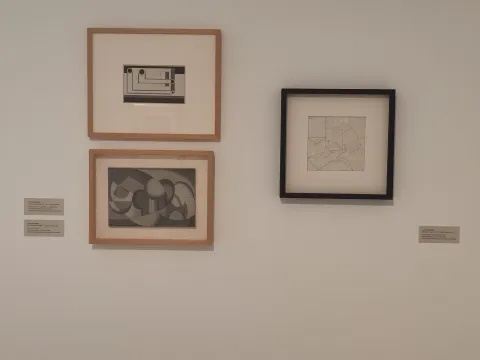
Avant-garde Context 5. Sophie Taeuber-Arp and Jean Arp

Submitted by brandcode_deweloper on
IVAM Collection of Valencia

The MACA exhibits a work by artist Sophie Taeuber-Arp and another piece by Jean Arp belonging to the collections of the Valencian Institute of Modern Art (IVAM), within the dialogue between collections established since 2021 in the "Contexto Vanguardia" program.

This is the fifth exhibition within "Contexto Vanguardia" which seeks to maintain a permanent dialogue between the works in the IVAM collection belonging to the avant-gardes of the first decades of the twentieth century and the works of the MACA's Twentieth Century Art Collection, so that complementary readings are established, support and context for some pieces that, in communication with others, strengthen their language, thus allowing visitors to enjoy artists not represented in the MACA while completing the vision of the avant-gardes. The objective is to create content and share knowledge.

Composition Aubette, 1927 by Sophie Taeuber-Arp and Coquille Nuage I, 1932 by Jean Arp, are the two works that can be visited in the museum.

The Artists
Jean Arp and Sophie Taeuber-Arp are essential artists in the European avant-gardes of the first third of the twentieth century: Dadaism, Neoplasticism, Constructivism… always around abstraction.

Jean Arp freely adapts forms extracted from nature transformed into elementary poetry in a constant recognition of nature as the ideal of art. Cloud Shell is a work that takes root in water, sun, clouds, or stone, and introduces the idea of metamorphosis, of continuous movement, in the ancestral time of an origin.

Sophie Taeuber-Arp is a multifaceted artist largely unknown, a convinced activist of modernity, who bases her formal language on geometric forms. In this piece that was created for the rehabilitation of the Café Aubette in Strasbourg, she uses the primary colors she had experimented with in her textile work, synthesizing the Neoplasticist aesthetic.

EXPO-0064
Imagen
alt
Sophie Taeuber-Arp
Rosa María Castells
Obras del Instituto Valenciano de Arte Moderno (IVAM)

The Invited Piece. Equipo Crónica: Meninas in the Chalet

Submitted by brandcode_deweloper on
Chirivella Soriano Foundation

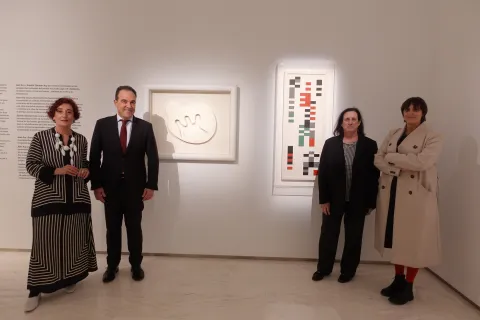
The MACA - Museum of Contemporary Art of Alicante has invited on this occasion the work of Equipo Crónica titled Las Meninas in the Chalet from 1969 belonging to the Chirivella Soriano Foundation of Valencia, which can be enjoyed from February 1st to April 28th, 2013. This splendid work from the Chirivella Soriano Foundation Las Meninas in the Chalet from 1969 fits perfectly alongside the work of Equipo Crónica belonging to the 20th Century Art Collection titled Self-portrait in Palace painted just one year later, in 1970.

A reflection on the theme of classical painting that serves to place Velázquez's characters—in the case of Las Meninas in the Chalet—the Infanta Margarita of Austria, the lady-in-waiting of the Infanta Isabel de Velasco, the dwarf Mari Bárbola, the royal chamberlain José Nieto and the dog, in a chalet from the 50s-60s, a time when the tourist phenomenon emerged and the chalet became fashionable for summer vacations. The exterior space of this representation corresponds to an advertisement from the Valencian store "Hogar completo"—specialized in armchairs, rocking chairs and folding summer loungers.

Self-portrait in Palace places the scene in the original space of the Las Meninas painting, preserving the characters of the royal chamberlain José Nieto and the Dog decorated with the Cross of Santiago, but in this case distorted, to occupy a gigantic volume. The two artists Manolo Valdés and Rafael Solbes, portray themselves in the foreground as in the original work the main characters of Las Meninas are placed. The painting is not finished, as there appears a blank area, empty and thousands of paint drips, and they appear characterized as two house painters who, during a break from their work, stop to look at us because we have placed ourselves in the scene and they invite us to reflect on the work they are carrying out.

The collaboration between institutions such as the MACA and the Chirivella Soriano Foundation, in this case coordinated through the Consortium of Museums of the Valencian Regional Government and the Culture Department of the Alicante City Council, has made possible the arrival of this work by Equipo Crónica. An exhibition program that will continue throughout the year.

Equipo Crónica. (1964-1981)

Formed by the artists Manolo Valdés, Rafael Solbes and Juan Antonio Toledo (although the latter soon distanced himself from the group), the group reacted against the dominant informalist current in the Spanish artistic panorama of the time. Their collective work developed during the last ten years of Francoism and the democratic transition, until 1981.

Equipo Crónica creates decidedly figurative work very close to the pop art aesthetic. Taking advantage of resources from journalistic chronicles, the language of mass media, comics, advertising or art history itself, their painting critically analyzes the social and political situation of Spain and casts an ironic look at myths by placing well-known situations and characters in different contexts, thus contributing to the demystification of images and questioning the very function of art.

The MACA - Museum of Contemporary Art of Alicante has invited on this occasion the work of Equipo Crónica titled Las Meninas in the Chalet from 1969 belonging to the Chirivella Soriano Foundation of Valencia, which can be enjoyed from February 1st to April 28th, 2013.

The collaboration between institutions such as the MACA and the Chirivella Soriano Foundation, in this case coordinated through the Consortium of Museums of the Valencian Regional Government and the Culture Department of the Alicante City Council, has made possible the arrival of this work by Equipo Crónica. An exhibition program that will continue throughout the year.

EXPO-0062
Imagen
PIEZA-INVITADA-008.jpg
/sites/default/files/inline-images/resources/exposiciones/EXPO-0062/HOJA-MANO-EQUIP-CRONICA-ALTA-ilovepdf-compressed_5.pdf
Rosa María Castells
Fundación Chirivella Soriano

Avant-garde Context 4. Luis Fernández

Submitted by brandcode_deweloper on
IVAM Collection of Valencia

This is the fourth exhibition within "Contexto Vanguardia" that seeks to maintain a permanent dialogue between the works of the IVAM collection belonging to the avant-gardes of the first decades of the twentieth century and the works of the MACA's Twentieth Century Art Collection, so that complementary readings are established, support and context for some pieces that, in communication with others, strengthen their language, thus allowing the visitor to enjoy artists not represented in the MACA while completing the vision of the avant-gardes. The objective is to create content and share knowledge. «Abstraction or Still Life», «Abstraction» (1933) and «Abstraction in longitude» (1926-1928) are the three oil paintings on canvas by artist Luis Fernández that are shown alongside works by Julio González, Pablo Gargallo and Juan Gris, among others. Luis Fernández (Oviedo, Spain, 1900- Paris, France, 1973) was one of the Spanish artists of the so-called School of Paris. He arrived there in 1924 and struck up friendships with Picasso and Julio González, as well as with geometric abstraction that would lead him to join the Abstraction-Création movement. A painter concerned with craftsmanship and the artisanal concept of the work, he formulated his thinking in various texts written in the 1930s, his most analytical and experimental period. He reflected on color and its function in painting, on composition, format and the profound meaning of abstraction which for him possessed metaphysical and symbolic resonances. His painting—he said—was an "unconscious representation of the order that man observes in the universe".

EXPO-0061
Imagen
WhatsApp-Image-2024-10-16-at-11.35.00.jpeg
Luis Fernández
Rosa María Castells
Obras del Instituto Valenciano de Arte Moderno (IVAM)

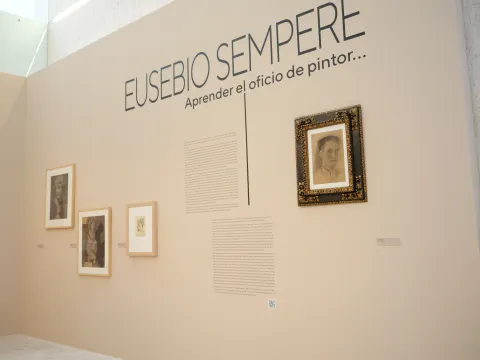
Eusebio Sempere. Learning the Painter's Trade

Submitted by brandcode_deweloper on

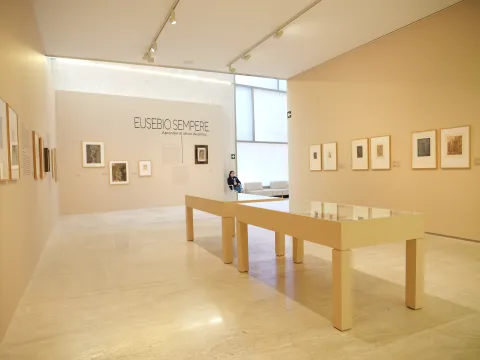
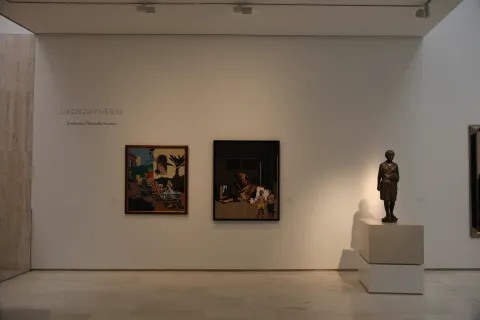
Thanks to an early vocation for painting, Sempere began in 1941 his training period at the School of Fine Arts of San Carlos in Valencia, the city where his family moved after the civil war, after having lost his toy factory in Onil. 
 

Sempere had finished his high school studies a few months earlier and attended evening classes at the School of Arts and Crafts, which had given him some knowledge and practice in drawing. His six years of academic training were tedious and frustrating. Artistic education in Spain during those postwar years was depressing; to the poor teachers, mediocre as artists, authoritarian and despotic in their classes, was added an extreme conservatism in the content and continuous "Sorolla-like" references as the only valid example to follow, just as the artist recalls time and again. 
 

At the School he met Father Alfons Roig, professor of the subject Liturgy and Christian Culture, who spoke to the San Carlos students about Kandinsky and was perhaps the only person knowledgeable about and an enthusiastic defender of modernity and avant-garde movements. Eusebio finished his studies in 1946 but remained at San Carlos until 1948 in order to study the specialty of intaglio engraving with professor Ernesto Furió, one of the few teachers who managed to earn the respect of his students. Sempere learned the technique of etching and dry point, and his engravings show an exceptional mastery of graphic art, working texture and volume and skillfully balancing light and darkness. 
 

Sempere studied modeling, drawing, anatomy, perspective and painting procedures, acquiring solid training in the artistic craft that is demonstrated in the preserved works from those training years. At the end of 1948, the SEU (University Students' Union) grants him a scholarship to pursue further studies in Paris. There he will become an artist-

EXPO-0060
Imagen
P1060957
/sites/default/files/inline-images/resources/exposiciones/EXPO-0060/TEXTO-EXPO-SEMPERE-LECTURA-FACIL_5.pdf
Rosa María Castells

The Invited Piece. Pablo Palazuelo: Alborada

Submitted by brandcode_deweloper on
Contemporary Art Collection of the "La Caixa" Foundation

Alborada by Pablo Palazuelo came to share the space alongside the constructivists from the 20th Century Art Collection and established a dialogue with Palazuelo's work held in the Collection, Sub-rosa XII.

In Palazuelo's painting, one observes an attempt, sometimes unattainable, to represent the logic of chance. This—this structural, architectural, scientific will, falsely impersonal—makes his paintings appear as authentic manifestos about how abstract language materializes. Thus, the alborada to which the title refers, a musical composition that celebrates the dawn, unites two significant aspects in the artist's work: light, understood as a succession of chromatic planes, an optical variation, and the idea of serialization, represented through forms that configure a kind of rhythmic sequence, a movement that vibrates and shifts horizontally across the surface of the painting.

EXPO-0059
Imagen
303011.jpg
Rosa María Castells

Moving Forward, Looking Back

Submitted by brandcode_deweloper on
Colección Michael Jenkins y Javier Romero del MACA

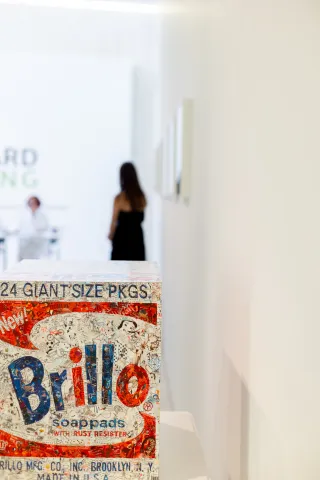
Moving forward, Looking back, Avanzando, mirando atrás, es la segunda exposición organizada a partir de la extensa colección donada por Michael Jenkins y Javier Romero al MACA, reuniendo en esta ocasión el trabajo de cincuenta y seis artistas de diferentes nacionalidades, trabajando en muy diversos medios artísticos, y trazando un equilibrio igualitario entre mujeres y hombres artistas. 

Esta muestra aborda planteamientos que pueden aplicarse por igual al trabajo artístico, a la labor de las instituciones dedicadas al arte contemporáneo y también, a la tarea como coleccionistas de Michael y Javier, quienes consideran la relevancia de testimoniar el presente, pero entendiendo la necesidad de mantener la vista en el pasado para construir y comprender el momento actual y también para vislumbrar el futuro. Conocer el pasado artístico es fundamental para contar lo que sucede hoy en arte. Ese conocimiento permite contar la historia del arte no como episodios aislados, sino interconectados, siguiendo el rastro de lo que acontece, buscando las semillas iniciales y los entrelazados con el fin de completar una lectura más precisa de la compleja y extensísima producción artística contemporánea.

Para muchos artistas, el trabajo en el estudio es una tarea que viene acompañada de forma continua por revisiones y análisis del trabajo previo, de lo hecho antes, como un impulso a su vez de nuevas ideas. Una mirada atrás que, a menudo, no se limita al trabajo propio, sino también al trabajo de otros artistas como fuente de inspiración.  En esta exposición conviven obras de artistas consagrados o de generaciones distintas buscando así los inicios de unas prácticas o ideas que no siempre surgen de forma nueva y sin sustento, ya que el trabajo de numerosos artistas actuales se enraíza a menudo en la obra de los predecesores, que a su vez también miraron atrás (para entenderlo, copiarlo, seguirlo, transformarlo o atacarlo y negarlo). Y esa mirada hacia atrás no impide sino que impulsa el registro de lo rabiosamente presente y permite imaginar algunas de las propuestas futuras o de los caminos que el propio arte y los artistas abren. 

La selección de trabajos mostrados aquí nos permite también ampliar nuestro conocimiento sobre las múltiples investigaciones estéticas y formales que existen en el arte contemporáneo, así como hacia las investigaciones que se adentran y reflexionan sobre muy diversos asuntos urgentes de nuestra realidad, en lo social y lo político.

EXPO-0058
Imagen
3F1A5586.jpg
/sites/default/files/inline-images/resources/exposiciones/EXPO-0058/Folleto-Cast_Val-OK_7.pdf
Josef Albers, Rosana Antolí, Lutz Bacher, Burt Barr, Pablo Bellot, Mira Bernabeu, Mark Bradford, Tania Bruguera, Bureau, Pepe Calvo, Vija Celmins, Eugenio Dittborn, Harold Eugene Edgerton, Steven Evans, Cayetano Ferrández, Nuria Fuster, Ellen Gallagher, Iluminada García Torres, John Giorno, Group Material, Susana Guerrero, Josephine Halvorson, Mary Heilmann, Kribi Heral, Arturo Herrera, Carmen Herrera, Leslie Hewitt, Jenny Holzer, Graciela Iturbide, Imi Knoebel, Barbara Kruger, Sol Lewitt, John Lindell, Richard Long, Agnes Martín, Marlene McCarty, Josiah McElheny, Rosell Meseguer, Donald Moffet, Mariko Mori, Steve Morrison, Olivier Mosset, Vik Muniz, Óscar Muñoz, Takashi Murakami, Wangechi Mutu, Bruce Nauman, Gabriel Orozco, Massimo Pisani, Sylvia Plimack Mangold, Kay Rosen, Aura Rosenberg, Matt Saunders, Dana Schutz, Richard Serra, Andrés Serrano, Nancy Shaver, Shahzia Sikander, Amy Sillman, Haim Steinbach, Thomas Struth, Yuken Teruya, Hank Willis Thomas,MAnn Toebbe, Cecilia Vicuña Y Kara Walker.
Rosa María Castells

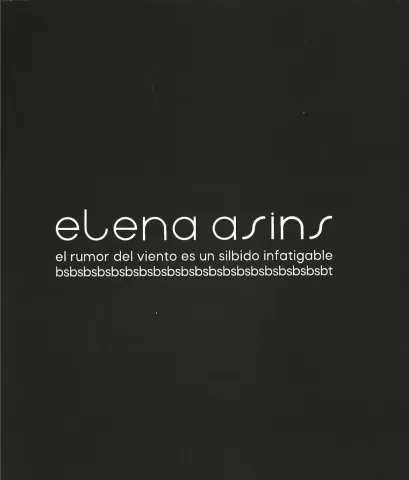
Elena Asins. The murmur of the wind is an tireless whistle

Submitted by brandcode_deweloper on

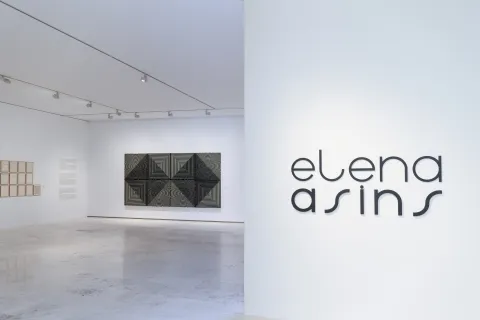
Elena Asins (Madrid, 1940 - Azpíroz, Navarra, 2015) is one of the most radical and rigorous artists in the Spanish art scene. A renovator of plastic language, Asins combines the constructive tradition of twentieth-century avant-garde with computation and information theory, being considered one of the pioneers of computer-assisted art in Spain. A brilliant artist, provocative in silence, who builds from structure, from mathematical norm and logic, a work that generates itself to become, at times, almost invisible.

Through, fundamentally, the works bequeathed by the artist to the Museo Nacional Centro de Arte Reina Sofía, this exhibition proposes a journey through the persistent investigations carried out by the artist and their plastic results: a final work of apparent simplicity in its calculations, but linguistically hermetic. True to herself and the result of her renunciation of color, Elena Asins's works are read first through the word and then through structure and line. Never forgetting the tempo: an internal music that runs through all her artistic production, sequencing it. Asins has resorted in her works to a wide range of formats and media from concrete poetry to video, passing through drawing, sculpture or installation, always characterized by compositional rigor and formal refinement.

Linked to some of the most innovative projects in the recent history of Spanish art, such as the Cooperative of Artistic and Craft Production or the Computing Center of the Complutense University of Madrid, we highlight the encounter there with Eusebio Sempere and Abel Martín, their friendship and the coincidence of their investigations. And we will show for the first time a fundamental work by Elena Asins: the Songs of Orpheus, a series of visual poems dated 1970 and preserved by Eusebio Sempere that have become one of the most important pieces in the history of Spanish experimental poetry.

EXPO-0057
Imagen
3F1A9604-Editar.jpg
/sites/default/files/inline-images/resources/exposiciones/EXPO-0057/poliptico-definitivo_7.pdf
Rosa María Castells
Obras han sido prestadas por el Museo Nacional Centro de Arte Reina Sofía, el MACVAC de Villafamés, el Museo de la Universidad de Alicante, la Fundación Mediterráneo y la Colección espíritu-materia. Obras a las que se unen las piezas de Elena Asins pertenecientes a las colecciones del MACA así como las que se encuentran depositadas en el museo como las de Robledo-Palop Collection de Nueva York o la Colección Ars Citerior.

Now the rush stayed still

Submitted by brandcode_deweloper on
Abstract Experiences Around Manolo Millares

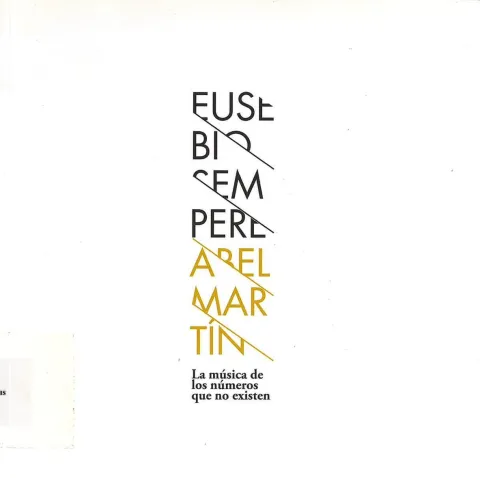
Eusebio Sempere and his partner Abel Martín learned the silkscreen printing technique in Paris, in the workshop of Cuban artist Wifredo Arcay. When they returned in 1960, they introduced this printing technique in Spain, creating beautiful silkscreens of themselves and their artist friends gathered around the Museum of Abstract Art in Cuenca. At first, Sempere and Martín worked together until, in the mid-1960s, Abel became a reference figure in the silkscreen printing trade, taking charge of the technical process with great quality in the prints and portfolios that came out of their workshops in Cuenca and Madrid. And thus he became a key figure in the reproduction and dissemination of contemporary art in our country.
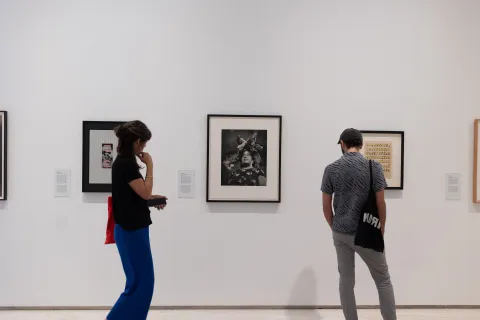
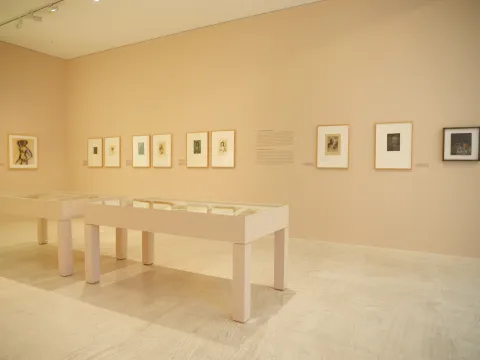
Furthermore, the deep conviction that graphic work deserved the status of an original work, that it brought contemporary art within reach of a large majority of the public, turning it into a mass phenomenon, and the respect and enthusiasm that both (Eusebio and Abel) profess for graphic work, enriches the Art of the 20th Century Collection itself. An impressive display of drawings, engravings, lithographs and silkscreens completes the extensive roster of essential artists that traverse the most suggestive territories of the artistic framework of the twentieth century. 

This exhibition showcases works created in the most abstract context, from the pioneers of the avant-garde in Paris to Spanish informalists, among whom stands out the work of Canary Islands artist Manolo Millares, to whom we pay tribute on the 50th anniversary of his death.

EXPO-0056
Imagen
3F1A2384-1.jpg
Rosa María Castells
Colabora: Colección
Fundación Mediterráneo y otras varias depositadas por la
Colección Ars Citerior.