Museum Day 2020

Submitted by brandcode_deweloper on

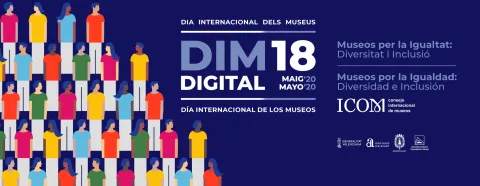
Alicante celebrates the eighth edition of International Museum Day online.

The City Council, the Provincial Council, Aguas de Alicante, the University and The Ocean Race Museum propose this year an online edition, due to the current situation of closure of museums and cultural centers due to COVID-19.

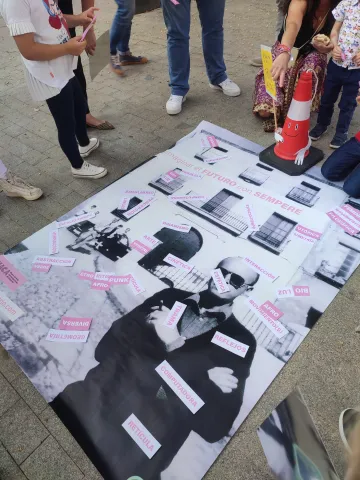
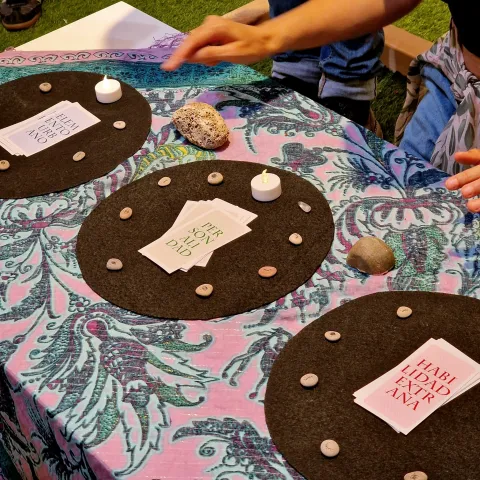
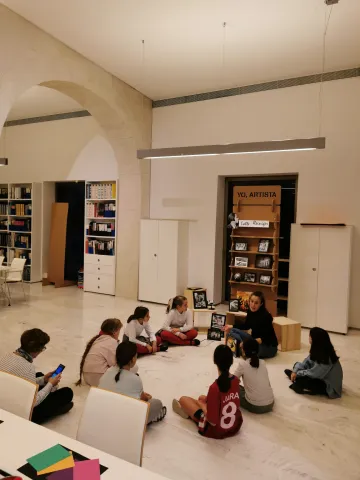
Twelve exhibition centers in Alicante come together for the eighth consecutive year to celebrate a new edition of Museum Day in the city, on the occasion of International Museum Day (IMD). On this occasion, and due to the exceptional situation, the MACA, Las Cigarreras, the MUSA, the Exhibition Room of the Fish Market, the Nativity Museum, and the New Tabarca Museum (on behalf of the City Council), the Mubag, Marq and the Juan Gil-Albert Institute (on behalf of the Provincial Council), The Ocean Race Museum, the MUA (on behalf of the University) and the Alicante Water Museum, have prepared programming for all audiences, which can be enjoyed online.

Following the successful participation of last year, with 16,193 visitors, the organizers hope that, despite the change in format, participation will be massive.

Every year since 1977, ICOM organizes International Museum Day, an exceptional moment for the international museum community.

The objective of International Museum Day (IMD) is to raise awareness that museums are an important means for cultural exchange, the enrichment of cultures, as well as for the development of mutual understanding, collaboration and peace among peoples. Organized each May 18 or around that date for more than 40 years, the events and activities planned to celebrate IMD can last a day, a weekend or even an entire week. More and more museums around the world are participating in this global celebration: last year 37,000 museums participated in the event in 158 countries and territories.

This year's theme is: "Museums for Equality: Diversity and Inclusion." With the theme "Museums for Equality: Diversity and Inclusion," International Museum Day 2020 #IMD2020 aims to become a meeting point to celebrate the diversity of perspectives that shape museum communities and staff, as well as to promote tools to identify and overcome biases in what museums display and in the stories they tell.

International Museum Day 2020 Goes Digital

Despite the current situation of widespread pandemic, #IMD2020 will be celebrated through the organization of digital and online activities. For those who wish to organize on-site activities, we propose an alternative date: a three-day celebration between November 14, coinciding with the Long Night of Museums, and the 74th anniversary of ICOM, November 16, 2020

The communication proposals for Digital IMD 2020 have been made by 4th year students of the Degree in Advertising and Public Relations: Álvaro Fuentes Lledó, Carolina González Valencia, Lourdes Ros Buendía, David Sabater Zamorano and María Vila García, within the context of the subject Production and Realization in Print Media; and coordinated by the professors: Ana Isabel Ibáñez Hernández and Lydia Girón Plaza. and coordinated by the professors: Ana Isabel Ibáñez Hernández and Lydia Girón Plaza.

Thank you all.

ACTI-0127
Imagen
facebook_portada-scaled.jpg

Photography Contest: Just This Once

Submitted by brandcode_deweloper on

For seven editions, from 2012 to 2018, the Museum held a photography contest coinciding with International Museum Day. In it, anyone who wished was invited to take a photo, alone or accompanied, in front of or inside the museum. The winning photo will be selected according to the following criteria:

◦ Originality of the location and pose or framing

◦ Dynamism and enthusiasm of the people posing in the photograph

◦ Creativity

ACTI-0013
Imagen
75.jpg
During the months of May 2012 to 2018
All rooms

II Film Cycle in Original Version

Submitted by brandcode_deweloper on

Following the success of the two previous editions, starting next week the MACA will once again host the original language film cycle in its facilities.

On this occasion, viewers will be able to enjoy a showcase on Kurosawa in the 80s, the latest Buñuel and a showcase of dance in cinema.

ACTI-0010
Imagen
Alt text
20:00 hours
90 minutes
Assembly Hall

Cinema in O.V.S

Submitted by brandcode_deweloper on

Film cycle in original language with which a collaboration policy is established with the University, in order to attract and publicize two of the most important cultural projects developed in the city of Alicante to younger people, as well as bring to the public an auteur cinema, already removed from the commercial circuit

ACTI-0003
Imagen
Alt text
60 minutes
Assembly Hall

ALL MACA

Submitted by brandcode_deweloper on

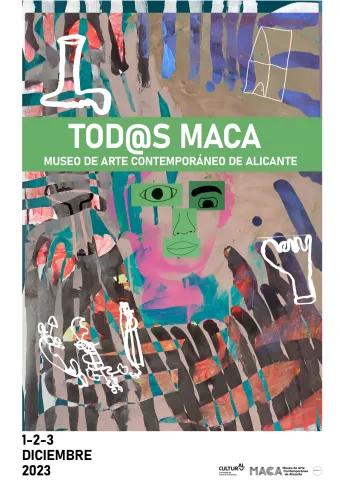
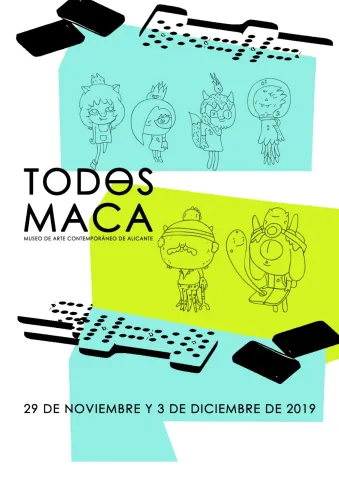
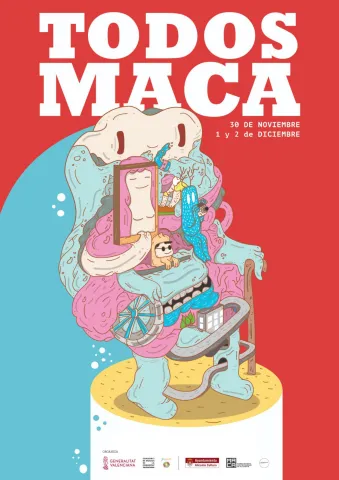
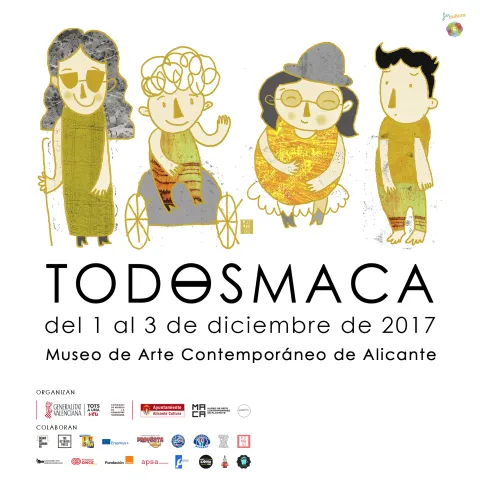
When these December dates arrive, when the days are shorter and colder, we have more desire than ever. The year is ending, but passion prevails. And it is precisely this overflowing passion, this need to go far, to step outside the guidelines and break away from the marked paths that pushes us to organize, once again, this TOD@S MACA: wonderful multidisciplinary artistic events with the aim of making visible and empowering people with disabilities.

And we return with the same objectives as always because, unfortunately, it is still necessary to work on this: that all people can participate in the usual creative processes, in the artistic circuits, and be present in all educational centers, in all professional spaces and in every stratum of this society. We seek social, political and human equidistance. Something that has not yet arrived for many reasons. And as long as that "yet" remains, we will be here, once again since 2017, celebrating these meetings and exchanges full of emotion and inclusion at the Museum of Contemporary Art in Alicante (MACA) around the International Day of Persons with Disabilities, which is celebrated every December 3rd.

With TOD@S MACA what we seek is to bring contemporary art closer to ALL types of audiences, thus fostering interest in culture, the arts, participation, creativity and respect for all groups and strata of citizenship. The idea is to build bridges between people, and to make our differences, our diversity, instead of an obstacle or a communication barrier, an opportunity for mutual learning, for collective creation. We all add up if we all participate.

The TOD@S MACA program consists of numerous artistic and cultural activities, in which we will transform the museum into a privileged space to awaken the genius of a spectator unfamiliar with the art world, establishing a dialogue with the public and inserting the museum into the social fabric of the city to become a place FOR ALL.

TOD@S MACA is not specifically aimed at a social group. It is not exclusive to people with disabilities or social exclusion. The target audience for these events is ALL OF SOCIETY. We could hardly build a more inclusive, tolerant and empathetic world if we do not count on the people who make it up. That is why the program of activities does not understand specific groups: it is open to all people.

ACTI-0791
Imagen
Sin-titulo-5-2.jpg
All rooms

Black cinema

Submitted by brandcode_deweloper on

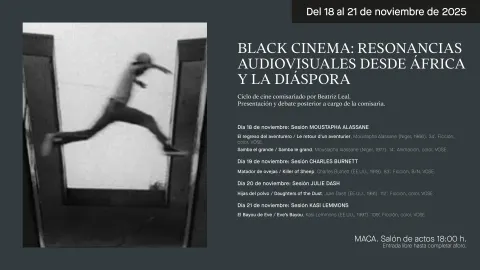
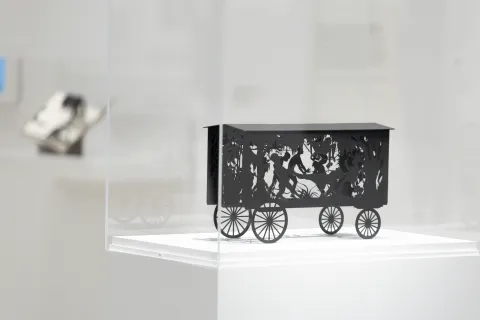
The 5 fiction titles that make up the cycle span two continents, with prominent presence of women and African and African American directors who are pioneers in a vanguard and critical art that frees itself from European references and seeks its own grammar and references. In line with the investigation of form and mastery of artistic techniques that Kara Walker employs to delve into the historical and psychological aftermath of slavery and social injustice, the films have been selected for their thematic, poetic, historical and geographical connections with the artist's production.

Beatriz Leal Riesco is an independent researcher, professor, critic and programmer specializing in contemporary African, European and Middle Eastern art and cinema. She is programming director of the Wallay! Bcn African Film Festival (Barcelona) and AFRIKALDIA: Basque Festival of African Cinemas (Vitoria). She has worked for the NY African Film Festival and other film festivals in the past. She combines her work as a lecturer and curator with her activities as a writer, publishing articles in a wide range of newspapers and academic journals, including El País, Cinema Journal, Secuencias, Caracteres, Ars Magazine, Asymptote, GuinGuinBali and Okayafrica. She regularly collaborates with institutions such as the Filmoteca Española (Madrid), MUSAC (León), CCCB (Barcelona) and the Filmoteca de Cataluña in Barcelona, where she is currently curating an exhibition and film cycle on the phenomenon of Ghanaian film posters from the 1990s titled COL.LISIÓ EXTREMA. Cartells de Ghana pintats a mà, anys noranta. (October 2025-January 2026).

November 18: Moustapha Alassane Session.

-The Return of an Adventurer / Le retour d'un aventurier, Moustapha Alassane (Niger, 1966). 34'. Fiction, color, VOSE.

-Samba the Great / Samba le grand, Moustapha Alassane (Niger, 1977). 14'. Animation, color, VOSE

The first session is dedicated to the "father of African animation": Nigerien Moustapha Alassane (1942-2015). Trained in animation techniques in Canada under the direction of Norman McLaren, Alassane is an example of constant experimentation with genres (animation, ethnography and vanguard auteur cinema), techniques (painting, stop-motion, drawing) and materials (metal, wood, wires or characteristic African fabrics).

In Le retour d'un aventurier (1966), the "first African western," Alassane uses satire and the popular western genre to question the racist, white supremacist and patriarchal dynamics of American expansionism, based on the cult of violence. In the animated film Samba le grand (1977), he uses stop-motion technique and hand-painted puppets to introduce a wide audience to the adventures of a legendary African hero, erased from history by colonizers.

November 19: Charles Burnett Session.

-Killer of Sheep, Charles Burnett (USA, 1978). 83'. Fiction, B/W, VOSE

Killer of Sheep is Burnett's first film, an African American filmmaker who was a prominent member of the LA Rebellion movement or Los Angeles Film School of Black Filmmakers (UCLA, late 1960s-80s), which emerged as a response to the Watts riots (LA, 1965) and was characterized by bringing together young African and African American directors who, starting from anti-colonial critique, Third Cinema postulates and auteur cinema, proposed a vanguard Black cinema alternative to Hollywood cinema.

In Killer of Sheep, made during weekends in 1972-1973 as a master's thesis at UCLA, Burnett demonstrates his ability to maintain tension between the narrative and the conceptual, presenting us with episodes of domestic life of the working-class Black population in the mid-70s in the Los Angeles neighborhood of Watts. Burnett wrote, directed, produced, filmed and edited the film, composed as vignettes with high poetic charge in the shots, through amateur actors and masterful use of black and white in 16mm, in line with Italian neorealism, Yasuhirō Ozu and Jean Renoir.

November 20. Julie Dash Session

-Daughters of the Dust, Julie Dash (USA, 1991). 112'. Fiction, color, VOSE.

Julie Dash is another illustrious figure of the LA Rebellion. Daughters of the Dust was the first film by an African American woman to be commercially distributed. In this filmed poem we learn the story of three generations of Gullah women from Saint Helena Island (South Carolina) in the year 1902, as they prepare to emigrate from the rural South to the urbanized North. It is no coincidence that the director places this family at the forefront of the Great Migration and alludes to the emotional and psychological effects of the massive internal American migratory movement that would transform the country's history with the arrival in the North of millions of Black people fleeing the racism of Southern policies. Filmed in Gullah dialect (Southern creole with African influences that emanates stories of slavery) and highly visual, it is composed of elaborate pictorial shots (thanks to production design by Kerry James Marshall -whose work is in MACA-) filmed by renowned artist Arthur Jaffa. Dash deliberately moves away from Western linear masculine narrative by using circular narrative in the form of vignettes where times, sensations and experiences overlap through the account of an unborn child, who uses the stories of her ancestors. The dialect, celebrations, clothing, food and rituals are an extreme act of poetic-political resistance of these women, whom Dash honors in this classic of late twentieth-century cinema that Beyoncé would pay tribute to in Lemonade (2016).

November 21. Kasi Lemmons Session

-Eve's Bayou, Kasi Lemmons (USA, 1997). 109'. Fiction, color, VOSE

The cycle closes with another debut feature, Eve's Bayou (1997), by African American Kasi Lemmons. Through her eyes we enter the imaginary and mythology of Southern Gothic terror, so beloved by Walker and successfully developed in the twenty-first century. Guided by a child (Eve), we are transported to the memories of a summer in the mid-1960s within a wealthy African American family in Louisiana. Women govern this Gothic world forged on the basis of secrets, voodoo and mystical forces of Afro-Caribbean heritage where forced sex, love and premonitions compose a world that Eve tries to make sense of. The child's gaze, surrounded by ghostly presences and magical rituals, allows us to discover the anxieties, fears and survival strategies of Black women inherited from a complex history of oppression and racism. This intimate work on memory and the human capacity for constructing personal and collective history, the play with terror to dissect relationships between sexes and races, the use of vignettes and the presence of childhood are elements that connect powerfully with the work of Kara Walker. Endorsed by critics and audiences (it was the most profitable independent film of 1997 in the USA), Eve's Bayou is preserved in the Library of Congress of the USA for its cultural, historical and aesthetic value.

ACTI-0779
Imagen
Sesiones-Todas_SlideWeb.jpg
18:00 hours
90 minutes
Assembly Hall

Mythology

Submitted by brandcode_deweloper on

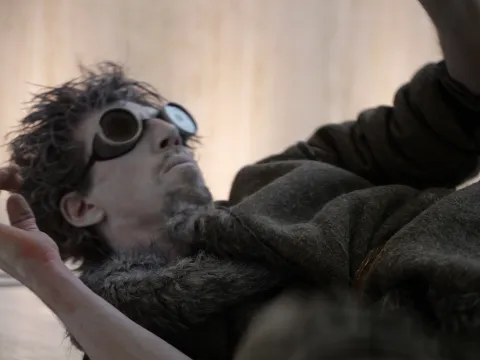
The Mitolatorio began its journey in April 2020. During the pandemic, it functioned as a digital collaborative map of contemporary myths. It was a way to stay connected with the outside world, redefining public space from our homes.

One of the pillars of the Mitolatorio has always been urban redefinition, because reviewing our emotions about public space empowers us within it, because paying special attention to it makes us more aware of its peculiarities, and it helps us value all elements of the public and urban landscape by placing on the same

level the architectural (a building with an emblematic façade), the vegetal (the tree in the plaza where we played) and the human (the neighbor who always sat on the same park bench), among others. We believe that this perspective can become

radical in an unexpected way if it is carried out from the perspective of a work from the Museum previously seen, smelled, and creatively discussed.

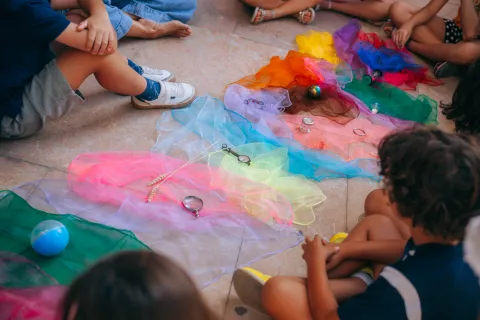
The mediation of the works and places will be based on carrying out creative actions with them as objects, to promote critical and expanded observation of the work and subjective, bodily and also critical exploration of

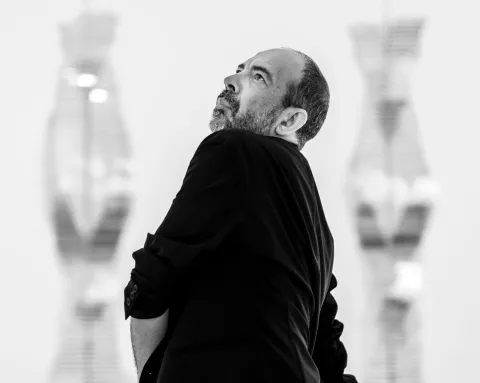
urban space. To the significant power of the work-place binomial we thus add two contributions: that of the practices of mediated plastic creation from the workshops and laboratories of María Maraña, and that of the techniques of proprioceptive exploration and identity fabulation from the interactive practices of Sergi Hernández.
ACTI-0775
Imagen
Sin-titulo-3.jpg
Desactivado

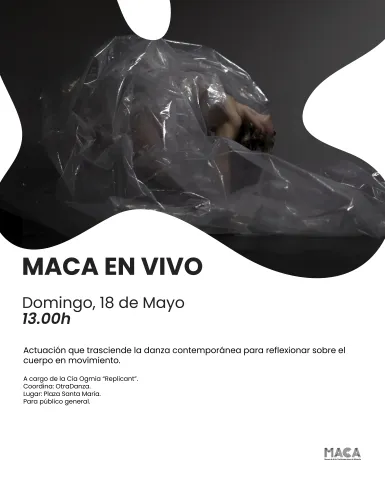
MACA Live

Submitted by brandcode_deweloper on

The April in Dance Festival has had the "MACA EN VIVO" program since 2023. Expanded programming carried out from the direction of April in Dance in collaboration with MACA and the Museum Consortium.

ACTI-0774
Imagen
WhatsApp-Image-2022-12-16-at-11.56.32.jpeg

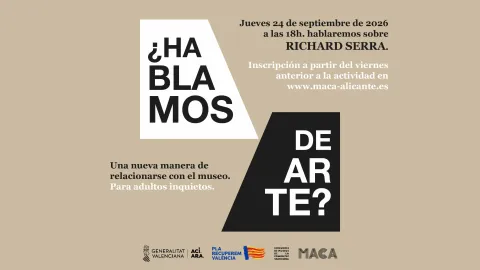
Shall we talk about art?

Submitted by brandcode_deweloper on

Through the Tangent call of the Consortium of Museums of the Valencian Community.

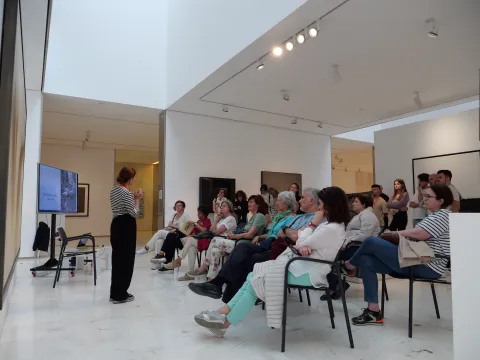
We propose a new way of relating to the museum with the aim of consolidating and promoting mutual enrichment and an exchange of experiences.

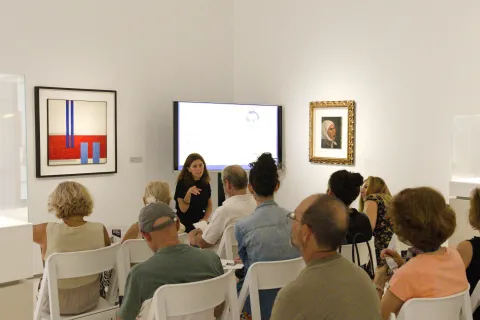
With these guided visits and actions we want to reflect on concepts and ideas that will emerge throughout the visit, relating the works from the MACA collections to their context, in a transversal way, making an analysis of current reality and how artists represent their experiences creating a collective memory through the great diversity of contemporary languages that have emerged in the 20th and 21st centuries.

For restless adults.

With the support of the Ministry of Education, Culture, Universities and Employment of the Valencian Regional Government.

ACTI-0770
Imagen
97.jpg
Desactivado
18:00 hours
60 minutes

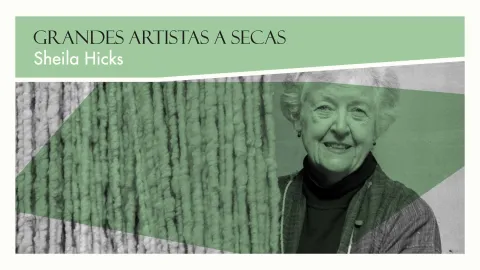
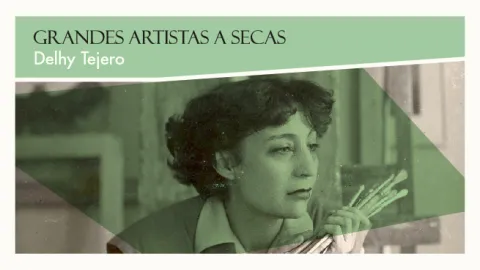
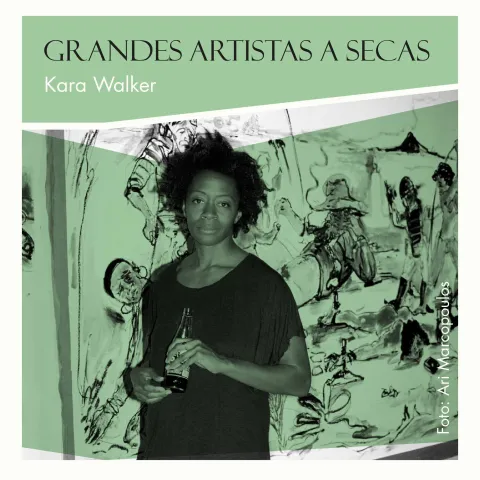
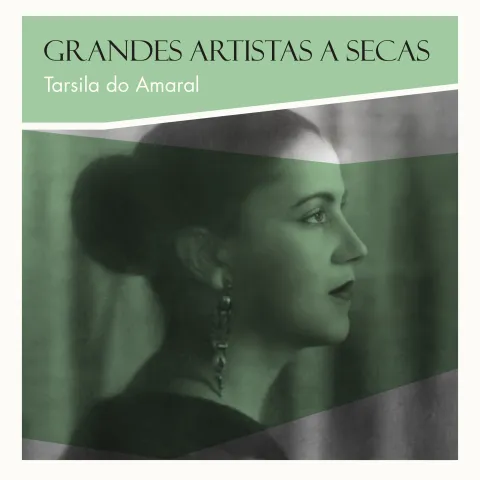
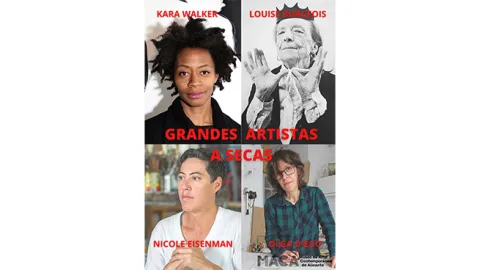
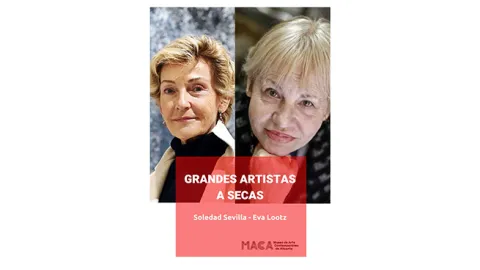
Great artists, plain and simple

Submitted by brandcode_deweloper on

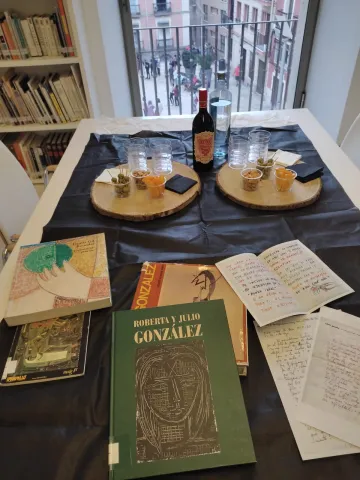
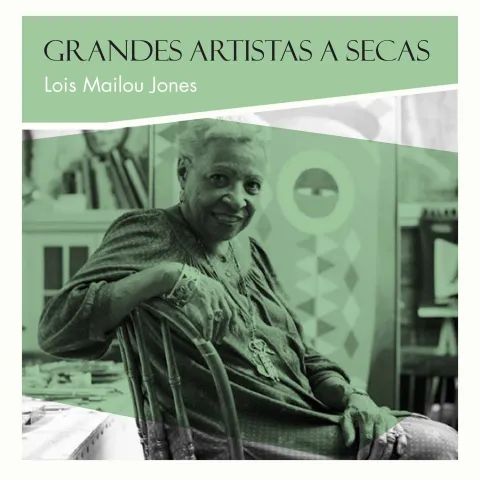
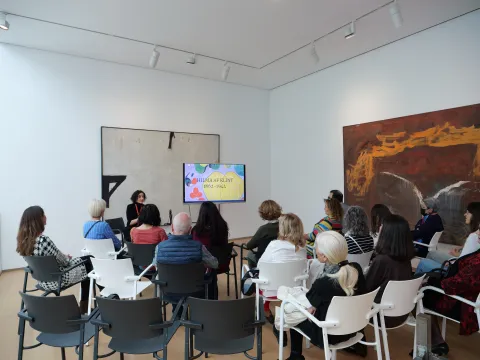
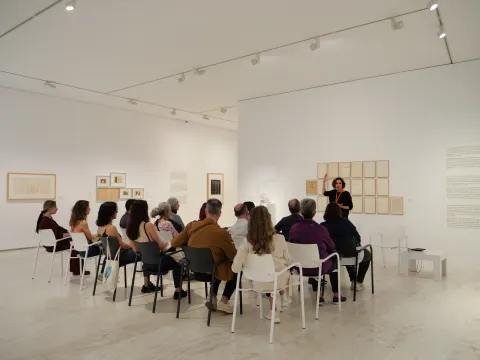
Workshop visit with vermouth around the work of female artists from the collections. Guided tour by Explicarte

Traditionally, women have been considered second-class citizens in the world of culture. This position was based on a statistic supported by a very limited number of women who had stood out in the field of literature, thought, and the plastic arts. This idea crumbles in the face of a simple consideration, and that is the reduced opportunities they had to develop their personal talents.

ACTI-0733
Imagen
WhatsApp-Image-2022-10-22-at-11.28.14.jpeg
Activado
Saturday
One Saturday a month except July and August
12:00 hours
90 minutes