Stories of the Raft

Submitted by maca on

A mediation and community art project.

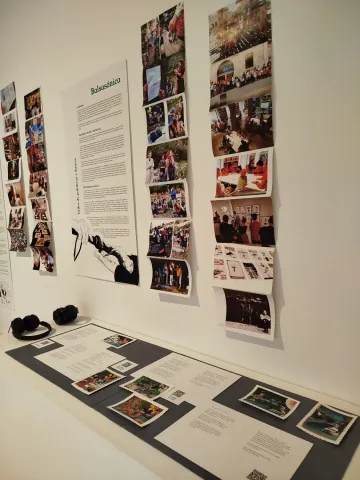
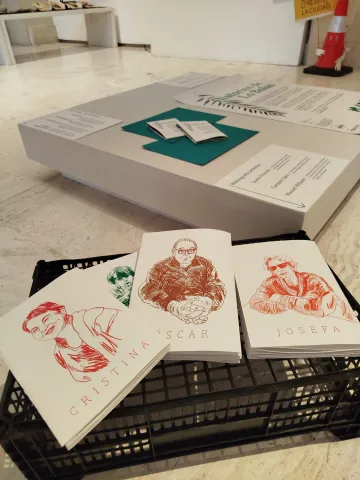
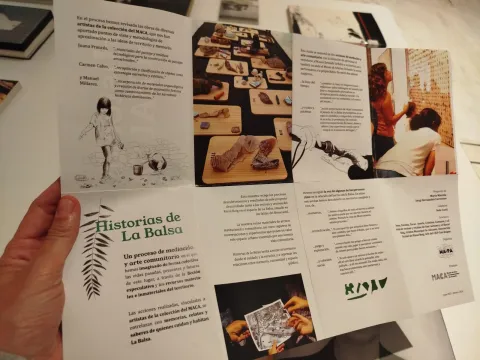
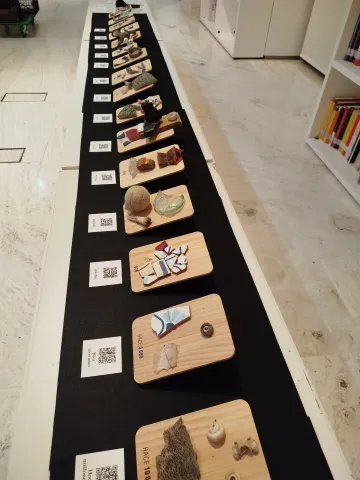
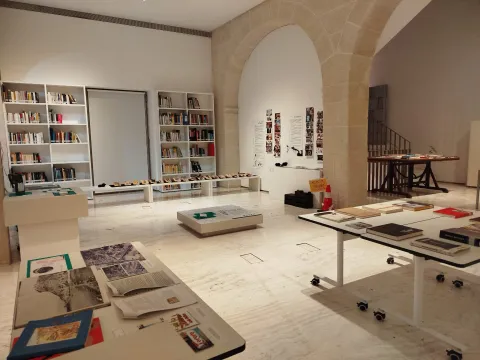
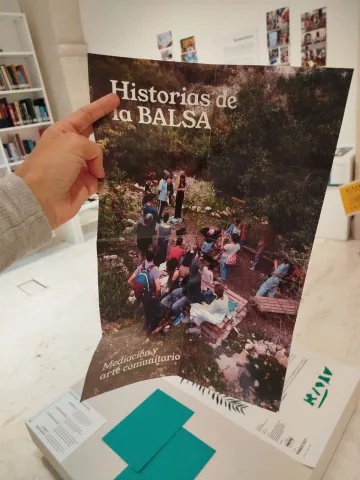
Stories of La Balsa is an exhibition that gathers the processes, discoveries and results of this project developed together with the residents of Raval Roig in the space of La Balsa, at the foot of Benacantil.

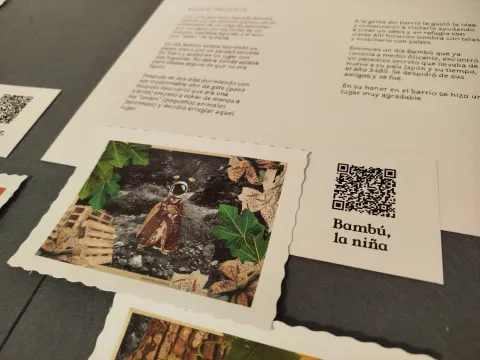
The project proposes to collectively imagine the past, present and future lives of this place, through shared imagination, speculative fiction and the material and immaterial resources of the landscape. The actions carried out, linked to artists from the MACA collection such as Carmen Calvo or Juana Francés, are intertwined with memories, stories and knowledge of those who care for and inhabit La Balsa.

The exhibition brings together materials from institutional and community archives, as well as records of conversations and experiences that highlight the value of this urban space sustained by an intense community life.

Stories of La Balsa invites us to look at the territory from the perspective of care and listening, and to rethink the relationships between memory, community and public space.

Coordination: Sergi Hernández and María Maraña (MA·PA estudio)

Imagen
foto
Library

The Architecture Table. Junquera Architects

Submitted by maca on

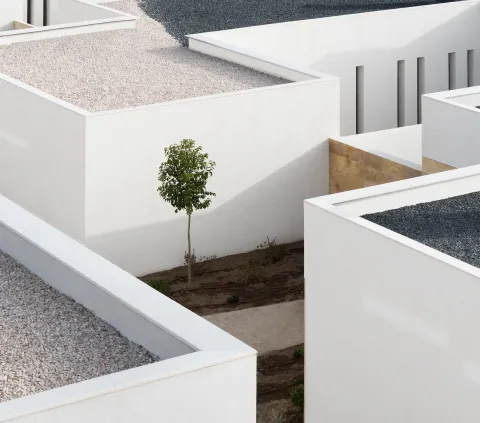
Junquera Architects. Ana Junquera and Jeronimo Junquera. 3 climates 3 houses. Comfort vs energy

Modern architecture has forgotten the wisdom of traditional architecture, entrusting comfort to energy consumption. Today more than ever we must design housing as a response to the climate of the place.

Coordinates: Santiago Varela

Collaborates: College of Architects of Alicante

Imagen
foto trabajo
Desactivado
7:00 PM
Library
Entrada libre

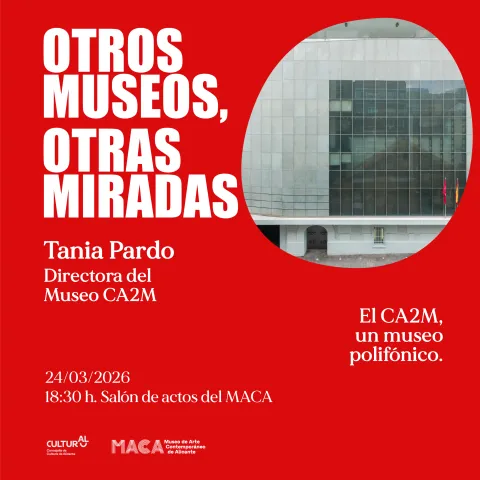
Tania Pardo. Other Museums, Other Perspectives

Submitted by maca on
The CA2M, a polyphonic museum

The Museo Centro de Arte Dos de Mayo, inaugurated in 2008, has become a benchmark in contemporary art at both national and international levels. Located in Móstoles, in the south of the Community of Madrid, it has made its own territorial position one of its greatest strengths. Its peripheral, decentralized, eccentric and outlying location is understood as a possibility for building imaginary geographies. This public museum, with low institutionality, safeguards the contemporary art collection of the Community of Madrid and the ARCO Foundation and works around the potentialities of contemporary practice through artistic production, exhibitions, thought, research and conservation of its collections. The CA2M is a museum that speaks volumes to establish dialogues that allow expanding institutional boundaries through its exhibitions and activities based on affective policies. A center that debates between the idea of a powerhouse, as Alexander Dorner conceived it—an electrical power plant in continuous operation—and the experiential body of radical imagination that Pontús Hultén spoke of.

Tania Pardo (Madrid, 1976)

Degree holder in Art History, curator and researcher, she is currently director of the Museo CA2M, Centro de Arte Dos de Mayo, where she previously served as Deputy Director (2019-2013). She has also been Advisor for Plastic Arts of the Community of Madrid (2019-2023). Head of Exhibitions at La Casa Encendida, Madrid (2015-2019). She was Director of Projects at the Fundación Santander 2016 (2009-2010); was part of the team at MUSAC, Museum of Contemporary Art of Castilla and León, León (2003-2009) and was a professor of Art History at the UCM, Complutense University of Madrid (2014-2019). As a curator, she has developed various projects in both national and international institutions, has regularly written as an art critic in different media and develops various projects at the intersection of artistic, social, and educational fields.

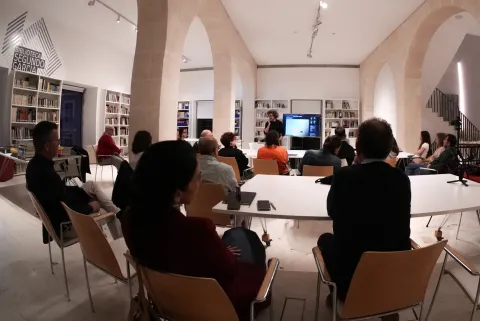
Other museums, other perspectives is a lecture series in which directors of other museums are invited to speak about their experiences, histories and knowledge in the management and direction of the museums in which they have worked.

Coordinated by: Isabel Tejeda

In collaboration with: Consellería de Educación, Cultura, "Consellería de Educación, Cultura, Universidades y Empleo de la Generalitat Valenciana (201)"

Imagen
Cartel
Desactivado
18:30
Assembly Hall
Entrada libre
154 people

Water Diffractions. The Invisible Fabric of the City

Submitted by maca on

Public presentation of the results of the workshop Water Diffractions. The Invisible Fabric of the City led by Daniel G. Andújar.

We will have a public session in which the conclusions of the first phase of the workshop will be presented. The workshop will take place from March 16 to 18 (the group is already closed), in which we will work with open data from the urban water cycle and analog and digital tools to produce visual and narrative prototypes that make visible the "invisible city" of water beneath the asphalt.

Imagen
foto
Desactivado
18:30
Library
Entrada libre

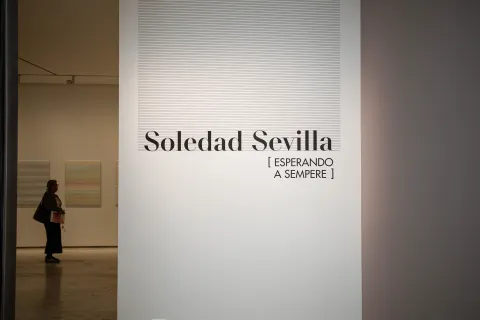
Soledad Sevilla [Waiting for Sempere]

Submitted by maca on

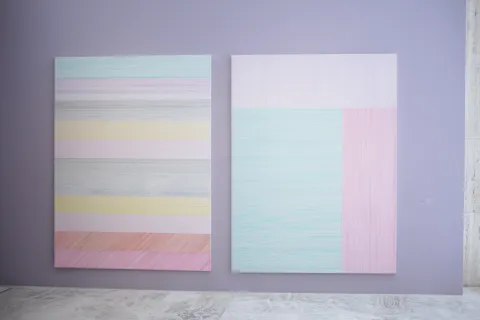
Soledad Sevilla [Waiting for Sempere] is a special exhibition in the artist's trajectory: a project that closes a vital and creative circle and that, at the same time, is essential for the MACA, a museum whose origins are intimately linked to the collection of Alicante artist Eusebio Sempere.
 

Sevilla and Sempere met in the 1960s. Between them arose a mutual admiration and "a deep and heartfelt friendship," while they coincided in some of the most relevant projects around geometric abstraction in the Spanish artistic context. A common interest in line, a rigorous practice of composition, and a drift toward the sensitive—toward a softer and more emotional geometry—connect the work of Sempere and Sevilla. This poetic affinity with the Alicante artist runs through Sevilla's entire career: from the beginnings to her most recent production, such as the series painted since the summer of 2022 conceived as inspiration and homage to her friend. Sevilla finds in light and line, like Sempere, a sensible emotion, a rigorous and deliberate stillness.
 

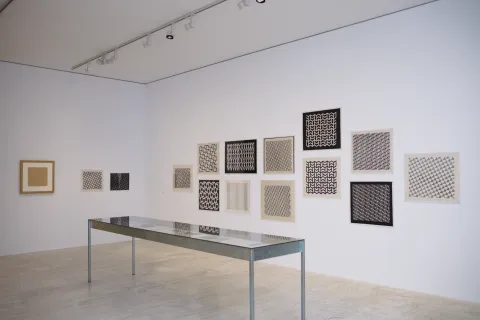
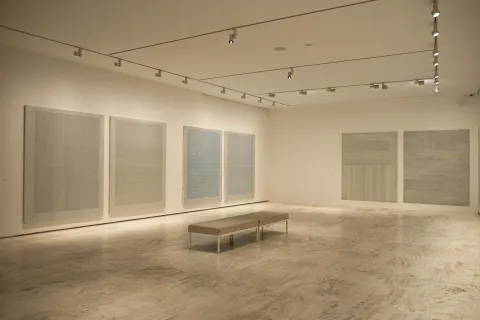
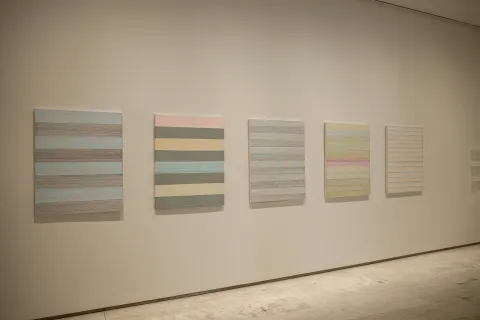
Starting from the pieces from the 1970s that we preserve in the museum's collections, the exhibition focuses its attention on the artist's most recent series. These are large-format paintings in which the vibration of the line, as filament or thread, generates surfaces that expand and continuously recompose themselves. These works envelop the viewer and invite them to experience the painting not only from sight, but also in a performative way, from the body that shares the space with it. Contemplation thus becomes a physical experience that unleashes intimate emotions. Sevilla manages to show the total space as a unity and, within it, deploy a wide range of registers and subtle variations. Geometry, far from being cold or distant, acquires here an intimate and introspective character.
 

A rigorous and disciplined artist, Sevilla works guided by intuition… As she herself states, her frameworks are "background for thought and art passes over it like a kind of reflection." Sempere himself describes it perfectly: "Why speak of painting if you are seeing it?"

EXPO-0084
Imagen
Sala
/sites/default/files/2026-03/Castellano_textos-sala-QR-1.pdf
Rosa María Castells
Obras pertenecientes a la Colección del MACA, a la Colección de Soledad Sevilla, del Museo Nacional Centro de Arte Reina Sofía, del Instituto Valenciano de Arte Moderno (IVAM) y de la Galería Maisterravalbuena.

From the bottom of the sea to the sky, 1980-1990

Submitted by brandcode_deweloper on
Juana Francés Collection

Around 1980, Juana Francés abandons social criticism to venture once again into the paths of abstraction, subtly capturing underwater landscapes and comets. A kind of journey that follows the itinerary from the depths of the sea to the sky, with the circle and rectangle as recognizable geometric figures. These are works on paper in an explosion of color and harmony of movement, with a more lyrical tone and spiritual transcendence. New vital paths of fullness and maturity that are cut short in 1985 with the death of Pablo Serrano, her companion. Juana then returns to canvases of great gestural violence and material density, dark and dramatic sidereal spaces where pain is reflected and which relate to the first informal paintings of the Alicante artist.

RECORR-0011

Man and the City, 1963-1980

Submitted by brandcode_deweloper on
Juana Francés Collection

In the latest informal paintings, humanoid forms can be glimpsed, monstrous faces configured—in the manner of collages or assemblages—by a pictorial mass to which new materials are gradually incorporated: eyeglasses, watch spheres, radio parts, bolts, plugs, spark plugs, cables, etc… Heads that fit into urban scenarios, into windows or boxes that imprison beings with legs or wheels. These are the rotopeds, absolute protagonists of works that grow in three-dimensionality to drown and isolate these contemporary beings, hostages of technical progress. Ironic titles that speak of the solitude of man crushed by the very forces he has created, a critique of a society where everything is filed and numbered, where man is objectified, profoundly alone in the immense clamor of the world in which we live.

RECORR-0010

I am interested in matter as a medium, 1957-1963

Submitted by brandcode_deweloper on
Juana Francés Collection

After the figurative works of marked hieratic character that serve as her apprenticeship, Juana Francés undertakes around 1955 a pictorial investigation into abstract informalism that leads her to become part of the El Paso group, of great importance and significance in the Spanish artistic panorama of the mid-twentieth century. These bold works of mixed techniques belong to that moment, where siena, white or black color, sprayed or dripped, coexists with manifest gestural violence and a great amount of matter. At first they are sands and earths of different thicknesses and textures, and shortly after, she incorporates waste material and fragments of nature: found objects, pieces of brick, ceramics, glass, in compositions closer to Dadaist approaches or to arte povera.

RECORR-0009

The International Panorama of the 1970s

Submitted by brandcode_deweloper on
20th Century Art Collection

Eusebio Sempere gave an international character to the 20th Century Art Collection and through the 117 artists represented, it encompasses almost all the artistic trends of his time, including the closest ones: land art, new figuration, American pop, hyperrealism, etc… At the same time, it highlights the importance of graphic work that allows the reproducibility of the original work and mass access to works of art, bringing together more than a hundred printed works on paper.

RECORR-0008

Social Realism

Submitted by brandcode_deweloper on
20th Century Art Collection

In 1960s Spain, a traditionally dramatic society, a series of artists approach reality using pop art as a reference. Works laden with irony that use the direct language of comics, advertising, or cinema to capture images recognizable to everyone, but manipulated, where the surprise of the absurd association produces in the viewer a reflection that is socially or politically charged with meaning.

RECORR-0007